
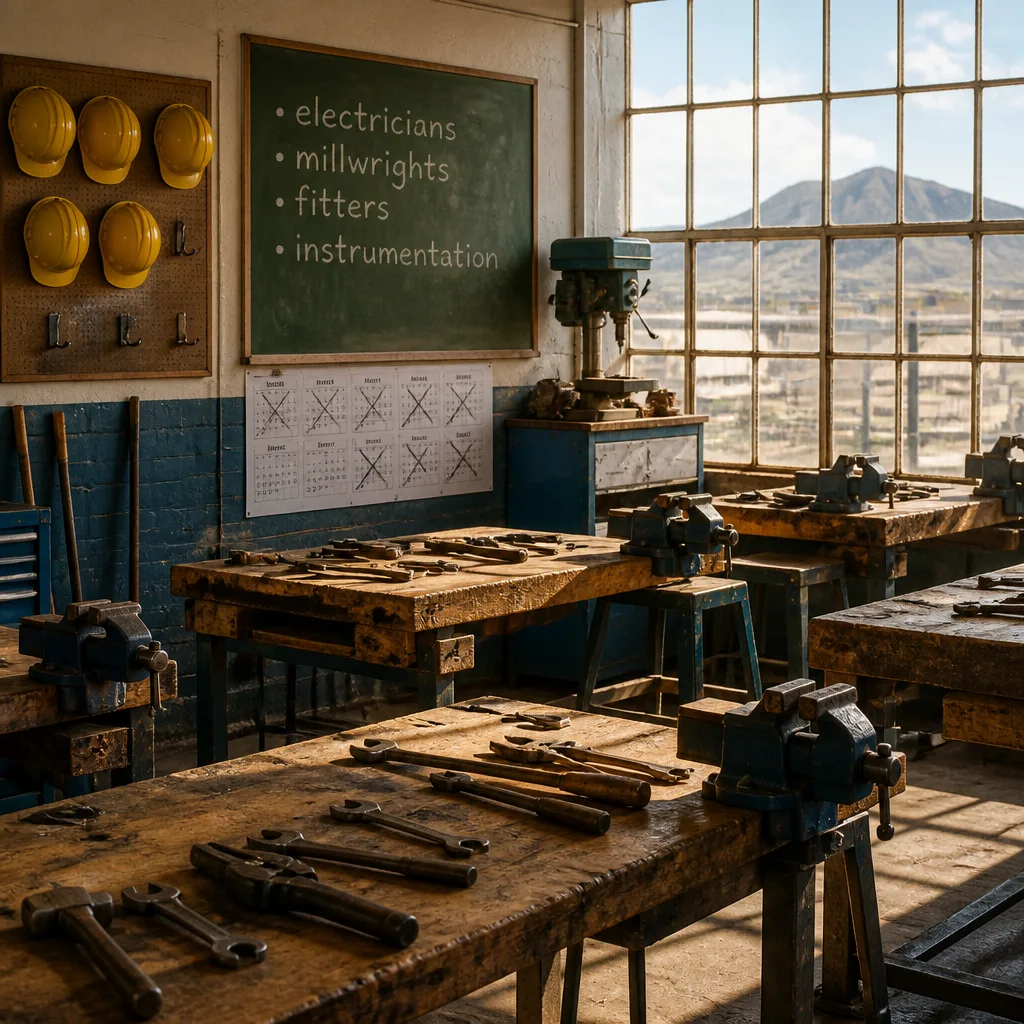
South Africa’s labour and industrial recovery may be undermined not by a lack of software developers or AI specialists, but by a deepening shortage of skilled tradespeople — electricians, millwrights, fitters and instrumentation technicians — industry sources reported.
Trades vacancies rising as artisans age
The share of companies struggling to recruit artisans rose from 10% in 2024 to 22% in 2025, a deterioration that industry commentators say is concentrated in roles vital to plant maintenance, infrastructure projects and energy roll-outs. Employers report vacancies for electricians, millwrights, fitters and instrumentation technicians among the hardest to fill.
Data cited in recent reporting show the average South African artisan is now in their mid‑fifties, while training output is far short of national targets. The National Development Plan envisages producing 30 000 qualified artisans a year by 2030, a figure that current training pipelines are not approaching.
"Every year the experienced hands get closer to retirement, and there aren't enough young people coming through to replace them," said Dr Andrew Dickson, Engineering Executive at CBi-electric, highlighting how the shortage affects manufacturing plants, mines and energy projects.
Training pipeline failing to deliver
Technical and vocational education and training (TVET) colleges are frequently held up as a solution, but throughput rates remain low. Even at its recent peak the national throughput rate for the National Certificate (Vocational) reached only 14% in 2024, according to the reporting. Over the past five years more than 2.6 million students entered the system; the majority did not complete on time or dropped out.
Those shortfalls mean firms face higher recruitment costs, delays in project delivery and limited capacity to maintain critical equipment — problems that reduce competitiveness and raise operational risk across industries that underpin economic growth.
- Recruitment pressure: Artisan recruitment difficulties more than doubled in one year (from 10% to 22%).
- Ageing workforce: The average artisan is in their mid‑fifties, signalling imminent retirements.
- Poor training outcomes: TVET throughput for NC(V) peaked at 14% in 2024; over five years 2.6 million entrants largely failed to advance.
Why this matters for technology and investment
The national narrative about the future of work has emphasised AI, coding and digital careers — and government has prioritised AI policy and talent development in its recent draft National AI Policy. International technology firms have also committed to large‑scale training initiatives. Yet the mismatch between hype and on‑the‑ground demand risks leaving sectors short of the practical skills needed to operate, repair and maintain physical assets.
Demand is growing most for roles that combine manual and diagnostic competence: electrotechnology engineers, mechanics, industrial equipment technicians and solar installation engineers. These are the occupations that keep factories running, mines productive and energy infrastructure online — and they are currently in short supply.
| Indicator | Figure |
|---|---|
| Share of companies struggling to recruit artisans (2024) | 10% |
| Share of companies struggling to recruit artisans (2025) | 22% |
| NC(V) throughput peak (2024) | 14% |
| Students entering system over five years | 2.6 million |
| NDP artisan target by 2030 | 30 000 per year |
For South Africans on tight training and job budgets, the implication is simple: government and industry interventions that focus exclusively on digital skills risk overlooking the trades pipeline that sustains much of the economy. Closing the gap will require coordinated action across TVET colleges, private training providers, employers and government policy to increase throughput, improve the attractiveness of trades careers and align curricula with real workplace needs.
Policymakers and employers face immediate choices: invest in scaled, quality artisan training and retention strategies, or accept longer project delays and higher maintenance costs. The shortfall is already shaping how companies plan maintenance regimes and schedule projects; unless reversed, it will become a binding constraint on growth in several sectors.
On the technology desk, this is a reminder that digital transformation depends on skilled hands as much as on code. The hardware that powers industry needs people who can install, maintain and diagnose it — and those people are increasingly in short supply.