“Niu Lai”, a low‑budget Chinese animated film, has defied expectations by turning online mockery into box‑office success, with audiences queuing to watch a movie widely praised for — and for many, because of — its rough animation and awkward dialogue.
From obscurity to viral hit
According to ticketing platform Maoyan, the film earned roughly 7,000 yuan (about R16,000) in its opening week beginning 5 August, before surging to about 33.06 million yuan (around R80 million) at the Chinese box office as social media attention snowballed. The title translates roughly as “Here Comes the Cow” and follows the story of a calf called Niu Lai and his relationship with his mother.
The animation was reportedly created by a mother‑and‑son duo, who worked frame by frame over five years and even wrote original music for the end credits. Little conventional advertising was done before the film’s breakout run; instead, memes and word of mouth drove interest, with some moviegoers describing the experience as a communal joke turned affectionate admiration.
Why audiences are turning up
The film’s stiff 3D character models and unpolished dialogue have been shared widely on social platforms, inviting both ridicule and a kind of ironic fandom. Several viewers embraced the movie’s imperfections as part of its charm, arguing that the evident human effort behind the project added emotional weight.
“It’s not perfect. But because it’s not perfect, it’s good, it shows how human it is... and I think that’s why this is trending,” said American musician Caelan Moriarty, who is working in China, to AFP.
Student viewers also helped fuel the craze. One student who watched the film in Beijing after seeing memes highlighted the film’s small, awkward details — the way the calf walks, for example — as elements that made it irresistibly funny and shareable, according to AFP reporting.
- Hand‑made appeal: The creators spent years on frame‑by‑frame animation and composed original music.
- Viral momentum: Social media memes and clips triggered mass curiosity rather than traditional marketing.
- Merchandise boom: Retailers moved quickly to produce T‑shirts, figurines and other items featuring the yellow cow.
Merchandise and cultural footprint
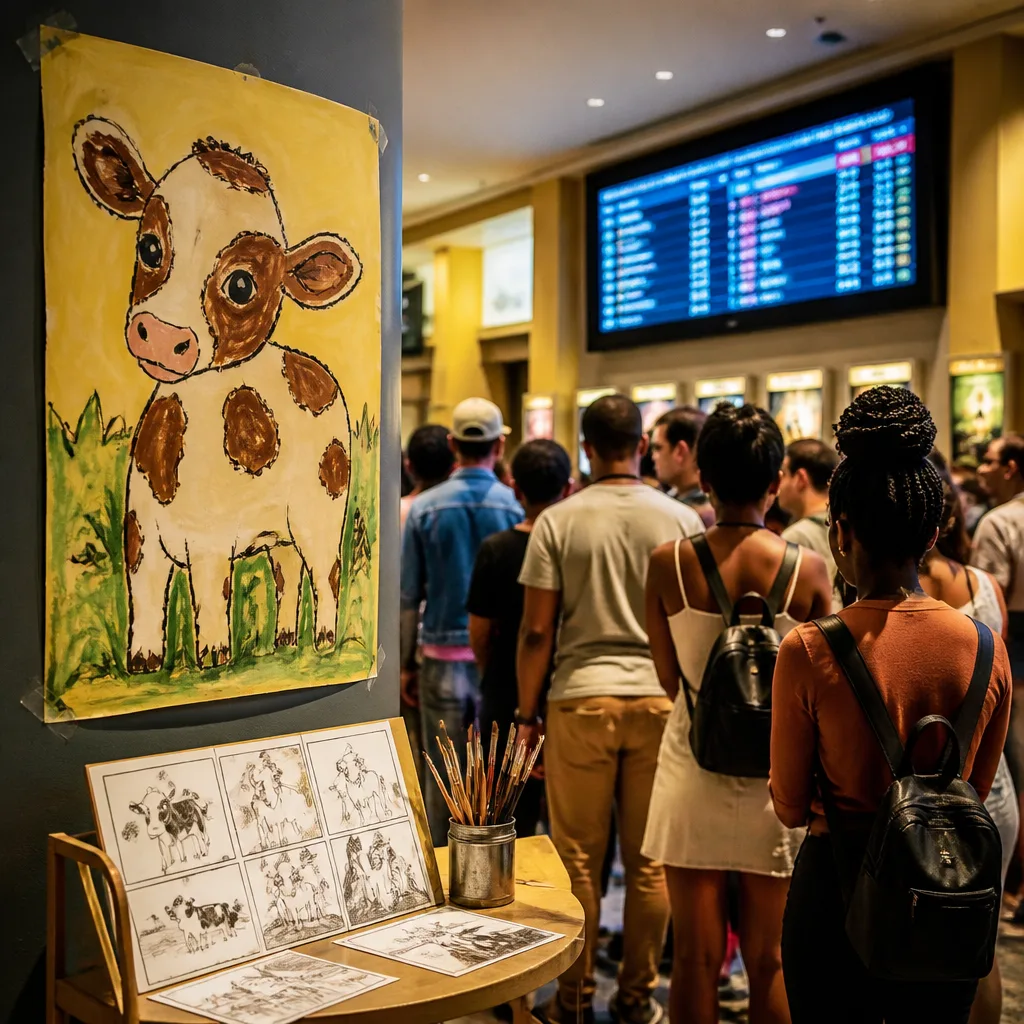
As online interest grew, sellers on platforms such as Taobao began offering a range of Niu Lai merchandise, from keychains to clothing, capitalising on the film’s unexpected popularity. In several cinemas, hand‑drawn banners depicting anthropomorphic cows stood in direct contrast to the polished posters for major studio releases screening nearby.
The phenomenon taps into a broader global conversation about the value of handcrafted work in an age of rapid artificial intelligence tools. Some commentators noted the film’s makers deliberately avoided AI shortcuts, something viewers found admirable even while laughing at the end result.
“Artificial intelligence could make the movie in like ten seconds or even faster,” Caelan Moriarty said to AFP, adding that the decision to take time and craft the work by hand was part of its appeal.
What it tells us about modern audiences
The success of Niu Lai highlights how contemporary audiences can turn mockery into commercial success, often driven by online communities that relish communal viewing experiences. For South African audiences who follow global pop culture trends, the film is a reminder that authenticity and human effort can resonate widely, even when the execution is imperfect.
While the movie’s long‑term cultural impact remains to be seen, its rapid climb from a nearly unnoticed release to a multi‑million‑yuan grosser is a case study in how the internet can rewrite a film’s destiny — sometimes in the most unexpected ways.