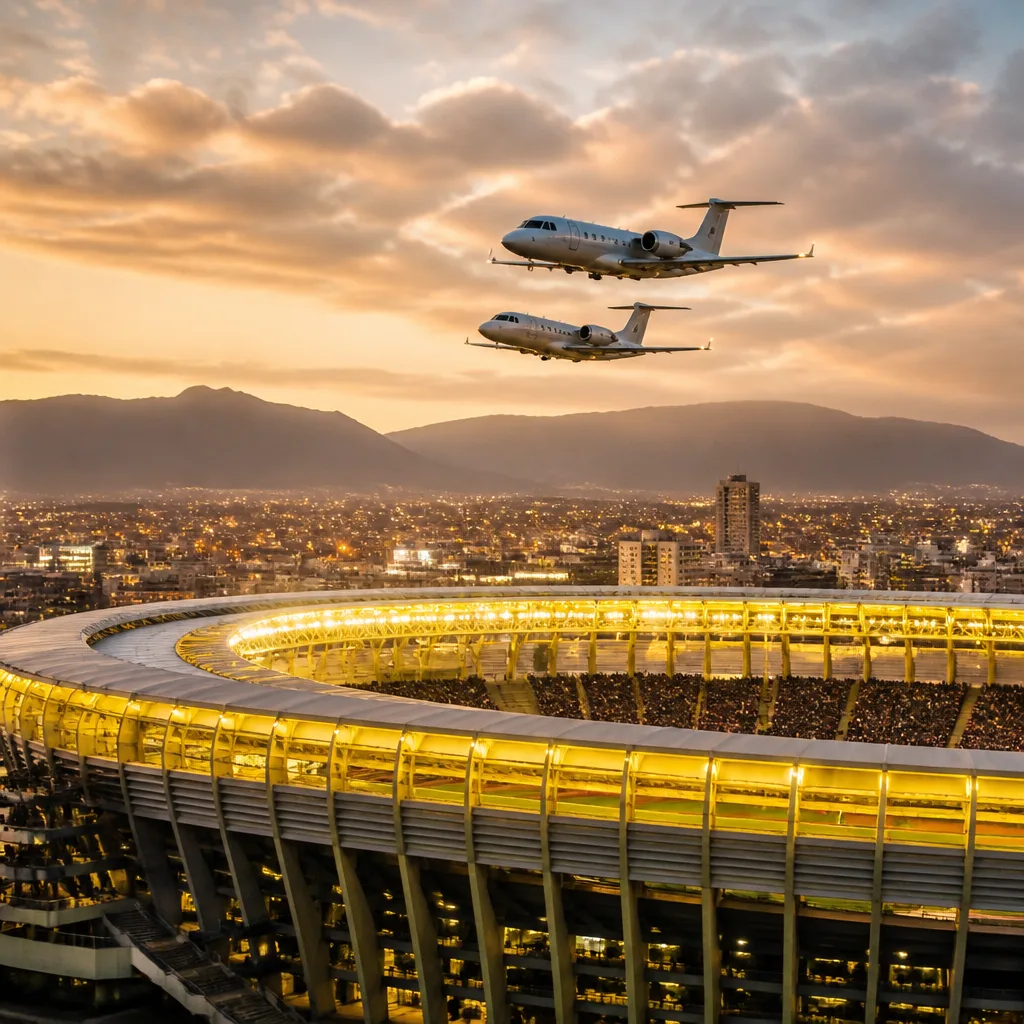
Two Embraer jets operated by regional carrier Airlink performed a low-altitude formation flyby over Cape Town’s DHL Stadium before the second rugby Test between South Africa and New Zealand, drawing cheers from an estimated 56,000-strong crowd and immediate public debate about flight safety.
Airline says manoeuvre was authorised and rehearsed
Airlink said the flyby was carried out in line with safety regulations and that the operation was carefully planned and rehearsed. The airline said each jet carried three senior captains filling the roles of commander, co-pilot and safety officer, and that neither aircraft was carrying passengers.
“Airlink notes the concerns expressed in various social media and online forums regarding yesterday’s formation flyby over Cape Town’s DHL Stadium,” the airline said on Sunday. “The flight demanded careful planning and rehearsal, as it required navigating at low altitude, at around 150 knots. The South African Civil Aviation Authority and Air Traffic Navigation Services provided valuable guidance, approval and support to ensure a safe flyby.”
Flight tracking service Flightradar24 estimated the lead jet passed roughly 12 to 14 metres above the stadium roof (about 41 to 46 feet). The formation’s speed was reported by the airline as approximately 150 knots (about 172 mph).
Public reaction and context
Footage and images of the pair of jets flying closely over the packed stadium circulated widely on social media, prompting both admiration and concern. Some viewers praised the spectacle, while others questioned the safety margin for aircraft operations above a crowded venue.
Flyovers by aircraft at major rugby fixtures have precedent in South African sport. The practice dates back to a Boeing 747 flypast over a Johannesburg stadium before the 1995 Rugby World Cup final between South Africa and New Zealand.
- Aircraft: Two Embraer jets operated by Airlink
- Crowd: Approximately 56,000 people
- Altitude reported: 12–14 metres above the stadium roof (41–46 feet)
- Speed: ~150 knots (172 mph)
- Onboard crew: Three senior captains per aircraft; no passengers
- Regulatory role: South African Civil Aviation Authority (SACAA) and Air Traffic Navigation Services provided guidance and approval, Airlink said
Questions remain about the operational approvals and risk assessment that authorised the flyby. Airlink named the SACAA and Air Traffic Navigation Services as having provided guidance and approval and said the event was a planned sponsorship activity; the airline is a sponsor of South Africa’s rugby union team.
At the time of publication, no official safety incident had been reported in relation to the flyby. It is not clear from the airline statement whether any additional formal risk assessments, notices to airmen (NOTAMs) or temporary flight restrictions were issued publicly in advance of the event.
Implications for future stadium flyovers
The episode is likely to prompt renewed scrutiny of the rules and public communication around low-altitude formation flights above large public gatherings. Aviation regulators, event organisers and carriers commonly rely on detailed planning and coordination for any authorised aerial displays. When such displays involve passenger-type aircraft over densely populated venues, public confidence depends on transparent explanations of the safety mitigations applied.
For now, Airlink has defended the operation as compliant and coordinated. Further comment from the SACAA or Air Traffic Navigation Services was not included in the airline’s statement and may clarify whether any additional conditions were attached to the approval.
This account is based on the airline’s statement, publicly shared flight tracking estimates and reporting of the event; some operational details may be subject to confirmation by aviation authorities.