
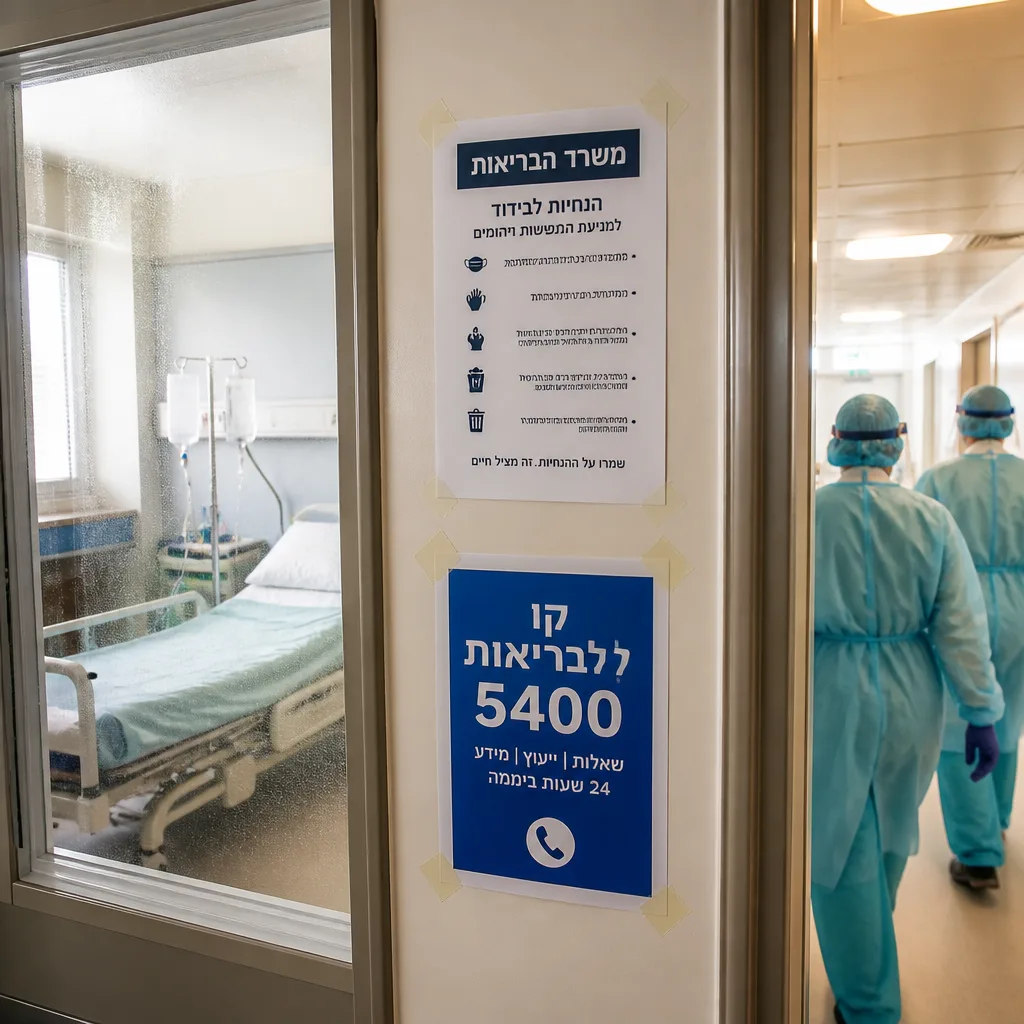
The Health Ministry has reported a suspected case of Ebola in a man who recently returned from the Democratic Republic of Congo (DRC) and was admitted to Soroka Medical Center in Beersheba after developing a fever, according to reporting by Times of Israel.
Patient isolated, tests pending
The patient was placed in isolation and is undergoing laboratory testing, with results expected within about 24 hours, the ministry said. At this stage, the ministry emphasised that Ebola is only a suspicion and that an epidemiological investigation has begun to determine potential contacts and exposure risks.
Israeli authorities also noted that two earlier suspected cases in June returned negative test results. The ministry said there has never been a confirmed case of Ebola in Israel to date, according to the report.
Public advice and travel guidance
Health officials urged caution for people planning travel to affected regions. The statement recommended avoiding all unnecessary travel to the DRC and Uganda, and in particular to areas within those countries where active infections have been reported.
“Anyone who has returned from one of those countries is urged to monitor their health. If they develop a fever or other unusual symptoms within 21 days of their return, they must stay home and avoid contact with others,” the ministry said, adding that symptomatic travellers should report via the ministry hotline at *5400.
- Patient currently isolated at Soroka Medical Center, Beersheba.
- Laboratory results expected within approximately 24 hours.
- Returnees from affected areas must monitor health for 21 days and report symptoms to *5400.
Context and implications for South African travellers
Though this incident occurred in Israel, it has relevance for South African travellers and health services. Ebola virus disease can present with non‑specific early symptoms such as fever and malaise, which can initially resemble more common illnesses. Rapid isolation and laboratory confirmation are essential steps to prevent onward transmission.
South Africans travelling to or returning from regions with known Ebola activity should consult a travel clinic before departure and follow the advice of public‑health authorities on return, including self‑monitoring and reporting any febrile illness. Health practitioners should take a travel history from febrile patients and consider appropriate infection prevention precautions while awaiting laboratory confirmation.
What we know so far
| Item | Detail |
|---|---|
| Facility | Soroka Medical Center, Beersheba |
| Testing turnaround | Results expected within ~24 hours |
| Recommended monitoring period | 21 days after return from affected country |
| Previous suspected cases (June) | 2 — both negative |
Health services in South Africa routinely screen returning travellers for notifiable and high‑consequence infections. Should a suspected Ebola case present locally, Provincial Departments of Health and the National Department have protocols for containment, contact tracing and laboratory confirmation through designated public‑health laboratories.
While the situation is evolving, there is no indication in the reporting that the patient has been confirmed positive. Laboratory confirmation is the only reliable basis to declare an Ebola case. The ministry's prompt isolation and investigation are consistent with best practice for suspected viral haemorrhagic fevers.
As always, people experiencing illness after travel should seek clinical assessment rather than self‑diagnose, and follow the advice of health authorities. Clinicians with concerns about possible high‑consequence infections should contact their provincial health authorities for guidance on isolation, testing and contact management.
This report is based on a Health Ministry statement as reported by Times of Israel. We will update as further official information and laboratory results become available.











