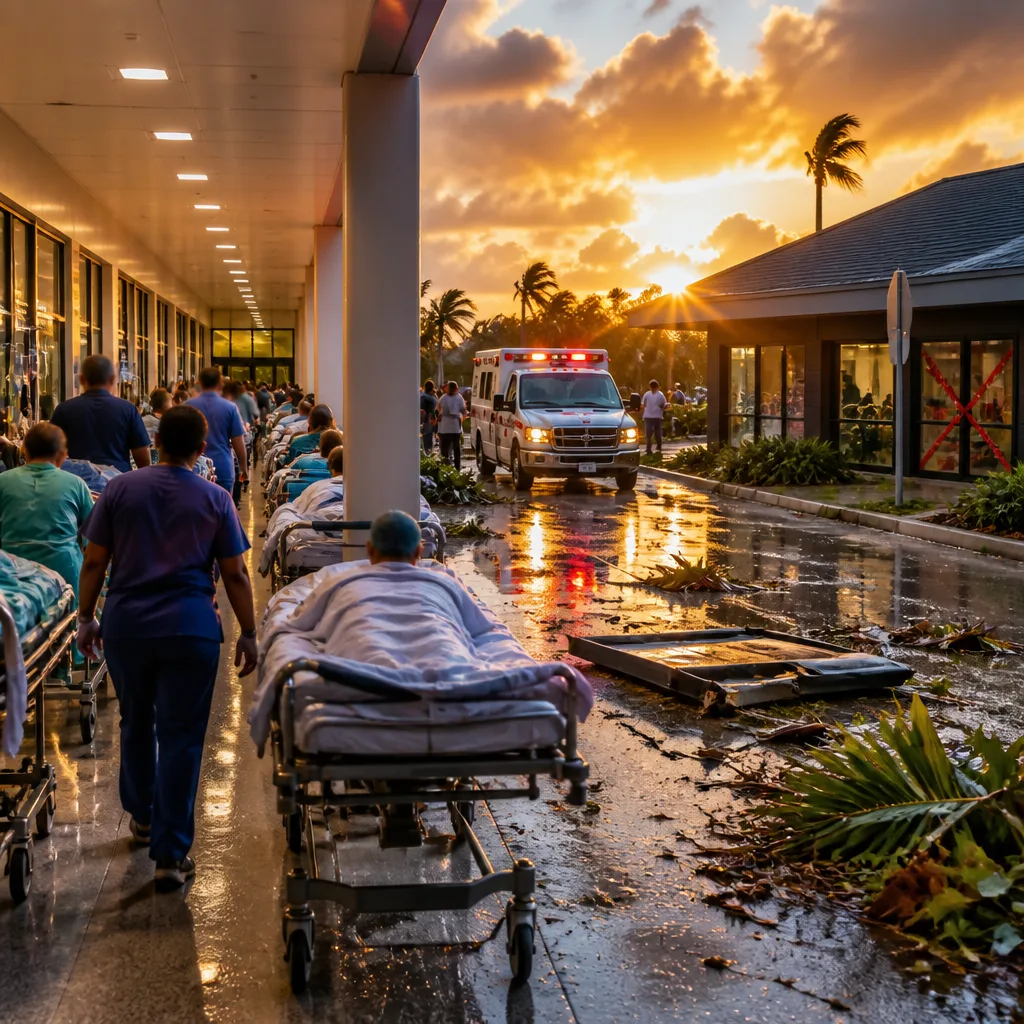
New research into health service use following Tropical Storm Helene in western North Carolina shows that when primary care and community health services were interrupted, patients increasingly turned to hospital emergency departments for a range of needs — including anxiety, alcohol‑related issues and pregnancy‑related care.
Primary care closures pushed patients to emergency departments
Researchers from N.C. State University and Appalachian State University analysed emergency department (ED) activity across nearly 130 EDs and focused on 19 hard‑hit counties. They compared three post‑storm windows — the first two weeks after landfall, weeks three through seven, and weeks eight through 14 — with the same dates in 2023 to gauge changes in demand.
The studies, led respectively by Jen Runkle and Maggie Sugg, found notable increases in ED visits among people aged 65 and older and spikes in visits for anxiety, alcohol‑related conditions and pregnancy‑related problems. The pattern highlights how disruptions to routine care and community services can shift burden onto hospital emergency services, which are already vulnerable to power, water and staffing interruptions after severe weather.
“Once the roads opened up, I left and went to Winston‑Salem just to get back online. My inbox was full of patients who still needed their medicines … needed primary care,” said Mark McNeill, a primary care physician in Asheville and founder of Trillium Family Medicine, who described the local experience reflected in the data.
The qualitative account from clinicians matches the quantitative analyses, indicating that when primary care practices were closed immediately after the storm, patients delayed care or sought help at EDs once travel became possible. This influx added pressure to hospitals already dealing with infrastructure and staffing challenges in the aftermath.
What the findings mean for health system resilience
Although the research is based in North Carolina, the implications are relevant wherever extreme weather or other emergencies interrupt routine care. Key takeaways include:
- Continuity of primary care is essential to prevent avoidable ED presentations when routine services resume.
- Mental health and substance‑related needs increase after storms and require pre‑positioned community responses.
- Maternity and pregnancy care are vulnerable when outpatient obstetric services are disrupted, driving patients to EDs.
These findings underline the importance of emergency planning that preserves access to chronic and perinatal care, maintains medication supplies and provides mental health support during and after disasters.
| Study element | Detail |
|---|---|
| Geography | 19 western North Carolina counties |
| Facilities analysed | Nearly 130 emergency departments |
| Time windows compared | Weeks 0–2, 3–7 and 8–14 after landfall versus same periods in 2023 |
Health planners should note the temporal pattern: an immediate disruption to outpatient care followed by a surge in ED demand as mobility and access return. This suggests that short‑term restoration of primary care services and alternative access points — such as mobile clinics, telehealth where feasible, and coordinated medication refill systems — could reduce downstream pressure on hospitals.
Clinicians and health administrators quoted or described in the reporting emphasised the practical consequences: an overwhelmed inbox of patients needing medication and routine management, and emergency departments attending to conditions that would normally be managed in the community.
For readers, it is important to remember that while these studies identify broad patterns after a storm, individual responses depend on local service availability. If you or a family member require ongoing treatment, contact your primary care facility or nearest clinic after a weather event, and seek emergency care when your condition is life‑threatening. Always consult a healthcare professional rather than self‑diagnosing or altering prescribed therapies without advice.