Minister in the Presidency Khumbudzo Ntshavheni has rejected what she described as a deliberate misrepresentation of life in South Africa and warned those who are unhappy here to leave the country peacefully rather than seek to destabilise it.
Diplomatic tensions after White Cross display in Washington
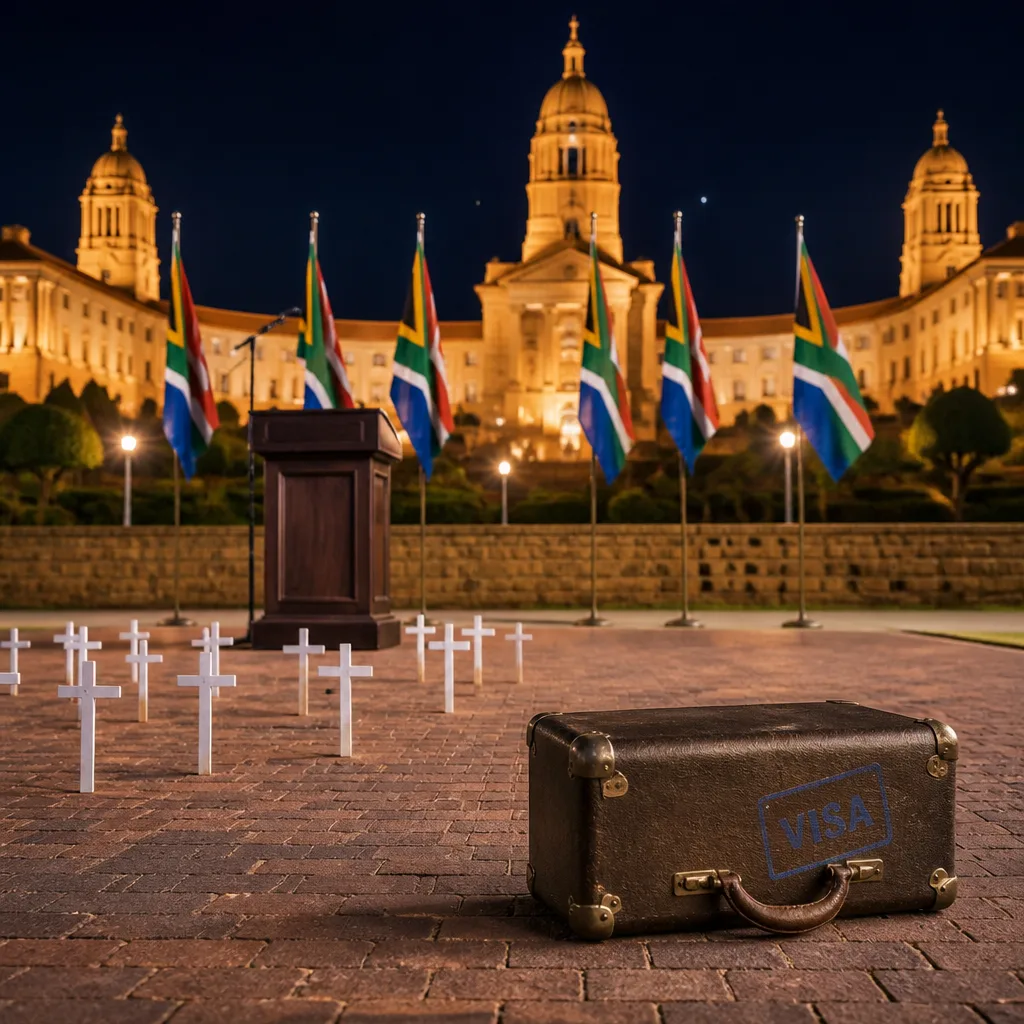
The remarks follow a campaign in Washington, DC, where a lobby group planted about 3 000 white crosses near the Washington Monument to draw international attention to farm attacks in South Africa. The display coincided with growing friction between the two governments, including new US visa restrictions linked to concerns over aspects of South African reform policies.
Ntshavheni told reporters that efforts to portray South Africa as an unsafe or failing state were inaccurate and dangerous to national stability. She stressed the government would not abandon its policies designed to address historical inequality, particularly black economic empowerment and local beneficiation of critical minerals.
"So, if you are not happy, leave in peace and when you want to come back, because you are a South African, come back in peace. But do not destabilise this country. The destabilisation of this country is not in the best interests of any of us."
She also said that Pretoria had responded to the US concerns but would not be coerced into reversing long-standing redress measures. On the question of access to minerals, she said foreign partners must accept South Africa's terms for participation and processing.
"You want to have access to our critical minerals, it must be done on our terms, and our terms are that you are going to beneficiate closest to source and you are going to have South Africans participating meaningfully, and the state participating meaningfully for that matter."
What the minister said and what remains unclear
Ntshavheni argued that the US position was inconsistent, noting Washington also pursues its own redress policies. She framed South Africa's approach as a sovereign duty to ensure citizens benefit from national resources and development.
Details remain limited about direct diplomatic exchanges between Pretoria and Washington. Government spokespeople said Pretoria had engaged on the so-called "Five Asks" reportedly put forward by US interlocutors, but Ntshavheni emphasised that engagement did not equate to capitulation.
- White Cross action: around 3 000 crosses placed near the Washington Monument to highlight farm attacks.
- South African stance: firm on black economic empowerment and on beneficiation near source.
- US action: new visa restrictions announced; government says it has responded but will not backtrack on policy.
Context and consequences
The episode sits at the intersection of human-rights advocacy, diaspora activism and high-stakes economic diplomacy. Measures on local beneficiation and state participation in mineral value chains are central to South Africa's post-apartheid economic strategy. They also affect foreign direct investment flows, particularly from countries seeking access to critical minerals.
Visa restrictions are a diplomatic tool with immediate human consequences for travel and commerce and longer-term implications for bilateral cooperation. The minister's refusal to alter policy signals Pretoria's intent to prioritise domestic economic transformation over rapid rapprochement if the two are presented as mutually exclusive.
Analysts say the standoff could complicate investment negotiations in mining and critical minerals, sectors where both US companies and the South African state have overlapping interests. It may also prompt further public campaigns by advocacy groups abroad, while hardening rhetoric at home.
Next steps
Government has indicated it will continue to engage with the US, but Ntshavheni's comments underline clear policy red lines. Observers will watch for any formal diplomatic exchanges, revised US measures, or shifts in investor behaviour.
| Issue | Current position |
|---|---|
| Visa restrictions | US has imposed new measures; Pretoria says it has responded |
| Beneficiation of minerals | Non-negotiable: processing closest to source, meaningful South African participation |
| Public activism abroad | White Cross campaign highlights farm-attack concerns; government calls it a false narrative |
Ntshavheni's remarks are part of a broader government narrative that frames economic transformation and social redress as matters of national sovereignty. How Washington responds, and whether either side adjusts tactics, will shape bilateral ties in the coming months. Further details are still developing.