
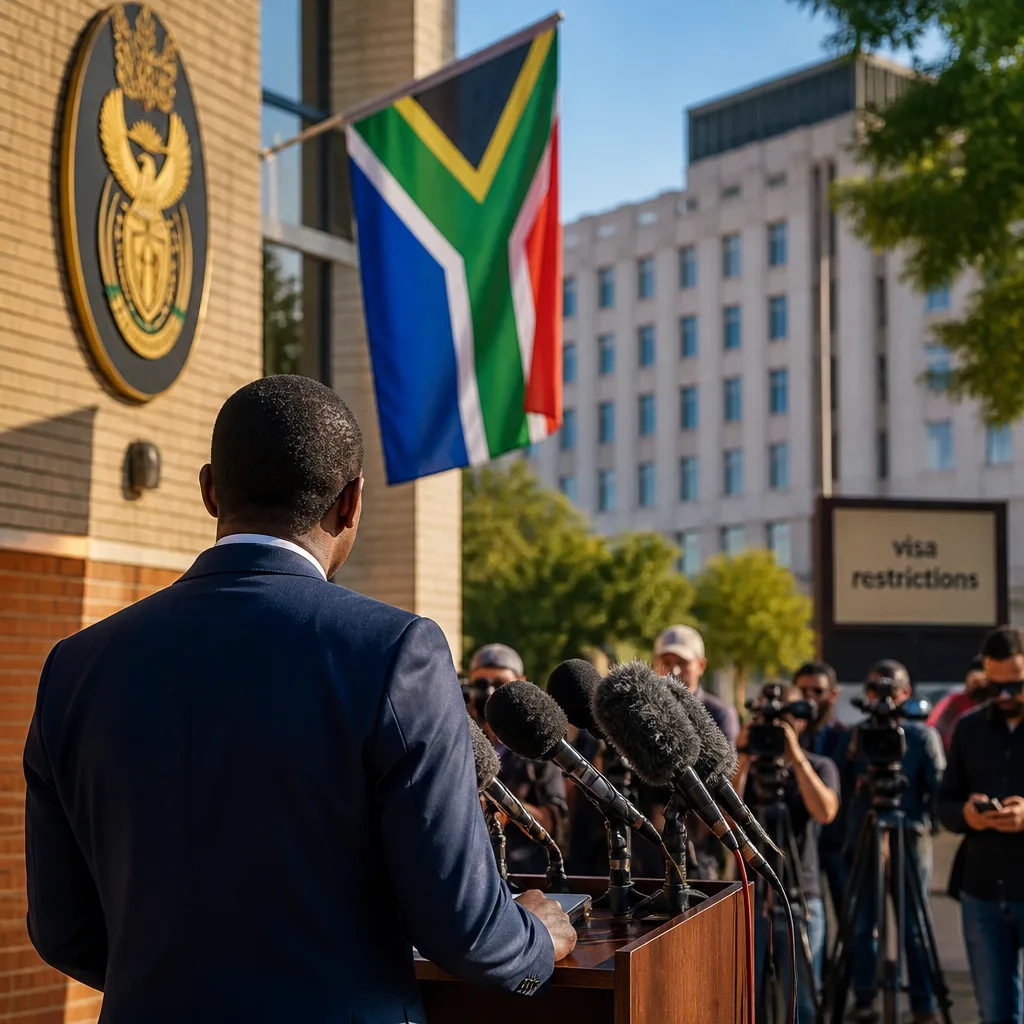
South Africa’s Ambassador to the United States, Roelf Meyer, has dismissed claims of a so‑called “white genocide” as false, saying the narrative is being pushed by a small group seeking to shape opinion in Washington.
Diplomatic damage control
Meyer said the framing of violent crime in South Africa as a racial campaign is incorrect and unhelpful. He told reporters that violent crime affects people across racial lines and should not be reframed as a racial issue.
“The point is, I think there’s a question mark about why people are coming with this kind of allegations, untrue stories, to Washington. If it’s going to help the situation with regard to crime in South Africa, the prevention of further crime in South Africa, it makes sense. But unfortunately, the American market for them, other purposes, I think. And for that reason, I think we have to distance ourselves from this attempt.”
Meyer said Pretoria will continue to engage Washington to counter what it regards as misinformation and to rebuild strained relations. His comments come amid tensions over crime, land reform and recently announced US visa restrictions.
Visa restrictions and land reform
The ambassador said South Africa is seeking clarification from the US State Department about the visa restrictions the United States linked to land expropriation. Meyer said the government had already responded to concerns raised by the US administration and was surprised by the decision to impose restrictions.
He described his current task in Washington as one of seeking further answers and clarity so that Pretoria can decide whether any follow‑up reaction is necessary. From South Africa’s perspective, Meyer said, the government had been clear in its explanations and therefore did not see the need for restrictions at this stage.
Signs of improvement, but engagement continues
Despite the tensions, Meyer said there are signs of improvement in relations between Pretoria and Washington. He emphasised that diplomatic engagement is continuing and that dialogue is the key to narrowing differences.
He also said South Africa is seeking to strengthen trade and investment ties with the United States, signalling that economic cooperation remains a priority even as the two countries navigate sensitive political issues.
- Key issues: crime, land reform, visa restrictions, misinformation
- Ambassador’s aim: seek clarity from the US State Department; counter misleading narratives
- Approach: continued diplomatic engagement to rebuild relations and expand trade ties
The ambassador’s rejection of the “white genocide” narrative is notable because the phrase has been used in some international forums to describe attacks on white South Africans. Meyer characterised those claims as untrue and suggested they are promoted by a limited number of actors attempting to influence opinion abroad rather than by an accurate reflection of conditions on the ground.
His remarks underline the delicate balancing act for South African diplomacy: defending domestic policy decisions such as land reform while maintaining constructive relations with a major bilateral partner. The visa measures announced by the US, tied to land expropriation concerns, have already created friction. Meyer’s mission in Washington will now include pushing for explanations and seeking opportunities to resolve misunderstandings.
It remains unclear what timeframe Pretoria expects for a response from the State Department, or what concrete steps either side might take if differences persist. Meyer’s comments indicate that South Africa will prioritise engagement and clarification before escalating its response.
Further developments are likely as officials in Pretoria and Washington continue talks. This report will be updated as more details emerge.














