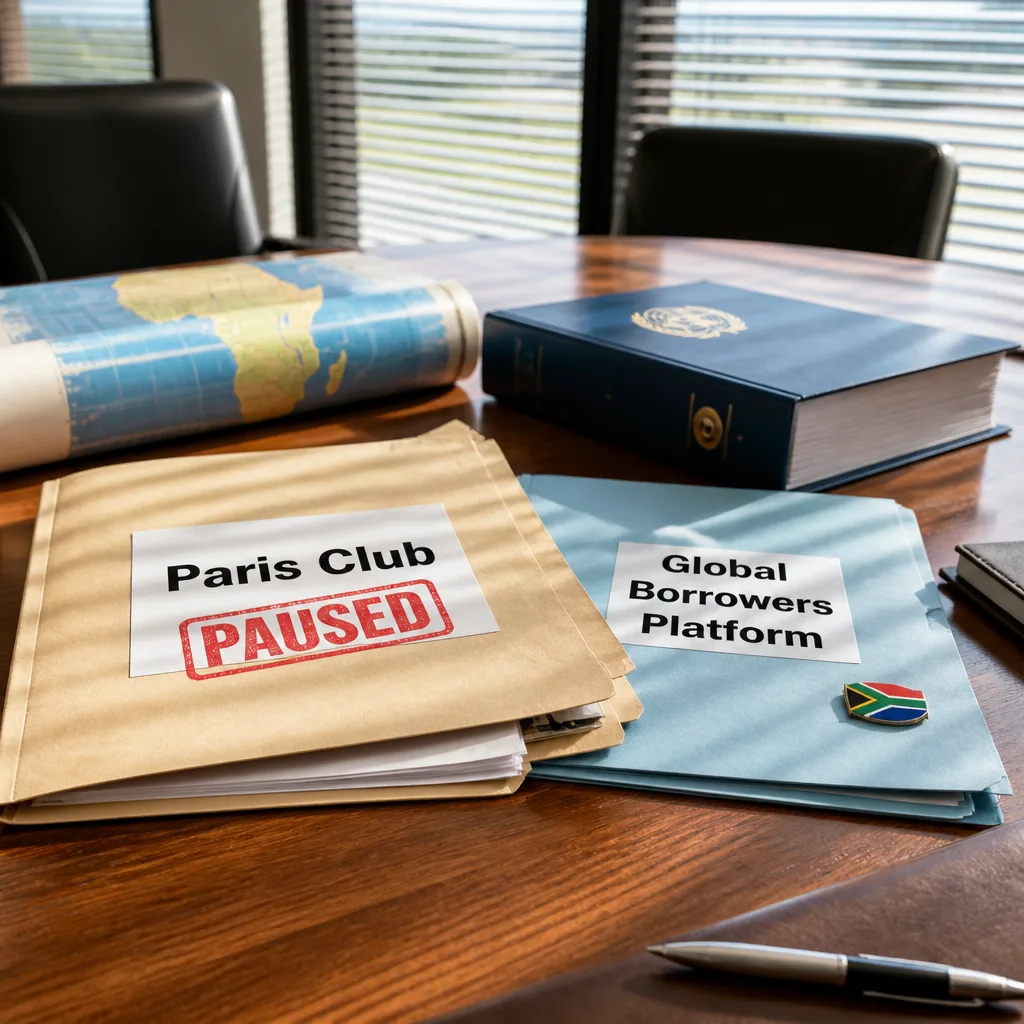
South Africa has informed the Paris Club it will not pursue full membership for now, the National Treasury said on Tuesday, and will instead focus on participation in a United Nations-backed Global Borrowers’ Platform that began operating in April.
Change in approach to creditor forums
The Treasury said South Africa will continue to engage the Paris Club as an ad-hoc participant and will remain active in official creditor committees established under the G20 Common Framework. The shift follows the government’s move to align with the Global Borrowers’ Platform, which describes itself as “a borrower-led space to share knowledge and amplify their collective voice.”
“In June this year, South Africa informed the Paris Club that it would continue its engagement with the institution as an ad-hoc participant, rather than pursue full membership at this time, noting its active engagement with the newly launched Global Borrowers’ Platform,” the National Treasury said.
The announcement clarifies South Africa’s role in multilateral debt discussions after it had been considered a prospective Paris Club member since 2022. The country has been an active participant in debt restructuring cases handled by the Paris Club and has served as vice-chair of the Official Creditor Committee for Zambia.
Context and consequences
South Africa’s decision comes amid broader calls for reform of the international financial architecture. The Treasury said the need for urgent reform of global financial institutions and mechanisms for debt resolution, which disproportionately affect developing countries, continues to shape its engagement across platforms.
- Continued Paris Club engagement: South Africa will remain involved as an ad‑hoc participant in Paris Club discussions.
- Active role in G20 Common Framework: The country will continue to participate through official creditor committees under the Common Framework.
- Alignment with borrower coalition: Priority engagement will be with the Global Borrowers’ Platform, a borrower-led coalition that began operating in April.
Analysts and stakeholders will watch how the recalibration affects South Africa’s influence in creditor negotiations and its ability to shape debt-relief outcomes for other developing countries. The country has previously used the G20 Common Framework when restructuring its own pandemic-related sovereign debt issues, after experiencing default pressures in 2020.
| Year | Event |
|---|---|
| 2020 | South Africa became the first African country to adopt the G20 Common Framework approach following pandemic-era debt pressures. |
| 2022 | South Africa was identified as a prospective Paris Club member. |
| April 2026 | The Global Borrowers’ Platform officially began operating. |
| June 2026 | South Africa notified the Paris Club it would remain an ad‑hoc participant while engaging the Global Borrowers’ Platform. |
The Treasury statement did not set a timetable for any future application to join the Paris Club as a full member. It framed the decision as part of a broader strategy to support reform of international financial institutions and to bolster collective bargaining power for borrowing nations.
Observers will be monitoring how this stance affects South Africa’s diplomatic relations with major creditor nations that make up the Paris Club, as well as its capacity to influence debt-restructuring negotiations in Africa and beyond. Details on how South Africa will divide resources and personnel between the Paris Club, the G20 Common Framework committees and the Global Borrowers’ Platform were not provided in the Treasury response and remain developing.