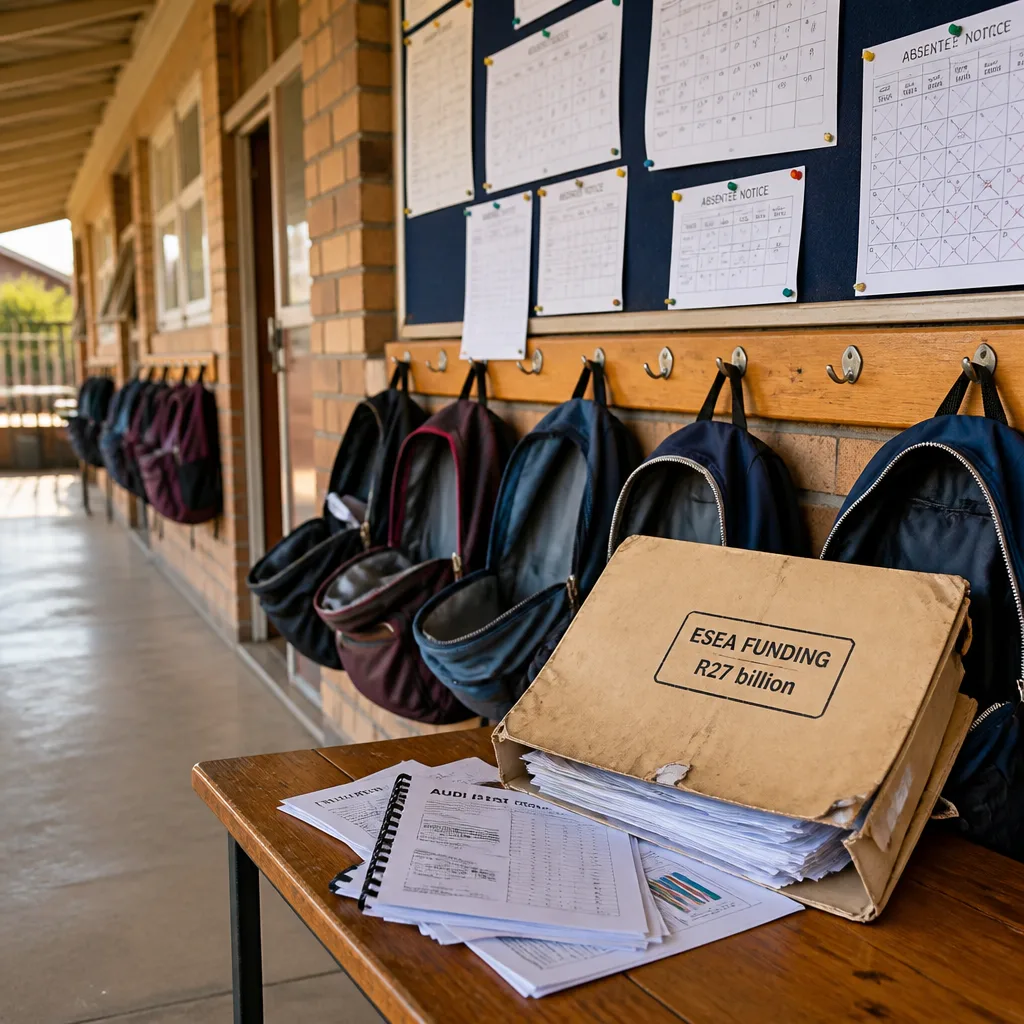
The US Government Accountability Office (GAO) has found that the Department of Education curtailed its most comprehensive monitoring of the Elementary and Secondary Education Act (ESEA) while chronic absenteeism in K-12 schools remains at alarming levels, according to a new report released this month.
Oversight reduced as attendance crisis persists
GAO estimates that at least one quarter of K-12 students were chronically absent in recent years — defined by the Department as missing 10% or more of school days. The watchdog says this sustained level of absenteeism coincided with the department discontinuing its broad monitoring of both programme and fiscal requirements under ESEA in 2026.
That monitoring mechanism is the principal federal tool for ensuring that states spending ESEA funds comply with legal requirements. GAO warned that the move exposes Title I and other ESEA funding to an elevated risk of undetected fraud, waste or abuse, noting Title I fiscal rules accounted for roughly two-thirds of nearly R27 billion in ESEA funding in fiscal year 2025.
Questions about the data used to track absenteeism
The GAO report also flagged problems with how the Education Department calculates chronic absenteeism rates, describing the method as producing results that are, in some cases, implausible. GAO concluded the calculation approach reduces confidence in national and state figures and undermines efforts to identify and respond to schools with the greatest need.
"K-12 Education: Actions to Improve Oversight of Key Federal Programs and Address High Chronic Absenteeism"
GAO reviewed departmental guidance and monitoring reports dating back to 2019 and criticised statutory gaps that limit the Department's ability to carry out frequent, well-defined monitoring. The office urged Congress to consider clarifying ESEA provisions to ensure stronger federal oversight of grantees.
Policy implications and what is at stake
The findings link two core concerns: persistent absenteeism following the COVID-19 disruption and weaker federal scrutiny of how billions are spent to support disadvantaged learners. GAO highlighted that 36 states have chosen to include chronic absenteeism indicators in their statewide accountability systems under the Every Student Succeeds Act (ESSA), yet the federal monitoring structure that could verify how well those systems work has been pared back.
For policymakers and education leaders, the report raises practical questions about how to restore reliable oversight and ensure attendance data are robust enough to guide intervention. GAO recommends action both within the Department and by Congress to tighten monitoring practices and improve the accuracy of absenteeism measures.
- At least 25% — estimated share of K-12 students chronically absent in recent years.
- R27 billion (approx.) — total ESEA funding in fiscal year 2025; Title I fiscal requirements make up about two-thirds of this amount.
- 36 states — include chronic absenteeism in their ESSA accountability systems.
| Issue | GAO finding |
|---|---|
| Monitoring | Comprehensive ESEA monitoring discontinued in 2026 |
| Data quality | Chronic absenteeism calculations produce unreliable results |
| Fiscal risk | Heightened risk of undetected misuse of Title I funds |
The report does not invent new attendance figures or propose specific remedies; rather, it calls attention to gaps that make it harder to hold systems to account. For education leaders, the practical effect is clear: without reliable data and active oversight, efforts to target support to learners most affected by absenteeism will be hindered.
Policy responses will need to balance restoring monitoring capacity with improving how absenteeism is measured and reported. GAO suggested Congress could close statutory gaps by specifying monitoring expectations and frequency, enabling the Department to verify state compliance and the proper use of federal funds.
While the report focuses on federal structures in the United States, its core message is relevant to any education system: dependable data and active external oversight are essential to protect public investment in schools and to ensure that attendance challenges are identified and tackled before they compound learning losses.