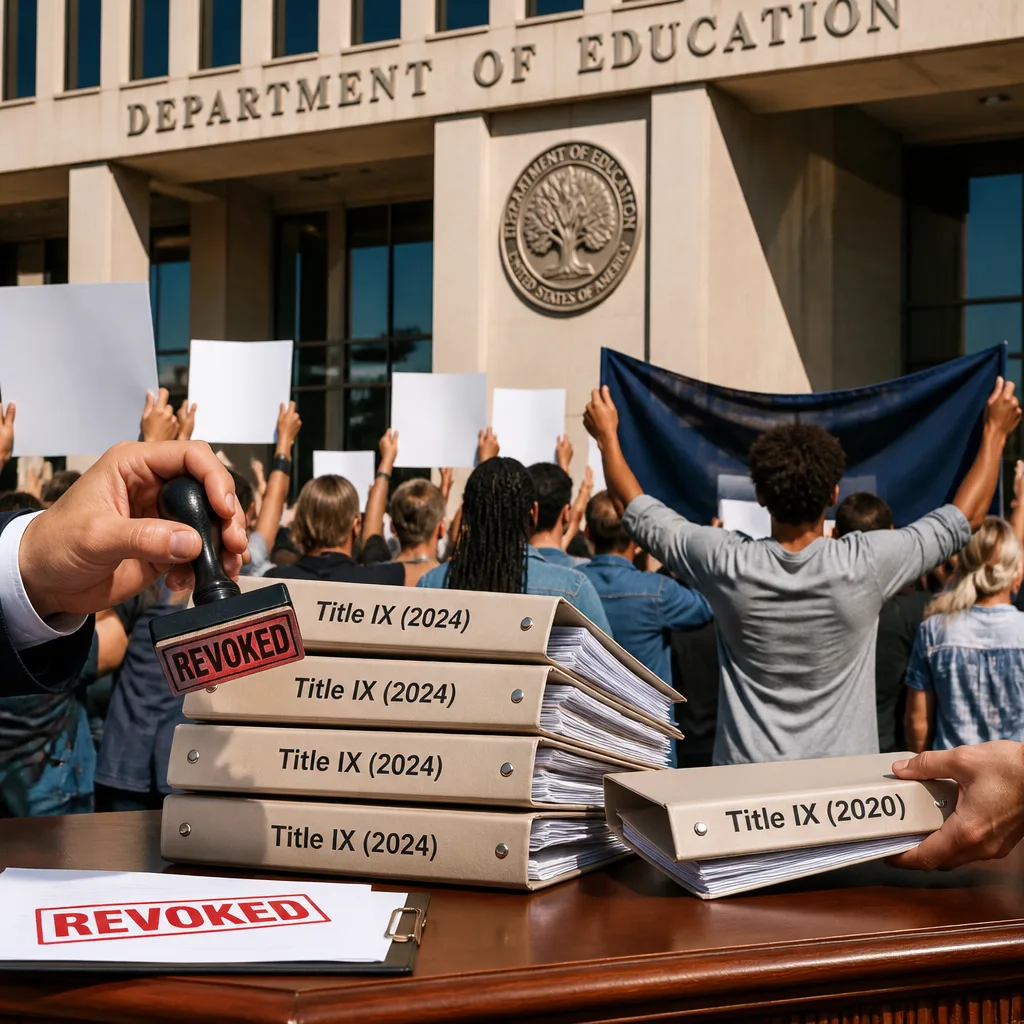
The US Department of Education has formally scrapped the Biden-era Title IX rule that extended protections against sexual harassment and assault to LGBTQ students, reverting to a regulatory framework finalised in 2020, reported The 74.
What the change does and does not do
The department’s action removes the 2024 rule’s expanded duties for districts, including prompt investigations and coverage of off-campus incidents, but it did not, at this stage, publish an amended definition of sex that would limit protections to the sex assigned at birth. Education Secretary Linda McMahon indicated a further amendment is expected.
“It was boys in boys’ sports and girls in girls’ sports,” McMahon said on OutKick host Dan Zaksheske’s show, calling the move a “full return” to Trump-administration policy.
The 2020 rule — completed under former Education Secretary Betsy DeVos — introduced procedural requirements such as live hearings so an accused student could respond to allegations. It also narrowed the categories of sexual-harassment and assault complaints that schools were required to investigate. Those aspects drew support from conservative lawmakers and criticism from advocates concerned about narrowing protections for survivors.
Responses and likely consequences
Republican lawmakers welcomed the department’s decision. Rep. Tim Walberg, then chair of the House education committee, said returning to the 2020 regulations “restores longstanding protections for women and girls” and aligns policy with court precedents, according to The 74.
Advocates for survivors and LGBTQ students warned the change revives earlier concerns about weakening institutional responsibilities to investigate and address sexual misconduct in schools. Shiwali Patel, senior director of education justice at the National Women’s Law Center, said the move risks eroding protections at a time when sexual harassment and assault remain pervasive, The 74 reported.
- 2024 rule: Broader coverage of complaints, requirement for prompt investigations, included off-campus incidents.
- 2020 rule: Narrowed which complaints schools must investigate; required live hearings and more procedural safeguards for the accused.
- Next steps: The department has not yet published a rule redefining sex but signals further amendments are planned.
| Feature | 2020 rule | 2024 rule |
|---|---|---|
| Scope of complaints schools must investigate | Narrower | Broader (including some off-campus incidents) |
| Procedural requirements | Live hearings; increased procedural protections for accused | Less emphasis on live hearings; faster investigations |
Legal challenges shaped the context. Secretary McMahon highlighted court decisions that had struck down parts of the 2024 rule as justification for withdrawing it. The administration’s focus included preventing transgender students from participating in women’s sports, though the department stopped short of immediately defining sex as the sex identified at birth.
For schools and districts this reversal creates immediate compliance and policy questions. Institutions that had begun implementing the 2024 requirements may need to reassess investigation protocols, training for staff, and how they handle reports that occur off school grounds. For survivors and advocates, the shift signals renewed debate over how educational institutions balance procedural protections for the accused with robust responses to harassment and assault.
As the Education Department prepares further rulemaking, parents, teachers and learners face uncertainty about which safeguards will govern campuses. The coming amendment that could redefine sex in Title IX policy is likely to attract further litigation and public debate.
Reported by The 74.