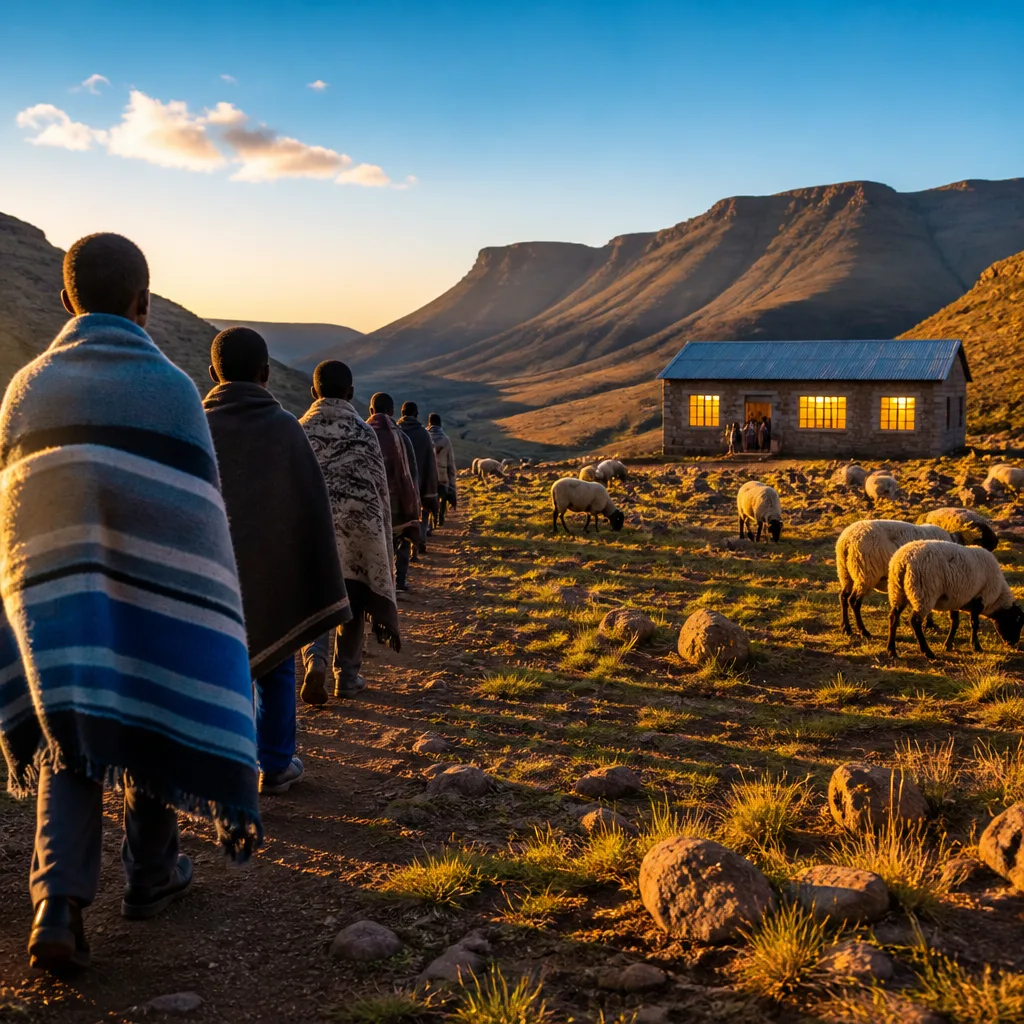
Dozens of young men in central Lesotho climb down rocky mountain paths as dusk falls to reach a single brightly lit classroom where they can study after a day caring for livestock. The part-time programme, based near Mokhotlong and attended by shepherds from surrounding cattle posts, is filling an educational gap created by poverty, tradition and the demands of pastoral work.
A route to learning after a day with the flocks
Photographs and reporting from the area depict groups wrapped in wool blankets making long, sometimes hour-and-a-half walks to reach the Good Shepherd night school in Semonkong, where more than 40 herders gather each evening. The pupils include boys and young men who spend months at a time isolated on mountain pastures tending animals — a responsibility that often replaces formal schooling.
"I started working with animals when I was 9. I only finished primary school,"
The quotation accompanies images of two students, Kabelo Mohai and Lepeli Maapesa, who are among tens of thousands in Lesotho engaged in herding. The work is deeply embedded in the country’s economy and social life: wool and mohair together make up nearly 60% of agricultural exports and pastoral livelihoods support about a quarter of the rural population, according to the reporting.
Scale and consequences
A World Bank analysis of 2018 data cited in the report found that nearly half of all boys in Lesotho were engaged in some form of herding. For many of those children, attendance at a daytime school is impossible; remote cattle posts and long periods away from villages sever routine contact with formal education.
The night-school model seeks to reconcile those demands by offering classes outside the conventional school day. Organised on a shoestring budget, these part-time classes are often the only educational option available to young herders.
What the evening classes provide
Though descriptions of the curriculum are limited in the source reporting, the night classes emphasise foundational literacy and numeracy — the basic skills that can enable further learning or improve daily life and future employment prospects. For shepherds who missed portions of primary school, these sessions can be a crucial second chance.
- Accessibility: Evening hours allow learners to fulfil herd duties during the day.
- Scale: More than 40 regular attendees were reported at the Semonkong night school.
- Economic context: Reliance on wool and mohair creates structural incentives for boys to herd rather than attend school.
Policy and practical implications
The situation raises questions about how education systems can adapt to the realities of rural livelihoods. Where cultural and economic practices place children outside the reach of daytime schooling, alternative modes — such as part-time, evening and mobile learning — may be necessary to broaden access. Small, community-run initiatives can provide immediate relief, but scaling and sustaining them will require funding, teacher support and integration with national education strategies.
For learners like those who make the trek to Semonkong, the evening classes represent more than lessons; they are an opportunity to remain connected to learning while meeting family and community obligations. The reporting underscores the importance of flexible approaches that keep learners, teachers and parents at the centre of education planning in rural and pastoral contexts.
| Indicator | Reported figure |
|---|---|
| Share of agricultural exports (wool & mohair) | ~60% |
| Rural population supported by pastoral products | ~25% |
| Proportion of boys engaged in herding (World Bank, 2018) | Nearly 50% |
The night-school example from Lesotho offers a practical model for neighbouring countries facing similar tensions between pastoral livelihoods and schooling. As jurisdictions seek to increase retention and learning outcomes, targeted support for flexible, community-led education could help ensure that children working in the fields or tending animals are not left behind.