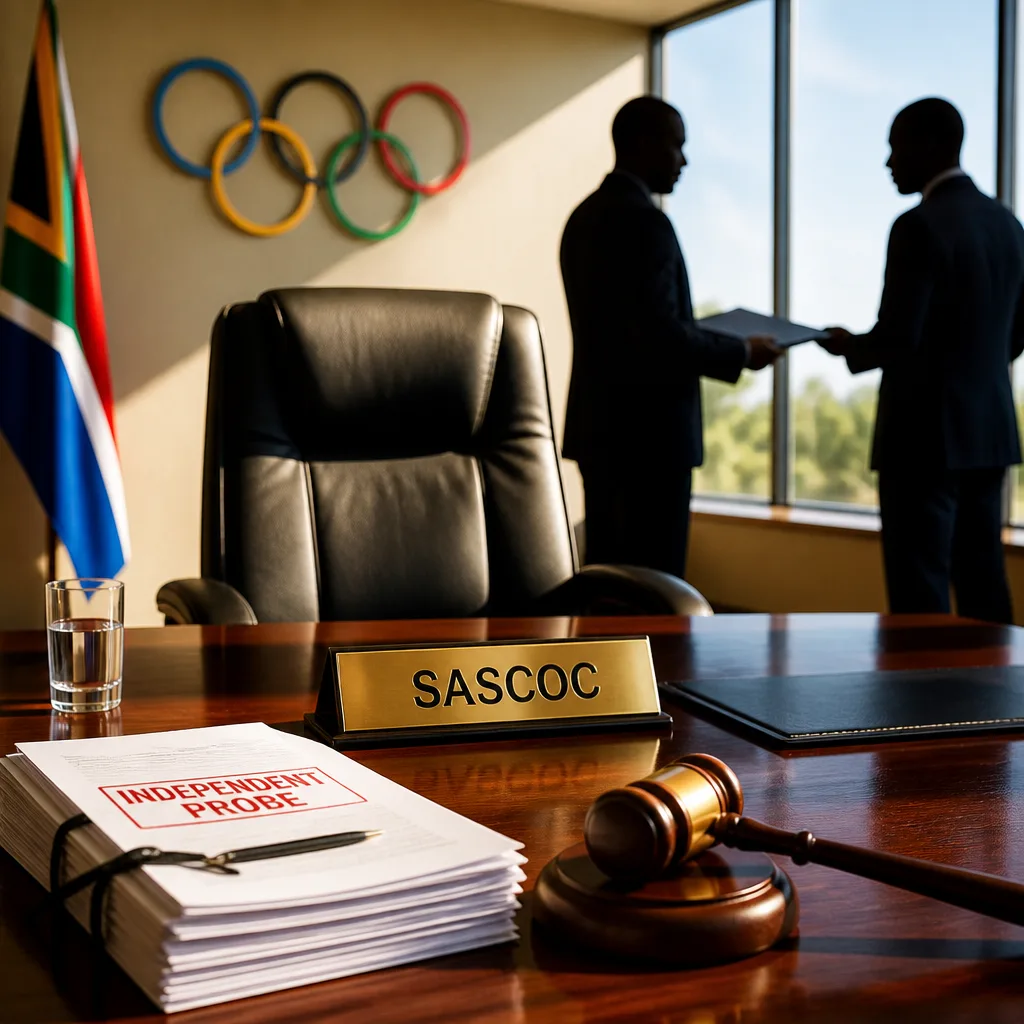
The South African Sports Confederation, Olympic and Paralympic Committee (SASCOC) has suspended its president, Barry Hendricks, after retired Judge Basheer Waglay’s independent investigation found sufficient prima facie evidence to refer anonymous complaints to SASCOC’s judicial body, according to reporting by Rowan Callaghan.
Interim leadership and what was found
Following the suspension, first vice‑president Lwandile Simelane has taken temporary executive responsibility, SASCOC said, while the matter moves through internal judicial channels. SASCOC emphasised the suspension is a procedural measure intended to protect the integrity of the probe and does not amount to a finding of guilt.
"[The] suspension is a procedural measure to safeguard the integrity of the probe and does not imply a finding of guilt," the organisation said, as reported by Rowan Callaghan.
The complaints relate to alleged breaches of SASCOC’s safeguarding policy and Codes Handbook. Judge Waglay determined that there was sufficient prima facie evidence to advance the matter to the body tasked with internal adjudication, the reporting said.
Pattern of instability across national sport
Observers say the suspension comes at a precarious moment for governance in South African sport. The report noted a string of concurrent leadership problems at other national federations, among them:
- Swimming South Africa — president Alan Fritz and CEO Shaun Adriaanse have been suspended;
- Athletics South Africa — president James Moloi has been suspended.
Those recent upheavals add to a history of executive conflict within SASCOC itself and highlight systemic governance challenges as the country prepares for the 2028 Los Angeles Olympic cycle.
Not the first time for Hendricks
The current suspension is not the first time Hendricks has faced boardroom action. The report recalled that he was previously suspended in 2020 over allegations of blocking a rival candidate prior to elections; he was later cleared via arbitration.
Callaghan’s timeline places the current developments within a longer chronology of controversies that have repeatedly unsettled SASCOC, including the 2017–2018 executive disciplinary and wire‑tapping disputes that resulted in the suspension and dismissal of several senior executives.
| Year | Notable event |
|---|---|
| 2017–2018 | Executive disciplinary purge and wire‑tapping scandal; suspensions and dismissals of senior executives including CEO Tubby Reddy |
| 2020 | Barry Hendricks previously suspended over election interference allegations; later cleared by arbitration |
| 2026 | Independent probe by retired Judge Basheer Waglay leads to Hendricks’ suspension; Lwandile Simelane assumes temporary authority |
Implications for athletes and the Olympic pathway
While SASCOC stressed the procedural nature of the suspension, the timing is significant: the 2028 Los Angeles Olympic cycle is already under way and demands steady national coordination, funding decisions and clear selection processes. The report suggested that the leadership turmoil, both at SASCOC and across key federations, risks distracting administrators and athletes at a crucial preparatory stage.
Governance turbulence can complicate relationships with stakeholders, sponsors and international bodies, and may delay decisions that affect high‑performance programmes, athlete funding and accreditation. The situation therefore carries consequences beyond internal politics, with potential knock‑on effects for South African competitors aiming to qualify for Los Angeles.
What happens next
According to the reporting, the matter will now be considered by SASCOC’s judicial processes. The suspension is intended to allow that process to run without the immediate involvement of the president. No finding of guilt has been recorded at this stage.
The wider pattern of suspensions across federations emphasises the need for robust, transparent governance and clear safeguarding mechanisms. Stakeholders within South African sport will be watching closely as SASCOC’s internal judicial body reviews the Waglay report and determines next steps.
As the national Olympic movement seeks to steady itself, the onus is on administrators to restore confidence — not only in boardrooms, but around the training tracks and pools where athletes prepare for the next Olympic challenge.