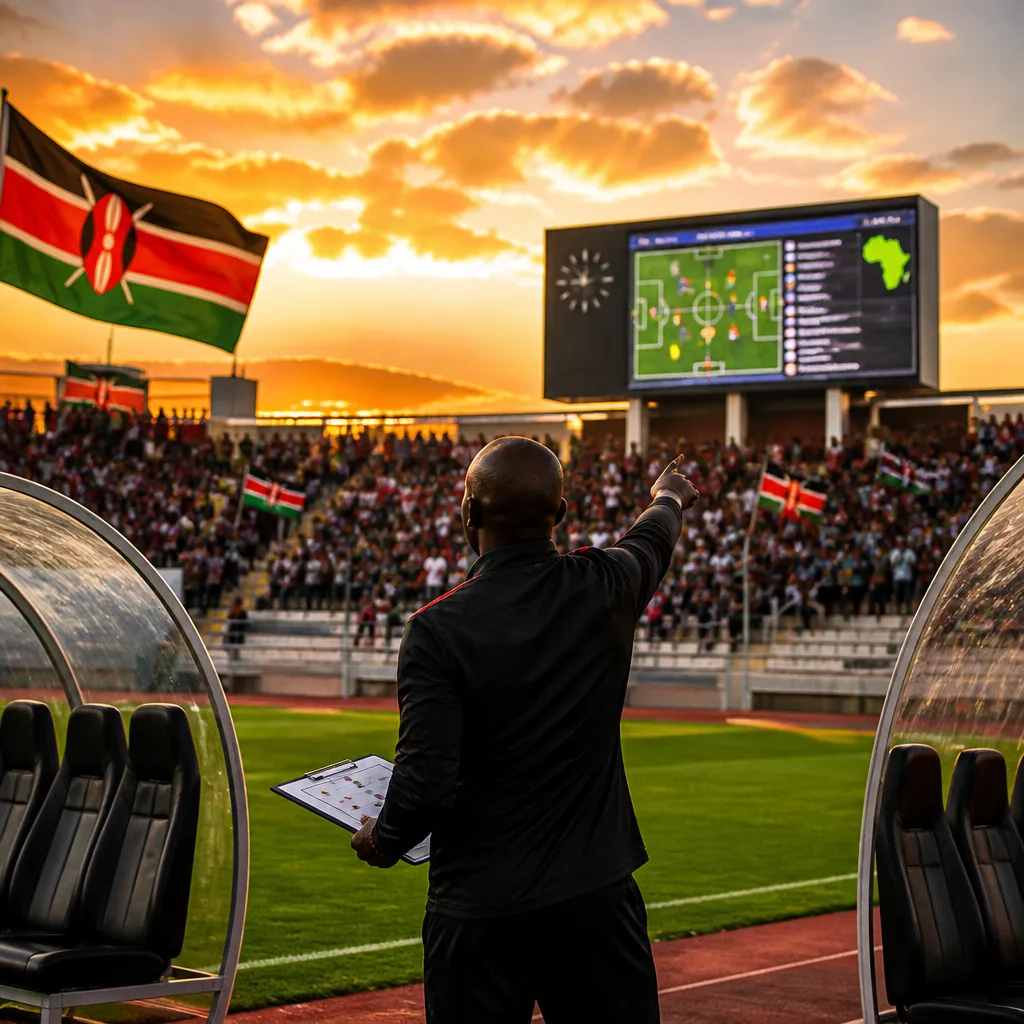
Kenya coach Benni McCarthy has suggested the timing of Pitso Mosimane’s return to the South African national team could work in the Harambee Stars’ favour when the two sides meet twice in AFCON 2027 qualifying next month.
Transition could be a tactical window
McCarthy, speaking on Sporty TV, argued that a change of head coach inevitably brings an adjustment period as players learn new methods and expectations. He said this settling-in phase might provide Kenya with an opportunity to exploit any early uncertainties in Bafana Bafana’s play.
“As good as they are, we have seen them at the World Cup but whenever there’s a change of guard, it takes time for players to understand a new head coach,”
He added:
“It takes time to understand his philosophy, how he plays and what he wants to achieve. So, maybe the (change of coach) could have come at a better (time) for us because it will take a couple of games for South Africa to play the way Pitso wants to play.”
That is a pragmatic reading of the fixture calendar. Mosimane has already begun his second spell on a positive note, with Bafana beating Guinea at the Orlando Amstel Arena to pick up three points in Group D.
What’s at stake and context
While Kenya are already assured of a place at AFCON 2027 as one of the tournament hosts alongside Uganda and Tanzania, the November meetings still carry weight as they will influence who claims the remaining qualification place from Group D.
McCarthy’s comments frame the two encounters as not just a reunion with his former national team but also a strategic test for Mosimane, whose methods will now be measured in competitive fixtures rather than preparatory camps.
- Kenya — hosts of AFCON 2027, automatically qualified
- South Africa — currently have three Group D points after beating Guinea
- November fixtures — two matches between the countries that could determine Group D standings
The dynamic sets up an intriguing subplot: McCarthy, once a Bafana striker, now leads an opponent who expects to press any advantage. For Mosimane, the task is to fast-track his ideas and settle a squad that impressed at the World Cup but will now adopt a new coach’s methods.
Immediate consequences for Bafana
South Africa’s win over Guinea gave Mosimane a winning start, but McCarthy’s assessment underlines the difficulty of immediately translating a coach’s philosophy into consistent match performances — particularly when tight schedules and competitive stakes compress preparation time.
For Kenya, who will play those matches without the burden of qualifying pressure, the strategy is straightforward: take advantage of any early friction in Bafana’s transition and maximise the points haul from the head-to-heads.
| Group D | Known status |
|---|---|
| South Africa | 3 points (beat Guinea) |
| Kenya | Host nation — automatically qualified |
| Guinea | No points reported after defeat to South Africa |
| Eritrea | Group member (no reported results provided) |
Both coaches have clear incentives. Mosimane needs to demonstrate his system works in short order and keep momentum building towards the tournament. McCarthy, free from the pressure of qualification, can prepare Kenya to be disruptive and clinical in those November clashes.
These fixtures will be a useful barometer for how quickly a national team can adapt to a new coaching voice and for whether a host nation’s absence of qualifying pressure translates into an on-pitch advantage. Expect chess moves from both camps and tactical tweaks that reveal how each coach responds under the tight timeline.
November’s double-header will be as much about coaching nous as player quality — and according to McCarthy, the timing of Mosimane’s reappointment hands Kenya at least a window to try and make it count.