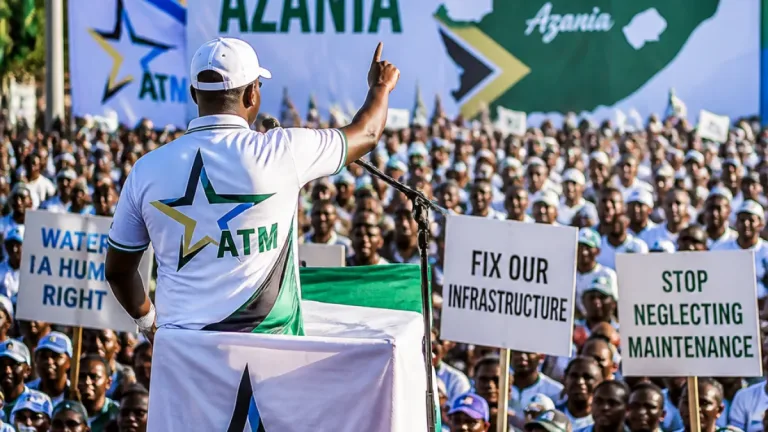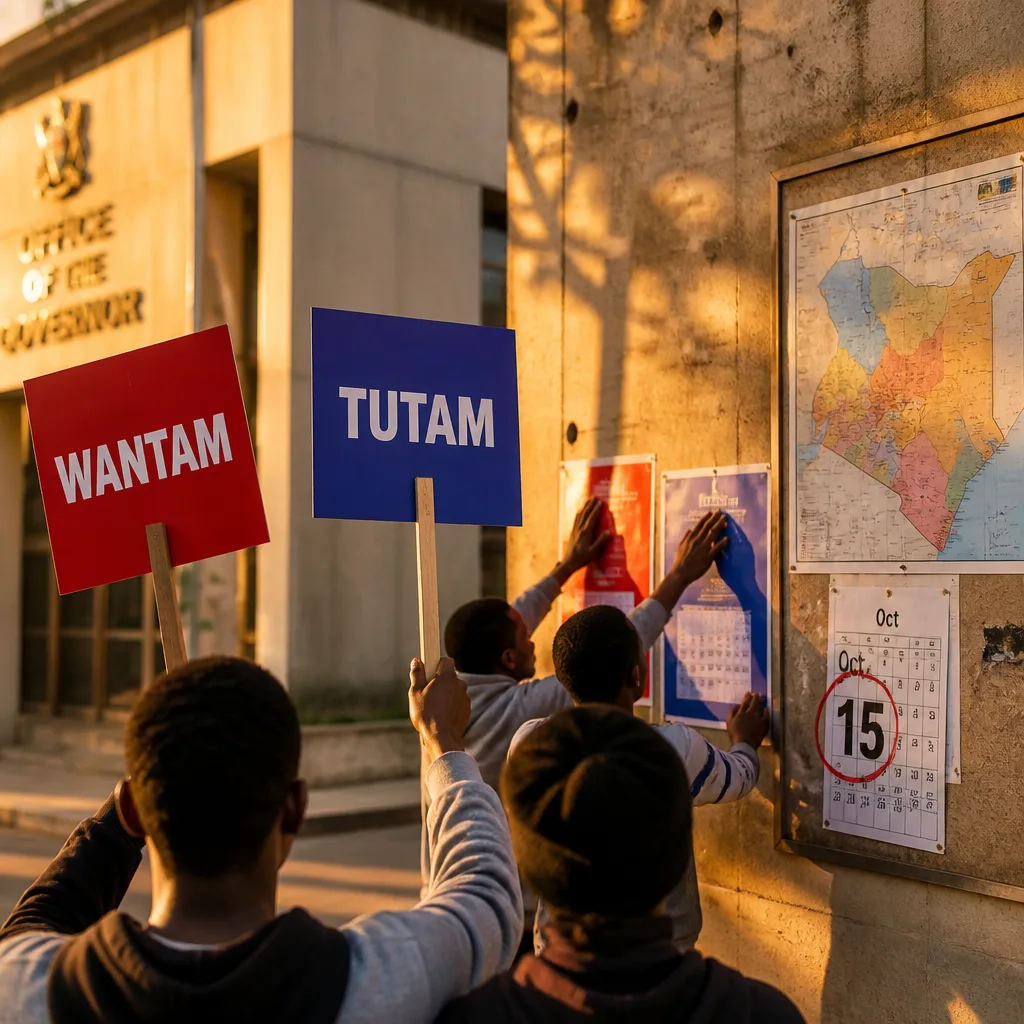
Kenya’s political landscape is sharpening into two competing slogans — one urging that President William Ruto serve just a single term, and another pushing for him to complete a second. Youth-driven anger at perceived underperformance and rights abuses has given rise to the “Wantam!” (one term) campaign. At the same time, a government-aligned push labelled “Tutam!” (two terms) or “Kumi bila break!” (two uninterrupted terms) is coalescing behind the idea of continuity into 2027.
Opposition splits complicate anti‑Ruto drive
The opposition’s capacity to consolidate around a single challenger has been weakened by organisational splits since the death last year of veteran leader Raila Odinga. Odinga’s Orange Democratic Movement has evolved into two factions — Linda Mwananchi and Linda Ground — the former opposing the government while the latter, led by Odinga’s brother Oburu Odinga, leans towards the administration. That division has left the opposition without a clear, unifying presidential candidate.
Complicating the picture further, the ruling coalition experienced turbulence after the 2024 impeachment of former deputy president Rigathi Gachagua for conduct described as promoting ethnic division and undermining executive authority. Gachagua has since emerged as a leading opposition figure in his Mount Kenya stronghold, where the Independent Electoral and Boundaries Commission (IEBC) estimated more than seven million registered voters by April 2026.
Deadlines and arithmetic may decide 2027
The IEBC’s timetable — which includes a 15 October deadline for parties to submit their leaders’ names and party symbols — compresses the window for last‑minute coalitions or unity deals. Without rapid pact‑making, a divided opposition may hand an advantage to the incumbent.
That advantage stems not only from an absence of a single rival but from the arithmetic of Kenya’s electoral map. Regions where figures like Gachagua command large, concentrated support could swing a national contest if opposition votes are split across multiple platforms.
- Youth mobilisation: Calls for accountability and a one‑term limit reflect broad dissatisfaction among younger voters.
- Party fragmentation: The split of Odinga’s movement into two factions reduces the chance of a single opposition nominee.
- Regional power bases: Politicians with strong local followings can influence national outcomes when opponents do not unify.
| Event | Implication |
|---|---|
| Death of Raila Odinga (last year) | Loss of a unifying opposition figure; party fragmentation |
| Impeachment of Rigathi Gachagua (2024) | Shifted Gachagua into a prominent opposition role in Mount Kenya |
| IEBC deadline (15 October) | Limits time for opposition coalition building ahead of 2027 |
Who stands to gain and who pays is clear in the short term. A dispersed opposition benefits the incumbent by diluting anti‑government votes; the price is borne by voters who seek a coherent alternative platform to challenge the ruling administration. For the youth whose slogan underpins the one‑term movement, the political calculus will depend on whether their mobilisation can be translated into cross‑regional alliances and a single candidate acceptable to the broader opposition.
Looking ahead to 2027, much will hinge on whether the factions that now position themselves opposite one another can broker unity, and whether regional leaders such as Gachagua convert local popularity into a national coalition. The IEBC’s deadlines mean those negotiations must now accelerate.
For observers across Africa, Kenya’s moment is instructive: leadership transitions, party splits and competing narratives about accountability and continuity are shaping not only who runs but how electorates engage with power. The coming months will show if rhetoric translates into a reshaped field or merely cements the incumbent’s path to a second term.