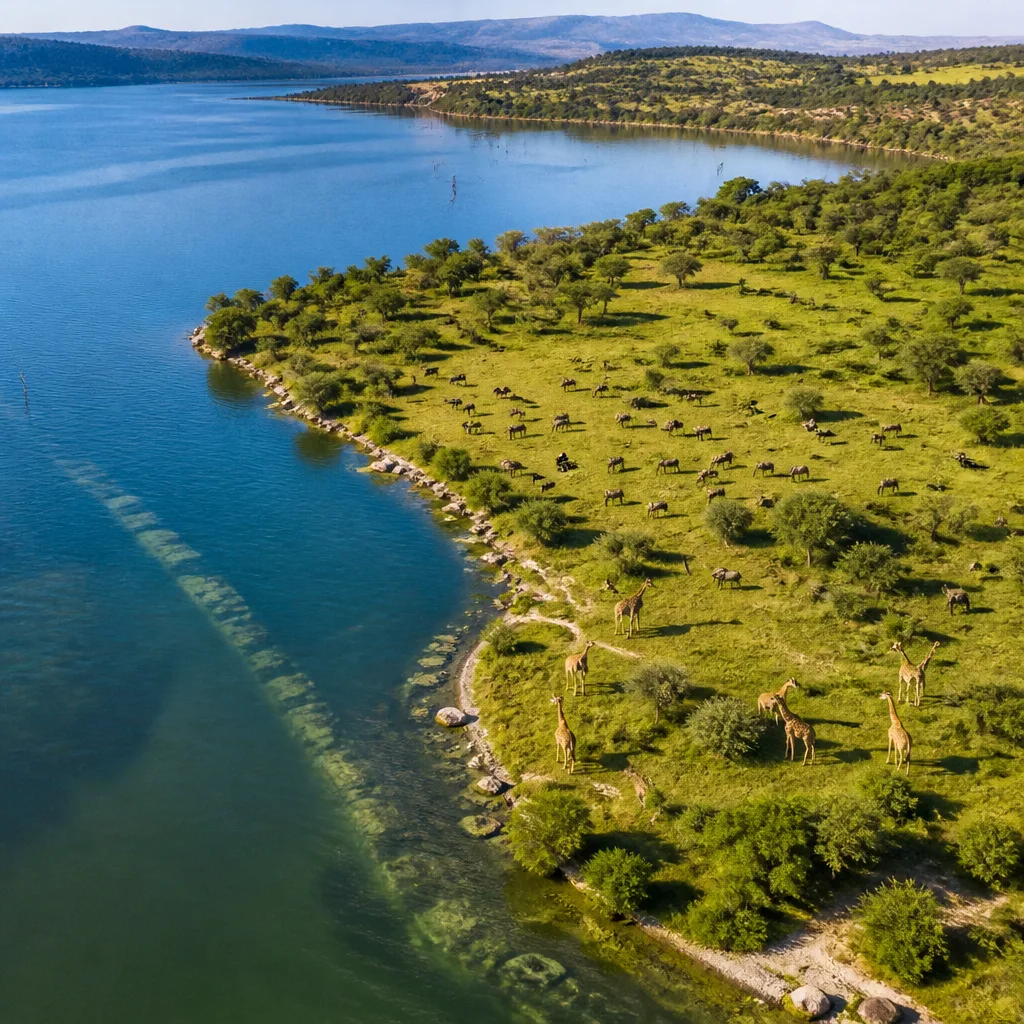
Crescent Island, a horseshoe rim of an ancient volcano in Lake Naivasha, has been cut off from the Kenyan mainland since 2020 after water levels rose above a causeway that normally links the island to the shore. Researchers from the School of Veterinary Medicine at St. George’s University in Canada visited the island this year to assess the consequences of the isolation, and found a landscape where large herbivores are thriving in the absence of many carnivores.
What has changed on Crescent Island?
Located about 80 km northwest of Nairobi, Crescent Island is typically intermittently connected to the mainland: when lake levels fall the causeway allows animals to move freely, and when levels rise the landform becomes a true island. In 2020 the water stayed high and submerged the causeway; it has not re‑emerged in the five years since.
The visiting research team reported that the island now contains very few carnivores and that many herbivore species — from wildebeest to giraffe — are present and effectively trapped on the island by the surrounding water. The absence of regular predator pressure creates a markedly different ecological context from that of the adjacent mainland.
Why predator absence matters
Predators play several ecological roles beyond killing prey: they shape herbivore behaviour and distribution, influence vegetation through selective feeding, and can regulate population size and health. When predators are absent, short‑term observations often show benefits to prey species — lower direct mortality, reduced stress and higher apparent numbers — but these can be accompanied by longer‑term risks.
- Increased herbivore densities can intensify grazing and browsing pressure on plant communities.
- Higher population densities may raise the risk of disease transmission among animals.
- Isolation can reduce genetic exchange with mainland populations, potentially increasing inbreeding over time.
These are general ecological principles; the researchers’ visit aimed to document what is already happening on Crescent Island rather than to provide definitive long‑term outcomes.
What the researchers did and did not report
The team from St. George’s University visited to assess the situation on the island and reported finding few carnivores among a suite of large herbivores. The source material does not detail specific population counts, measures of vegetation change, disease surveillance results or genetic analyses. As such, the currently available information should be read as an early assessment rather than a comprehensive ecological study.
Field visits like this are a first step: systematic monitoring over multiple seasons would be required to determine trends in population size, vegetation condition, disease incidence and genetic diversity. Those data would inform any management response, whether that is passive monitoring, habitat interventions, or measures to restore connectivity or reintroduce predators — each an option that carries ethical and logistical complexities.
Broader implications
Crescent Island’s situation is an example of how hydrological changes can act as a driver of ecological isolation. Whether caused by climate variability, local water use, or other factors, persistent changes in water level can transform connectivity in lake and river systems, with cascading effects for wildlife and ecosystems.
For conservationists and managers the case raises questions about priorities and practicalities: when an island becomes effectively predator‑free, should managers intervene to restore ecological balance, or is non‑intervention preferable if the island’s animals appear to be doing well? The right answer depends on longer‑term data and on human values about intervention in nature.
For now, Crescent Island offers a living laboratory where researchers can observe how large mammal communities respond when natural predation is dramatically reduced. Continued, carefully designed monitoring will be necessary to separate temporary fluctuations from persistent ecological shifts.