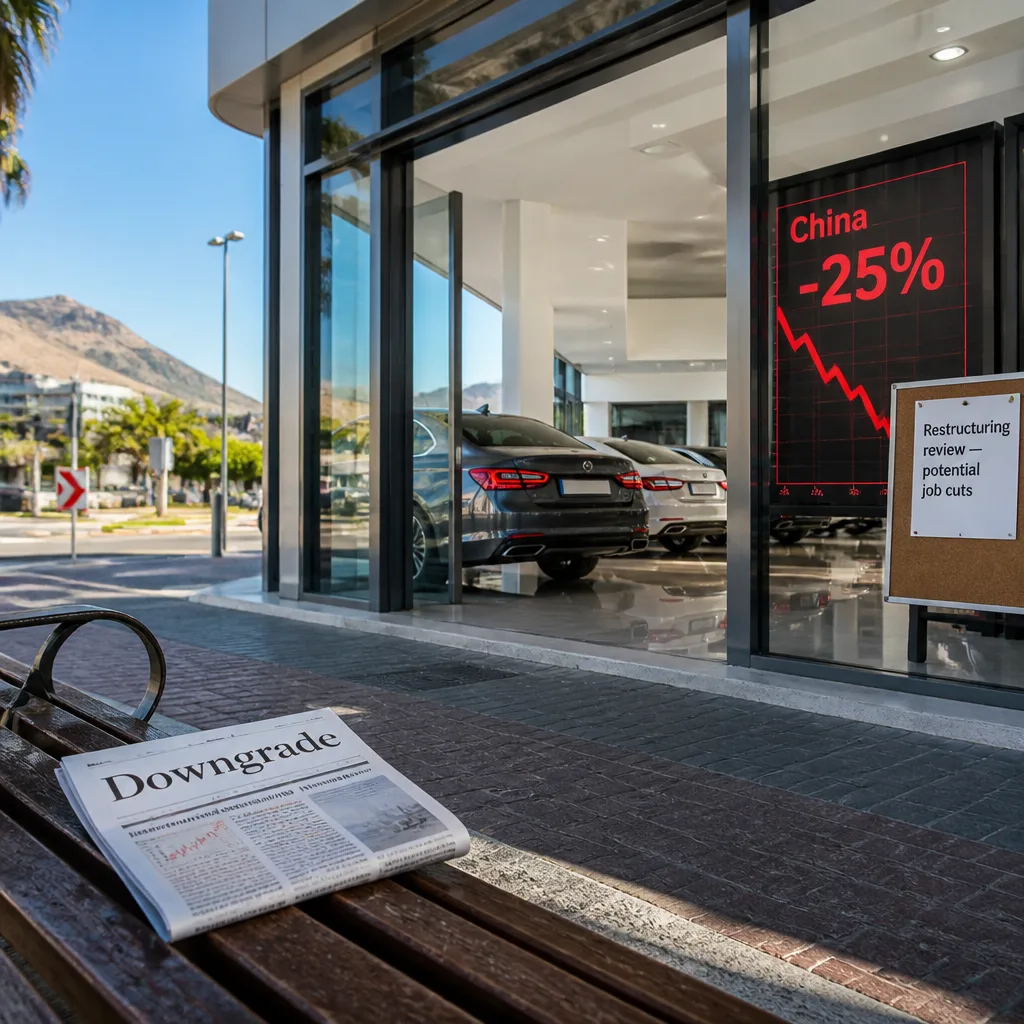
Shares in BMW fell after HSBC downgraded the stock to Hold and reduced its price target, citing a deteriorating China business and mounting cost pressures for European automakers. The bank now expects China sales to decline roughly 25% year‑on‑year in 2026, with a further 4% drop in 2027, and has lowered profit forecasts for 2027 and 2028.
What HSBC changed and why it matters
Analysts led by Michael Tyndall said the Chinese market showed no signs of recovery for 2027, prompting HSBC to cut its 2027 and 2028 reported operating profit estimates for BMW by about 16–20%. The revisions are driven by weaker China volumes and pricing, rising raw‑material costs and only partial offset from planned restructuring savings.
"The China business continues to worsen, no recovery in sight for 2027e," the analysts wrote.
HSBC also flagged a higher commodity and currency impact on BMW’s 2026 guidance, noting the carmaker raised its estimate of these headwinds to around €1 billion at the half‑year results. The bank estimates roughly €0.5–0.6 billion of that relates to raw materials, and expects an additional hit to margins of about 70 basis points in 2027 from raw‑material pressures.
Restructuring, jobs and competitive pressure
The bank expects BMW’s restructuring will deliver roughly €0.7 billion of annual savings in 2027 and 2028, but noted ongoing execution risk. Press reports referenced in the analysis point to about 8,000 potential job cuts — around 5% of BMW’s workforce — as part of cost‑saving plans. HSBC contrasted this with an even larger restructuring at Volkswagen, which has signalled plans affecting substantially more roles.
HSBC’s note also emphasised a growing competitive gap between German premium brands and local Chinese rivals. Year‑to‑date combined volumes for Audi, BMW and Mercedes‑Benz were down 22%, while local premium brands grew about 15%, the bank said. That divergence increases pressure on margins and market share in what remains the world’s largest auto market.
Implications for South African business and jobs
While HSBC’s research focuses on European manufacturers and China volumes, the consequences travel. Lower global volumes and margin pressure affect the demand for commodities, component supplies and logistics — all channels that touch South African industry and employment.
- Lower Chinese demand can weigh on commodity prices and export revenues for resource sectors that supply vehicles and components.
- Restructuring and job cuts at large manufacturers increase the risk of lower orders for suppliers and aftermarket businesses tied to premium carmakers.
- Downward pressure on margins may slow investment in new models and localisation programmes, affecting medium‑term jobs in component manufacturing.
The speed and scale of the impact will depend on how deep the China contraction becomes and whether OEMs (original equipment manufacturers) accelerate localisation or shift sourcing strategies to protect margins.
Numbers at a glance
| Metric | HSBC view / reported figure |
|---|---|
| China volume change (2026) | −25% year‑on‑year |
| China volume change (2027) | −4% |
| Commodity & FX impact (BMW 2026 guidance) | ~€1 billion |
| Estimated raw‑material portion | €0.5–0.6 billion |
| Expected restructuring savings (2027/28) | ~€0.7 billion annually |
| Potential job cuts reported | ~8,000 (≈5% of workforce) |
HSBC will look for more detail at BMW’s Capital Markets Day scheduled for 29–30 September, when management is expected to outline further clarity on savings and the restructuring timeline. In the meantime, the bank sits below consensus on operating profit forecasts for 2027 and 2028 by about 7–17%, reflecting its more cautious view.
For South African households and workers, the immediate effect is likely indirect: weaker export demand and continued commodity volatility can translate to tighter incomes for suppliers and uncertainty in manufacturing employment. For investors and policy makers, HSBC’s downgrade is a reminder that auto sector transformations in China can ripple into global supply chains — and into local boardrooms and factory floors here at home.
WE NEWS does not provide financial advice.