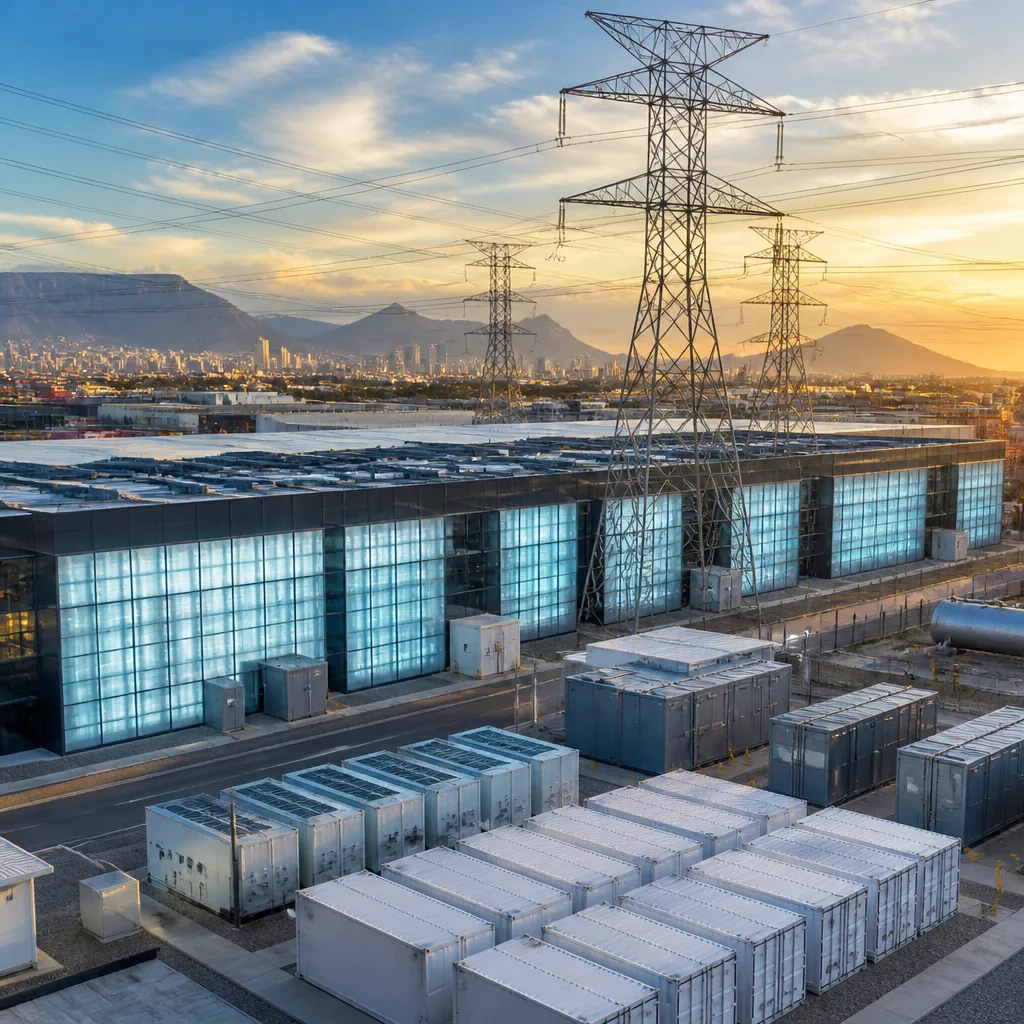
The global boom in artificial intelligence is exposing a less-visible but critical constraint: reliable, round‑the‑clock electricity. New estimates from the International Energy Agency (IEA) cited in reporting on the AI sector show data‑centre electricity demand could climb from 485 terawatt‑hours (TWh) in 2025 to about 950TWh by 2030, placing power supply at the centre of future decisions about where and how AI infrastructure is sited.
Power, not chips, may determine the next phase of AI
For several years the race to build AI businesses focused on securing GPUs and compute capacity. But the IEA projections and industry analysis reported this month argue that the real constraint for large AI deployments is continuous electricity: AI‑focused data centres need power every hour of every day, not just when renewable sources are generating. The same reporting warns that AI‑specific facilities could grow faster than the broader data‑centre fleet — a trend that intensifies demand for an always‑available supply.
| Year | Estimated global data‑centre electricity (TWh) |
|---|---|
| 2025 | 485 |
| 2030 | 950 |
Industry analysis cited by the report notes that by 2027 a single advanced data‑centre server rack could have a peak electricity draw equivalent to 65 households. The implication is straightforward: while chips and racks are portable, the availability of bulk, reliable power is not. The IEA also estimates that grid and infrastructure constraints could delay roughly 20% of planned data‑centre projects, and that in the United States data centres may account for nearly half the growth in electricity demand through 2030.
What this means for South African business and investors
The global shift has direct implications for South Africa’s business community and energy planners. For entrepreneurs and investors who are considering data‑intensive ventures or hosting cloud infrastructure, the decision calculus is changing: access to cheap power alone will no longer suffice. What each project needs is predictability — contracted, firm capacity that can be relied on through load spikes and across seasons.
- For corporates: locational choices will increasingly favour sites where firms can secure long‑term energy offtake agreements or co‑locate with dedicated generation and storage.
- For grid operators and government: accelerated investment in transmission, flexible generation and storage will be necessary to attract high‑value data centre investment without displacing other users.
- For investors and founders: opportunities will emerge across the energy supply chain — from firming renewables with storage to utility‑scale power procurement and microgrid solutions tailored to data‑centre needs.
"The constraint shaping the next phase of AI isn’t algorithms or chips. It’s power," the reporting summarised, citing the IEA’s modelling and industry analysis.
That framing suggests the next wave of commercial opportunity will be in the physical plumbing that delivers continuous electricity — and in services that manage demand and resilience. Founders who build companies that secure or manage energy for compute facilities could find a sizeable market, the analysis suggests. The practical outcome for ordinary households is twofold: first, where data‑centre builds compete with local demand for constrained capacity, municipal and national planners will face tough trade‑offs; second, large industrial demand can accelerate infrastructure investment that benefits wider communities if managed with clear procurement and compensation rules.
It is important to underscore that these are global projections and strategic observations, not financial advice. The IEA numbers provide a yardstick for scenario planning: policy makers, utilities and business leaders should treat energy as a strategic input for the AI era, not a fungible operating cost.
For South Africa, the report is a timely reminder that attracting next‑generation digital investment requires more than tax breaks or land offers. It requires credible, long‑term agreements for firm power, accelerated network upgrades and policy certainty that align energy, industrial and digital strategies. The commercial winners are likely to be those who recognise that in the AI era, power is the new scarcity.