Mahikeng — North West Premier Lazarus Mokgosi says the provincial government is pursuing closer ties with scientific and research institutions to harness geological data for development that benefits communities dependent on mining.
Science and geology at the centre of planning
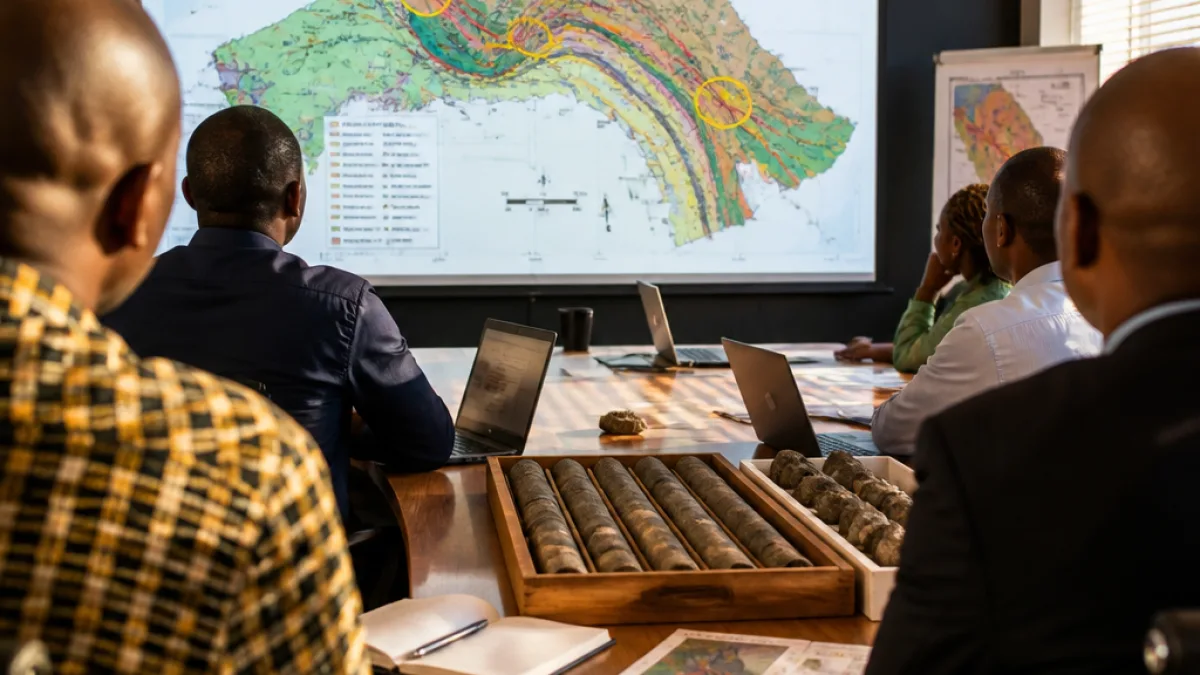
Mokgosi met with the Council for Geoscience to explore how scientific research and geological information can support mineral exploration, infrastructure planning, groundwater management and environmental sustainability across the province. The discussions centred on translating the region’s mineral endowment into more jobs, investment and local opportunities.
"its mineral wealth needs to translate into more jobs, investment and opportunities for communities."
The meeting signals a strategic shift by the provincial administration to base development decisions on research and reliable data rather than solely on short-term extraction metrics. Officials flagged potential collaboration in joint research, skills development, infrastructure projects and sustainable development planning.
Why geological data matters for communities
North West is one of South Africa’s major mining provinces. Much of the local economy, employment and municipal revenue streams are linked to platinum, other metals and associated mining services. Using geoscientific data can affect communities directly by:
- informing safer and more targeted mineral exploration that could identify new areas of economic activity;
- guiding infrastructure siting to reduce costs and environmental impact;
- improving groundwater management to protect scarce water resources;
- helping long-term planning to diversify economies that are heavily dependent on mining.
For mineworkers, their families and towns built around shafts, better planning based on data could mean a more resilient local economy if investment is steered into downstream services, beneficiation and alternative industries.
Areas identified for collaboration
According to the meeting summary, potential areas of cooperation with the Council for Geoscience include:
- joint research projects between government and research institutions;
- skills development and training aligned to geoscience and mining-related careers;
- infrastructure planning using geological mapping and subsurface data;
- strategies for sustainable development and environmental management.
The provincial government said such partnerships would support policymaking that factors in long-term resource management rather than short-term extraction goals.
| Collaboration focus | Expected benefit |
|---|---|
| Mineral exploration data sharing | Targeted investment, reduced exploration costs |
| Groundwater mapping | Better water security for communities and mines |
| Skills and training programmes | Local employment and sectoral diversification |
Balancing extraction with sustainability
Mokgosi emphasised that the province wants geological insight to support environmental sustainability as well as development. Using scientific evidence to plan infrastructure or to manage groundwater is particularly significant in a region where mining activity can impact water tables and agricultural land.
The premier’s approach recognises the political and social realities of North West: communities expect that the province’s mineral wealth will generate tangible benefits — not only royalties and company profits, but jobs, skills and lasting economic alternatives.
What this means for stakeholders
For mining companies, more accessible geological data and formal partnerships with public research bodies can lower exploration risk and encourage investment in value-adding activities. For labour and unions, the move could open channels for coordinated skills development tied to future employment opportunities in both mining and non-mining sectors.
Municipalities and local planners stand to gain practical tools for siting infrastructure, reducing the likelihood of costly rework where subsurface conditions are unfavourable. For communities in and around mine towns, better groundwater management informed by geoscience could reduce conflicts over scarce water resources and help protect livelihoods.
The province has not released a timetable for concrete projects or funding commitments arising from the meeting. Officials framed the talks as the start of “strengthened partnerships” rather than a completed package of interventions. Further announcements are likely if joint research or pilot projects are agreed.
As North West seeks to convert geological advantage into broader development, the success of this approach will depend on sustained collaboration between provincial government, scientific institutions, industry and labour — and on whether communities see measurable benefits in employment, services and environmental protection.