Network Rail has completed a series of large-scale earthworks and drainage projects across the North West this year, investing £41 million in measures intended to protect key passenger routes ahead of a winter forecasters say could be unusually stormy.
Major sites and works
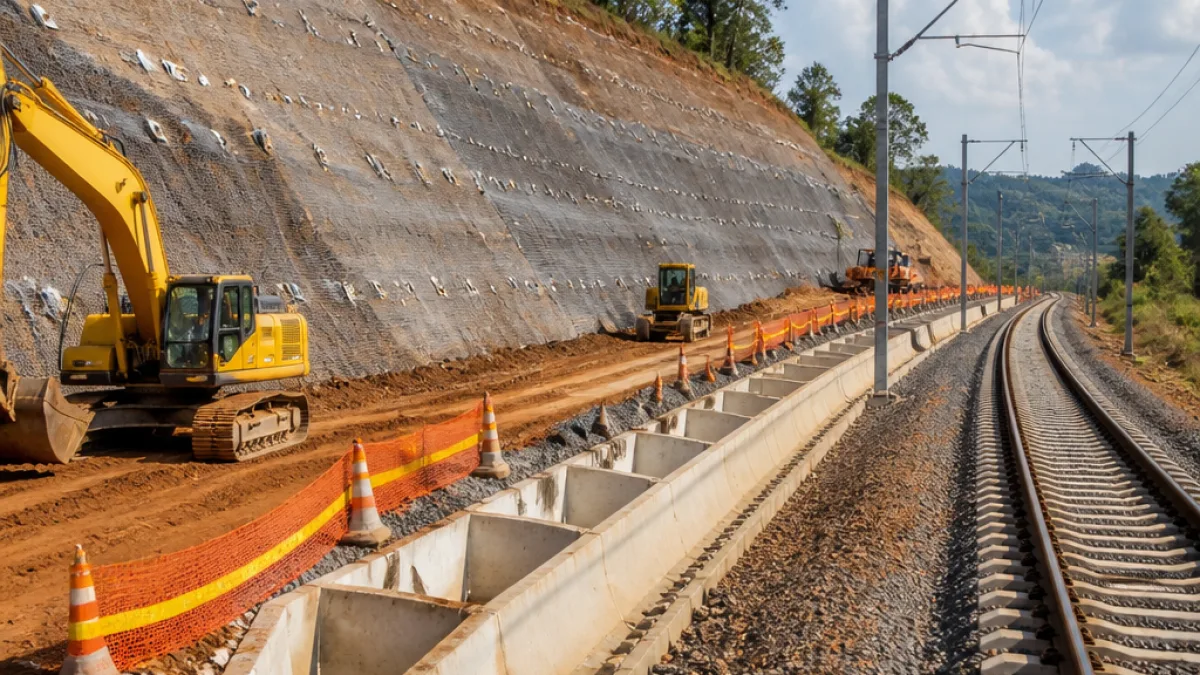
The investment covered several major schemes that targeted vulnerable cutting faces, embankments and drainage systems. Network Rail highlighted three of the largest packages in the North West:
- Shale Cutting, Settle to Carlisle: drainage improvements and earthworks stabilisation using soil nails and other techniques (£11.5m).
- Embankment upgrades between New Mills and Hague Bar, Derbyshire: extensive reinforcement works (£9.5m).
- Rock netting and anchors at Shap on the West Coast Main Line, Cumbria: rock protection and anchoring systems (£2m).
Alongside these capital schemes, Network Rail said its teams had been carrying out the essential seasonal tasks of clearing drains, cutting back overgrown trees and inspecting infrastructure to pre-empt failures.
Why the work matters
The North West contains some of the country’s most exposed and topographically challenging railway sections, where heavy rain, surface water and slope movement can cause landslips, embankment slumps and debris on the lines. These failures lead to long delays, costly emergency repairs and disruption for commuters and freight operators.
“We’re no stranger to storms in the North West – especially in the winter – and these multi-million-pound projects have been prioritised to prevent disruption for passengers on some of our most exposed and remote sections of railway,” Network Rail North West route engineering director Rob Stephens said.
Stephens added that the winter readiness work put the route in a better position to react and recover from weather extremes that, he said, are becoming more frequent and severe.
Preparedness and climate context
Network Rail linked the timing of the works to forecasts indicating a potentially stormy winter influenced by the global climate phenomenon El Niño. The authority has been accelerating planned resilience projects and routine maintenance to reduce the chance of catastrophic failures when heavy rainfall or severe winds arrive.
| Project | Location | Primary intervention | Investment |
|---|---|---|---|
| Shale Cutting stabilisation | Settle to Carlisle | Soil nails, drainage improvements | £11.5m |
| Embankment upgrades | New Mills–Hague Bar | Embankment reinforcement | £9.5m |
| Rock netting and anchors | Shap, West Coast Main Line | Rock protection, anchors | £2m |
What passengers and freight operators can expect
- Fewer weather-related closures and long-term diversions where the schemes have been completed.
- Increased short-term possession work during the programmes, with some localised weekend or overnight disruption while upgrades were carried out.
- More effective drainage and slope protection that should reduce the need for emergency engineering responses during heavy rains.
The combination of capital stabilisation works and proactive seasonal maintenance is designed to reduce the operational and economic cost of extreme-weather incidents as well as to improve safety for passengers and staff.
Broader implications
Network Rail framed the investment as part of a wider approach to climate adaptation. The projects use established civil engineering methods — soil nails, rock anchors, netting and regrading — that reduce the likelihood of earth movement beside railway lines. Such measures cannot remove all weather-related risk, but they lower the probability of catastrophic failures and shorten recovery times when incidents do occur.
For rail workers and engineers, the work also represents a concentrated period of high-intensity activity ahead of winter, with teams deployed to carry out both planned upgrades and routine checks. The authority said that by prioritising these schemes it hoped to protect passengers, freight customers and the workforce by preventing avoidable incidents.
Passengers are advised to check operator and Network Rail travel information before travelling during the winter months, as remedial works and weather conditions may still cause disruption despite the strengthened infrastructure.
(Reporting based on a Network Rail regional media statement published 21 September 2026.)