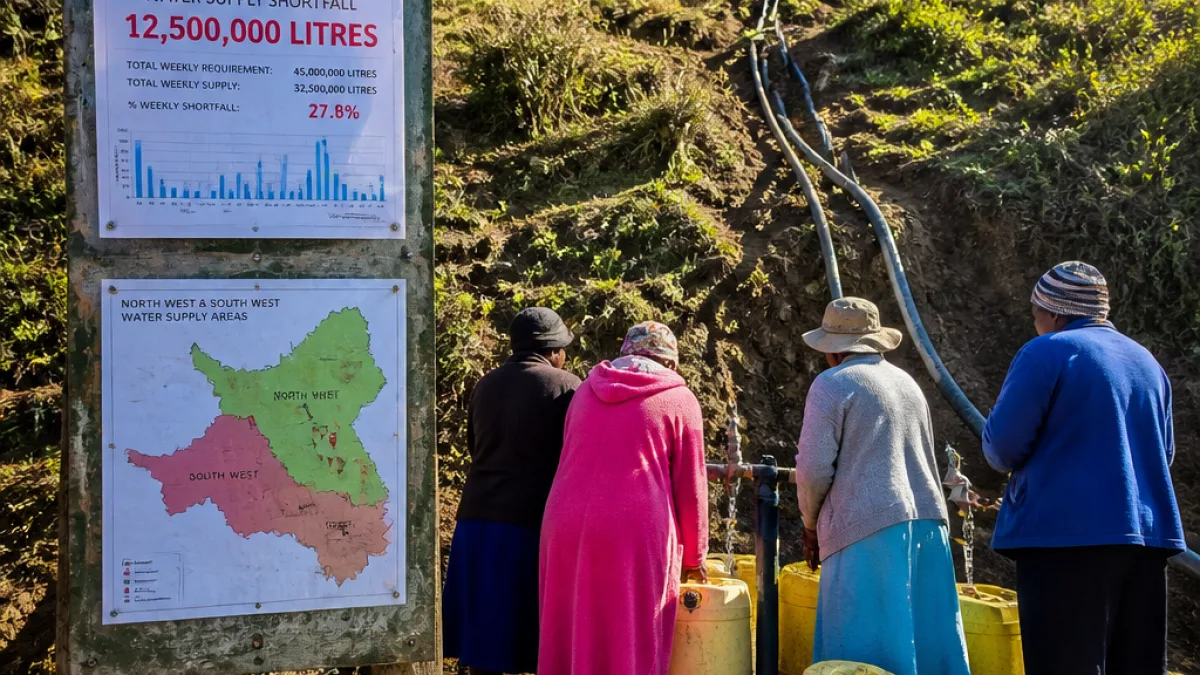
More than 1 million people in Cameroon's North‑West and South‑West regions were identified as needing water, sanitation and hygiene (WASH) support in the first half of 2026, but the WASH Cluster reached only 103,000 people — roughly 10% of the identified need, according to a humanitarian dashboard released by the Cluster.
Scale of the gap and planning target
The Cluster reports a funding requirement of $14.16 million to meet needs across the two regions. For operational planning, the Cluster is working against a reprioritised target population of 776,000 people, rather than the full million identified as in need. The response was delivered by 22 partner agencies across 13 divisions with support from 14 funders.
Concentrated coverage and uneven reach
Reach was highly concentrated. The divisions of Fako and Ngo‑Ketunjia accounted for the lion’s share of assistance, with 68,155 and 20,021 people reached respectively. Mezam (17,823) and Meme (16,168) followed. Several divisions — including Menchum, Lebialem and Momo — recorded minimal to no people reached, a gap the Cluster says may reflect limited operational presence or reporting shortfalls.
The population groups reached also show the focus of activities: returnees made up 56.81% of those assisted, internally displaced persons (IDPs) were 27.21%, and host communities represented 15.9%.
Demographics and persons with disabilities
More females were recorded among those reached: 55% female to 45% male. Women (33.7%) and girls (26.97%) were the largest demographic groups among beneficiaries, followed by men (21.78%) and boys (17.5%). A total of 389 persons with disabilities were assisted; more than 91% of those with disabilities were reached in the South‑West region and about 8% in the North‑West.
June surge drove most of the response
Monthly monitoring shows a flat and low pace from January through May — monthly reach ranging from about 2,000 to 8,000 people — followed by a dramatic scale‑up in June when the Cluster reported reaching 82,182 people. That single month accounted for roughly 80% of the cumulative reach recorded in the first half of the year.
The surge was driven by the implementation of a pilot gravity‑fed water scheme serving six densely populated communities: Wotutu, Ewongo, Bonadikonbo and Ekondotiti in the South‑West Region and Balikumba and Baba1 in the North‑West Region.
| Indicator | Value |
|---|---|
| People in need | 1,000,000 |
| Reprioritised operational target | 776,000 |
| People reached (Jan–Jun 2026) | 103,000 |
| People reached in June | 82,182 |
| Partners involved | 22 |
| Funders | 14 |
| Funding requirement | $14.16 million |
Infrastructure and outputs
As part of the June operations and related activities, the Cluster reported constructing 84 waterpoints and rehabilitating 24 (63 completed, 21 ongoing). For sanitation, 57 latrines were constructed and four rehabilitated; sanitation works were listed as 21 completed and 36 ongoing.
Operational implications
- Concentration of reach in a few divisions leaves several areas with little to no recorded assistance.
- Heavy reliance on a June surge highlights fragility of sustained service delivery and a need for predictable funding and longer‑term planning.
- Reporting gaps may mask both unmet needs and local responses that are not yet captured in Cluster data.
The dashboard underlines the difference between the scale of need and what partners have been able to deliver: a substantial funding requirement, a reprioritised operational target and a response that only gained momentum after a major pilot intervention. The concentration of beneficiaries among returnees and the female‑skewed demographics of recipients point to the humanitarian profile humanitarian actors are currently engaging.
For donors, humanitarian planners and communities in the North‑West and South‑West, the Cluster’s figures make clear the immediate task: convert the pilots and short‑term surges into sustained, geographically broader services and close the reporting gaps that obscure where assistance is still missing.