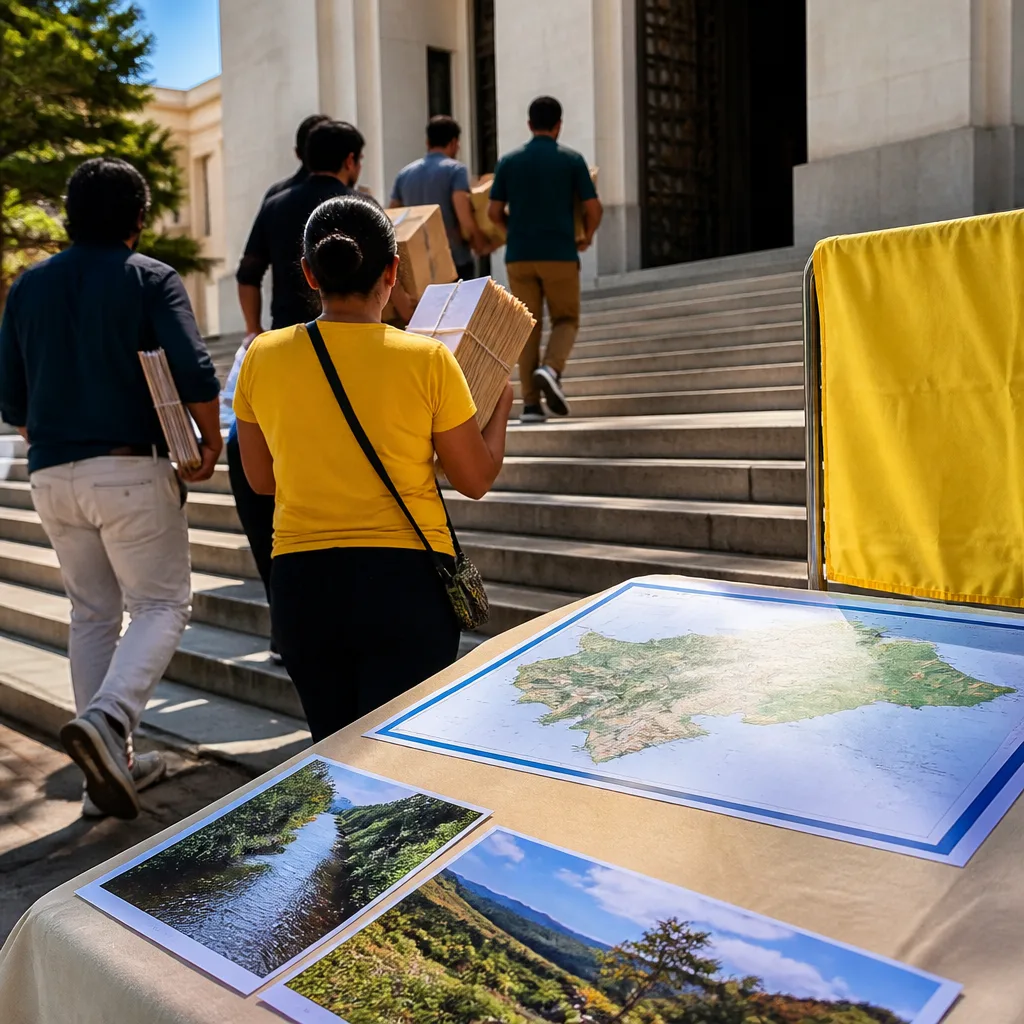
The international human rights campaign Write for Rights carried a tangible message of solidarity to Honduras this year after the 2024 killing of environmental defender Juan López. Amnesty International reported that campaigners travelled to Tegucigalpa with a curated selection of the correspondence — a small fraction of the outpouring of global support — to give to López’s family, his fellow activists and their lawyers.
The campaign focused on López’s work defending rivers, forests and a national park in the municipality of Tocoa. According to Amnesty International, López and colleagues had opposed mining and energy projects they said posed a threat to water quality and the surrounding ecosystem. As part of that effort they formed the Tocoa Municipal Committee for the Defence of Common and Public Goods to challenge those projects’ legality.
“On 14 September 2024, Juan was killed as he was leaving a church in Tocoa. His death left an irreparable void for his family and community…”
Amnesty’s report emphasised the risks faced by members of the Committee, saying they had been subjected to threats, harassment, criminalisation and attacks as a consequence of their activism. The Write for Rights campaign gave those dangers international visibility and mobilised public pressure through letters and other actions.
Scale of the campaign
Amnesty International said the campaign for López generated a notable global response. The numbers reported include:
- 332,381 actions submitted worldwide in support of the case.
- A selection drawn from more than 15,000 letters carried in suitcases to Honduras by campaigners.
Those figures illustrate how a local human rights struggle attracted an international network of supporters prepared to intervene through public advocacy and correspondence. Amnesty described the physical act of delivering letters as an important gesture: even a small selection of the messages, the organisation said, conveyed care, hope and sustained international interest.
Why the campaign matters
Write for Rights is Amnesty International’s annual mobilisation that pairs individual cases with global advocacy, aiming to secure justice, protection and accountability. In López’s case, the campaign sought to keep attention on alleged risks faced by community defenders and on the broader legal and environmental questions raised by contested extractive and energy proposals.
For South African readers, the story resonates with recurring themes here: conflicts over natural resources, the vulnerability of local defenders, and the role of international solidarity in amplifying claims for justice. Environmental activists in many countries confront similar dynamics — from contested permits to alleged reprisals — and global campaigns can alter the calculus for authorities or operators by raising reputational and diplomatic pressure.
What was delivered
Although Amnesty’s account focuses on symbolic and moral support, it also highlighted the legal dimension: many of the letters were directed at strengthening the case being advanced by the Justice for the Peoples Law Firm, which represents López’s family and the Committee. Campaigners said the correspondence was meant to accompany legal efforts and to show sustained international scrutiny.
| Item | Reported figure |
|---|---|
| Total actions generated | 332,381 |
| Letters delivered (selection) | more than 15,000 |
Amnesty’s campaign account underlines a central lesson of modern human rights work: grassroots mobilisation at home, when channelled through well-established transnational networks, can translate into visible pressure on behalf of individuals and communities facing threats. The organisation framed the delivery of letters as both a comfort to grieving relatives and a public record that the world is watching.
The documentation released by Amnesty does not, in itself, determine legal outcomes in Honduras. But it does demonstrate how organised international attention, captured through concrete numbers and personal messages, is still widely regarded by defenders and advocates as a valuable form of protection and advocacy.
As governments and companies continue to plan resource projects that affect local communities, the López case remains a reminder of the stakes for defenders who challenge those projects, and of the ways global solidarity campaigns can put those stakes on the international agenda.