Afghanistan’s education system is struggling to keep pace with a growing school-age population, while restrictions on girls’ schooling, limited investment and the return of more than 1 million Afghans from Pakistan and Iran add further pressure, according to a 2026 assessment by UNESCO and UNICEF.
The joint report says the number of children aged between seven and 18 rose from about 10.4 million in 2019 to 11.5 million in 2024. That increase has placed additional demands on schools, teachers and education services that are already described as overstretched.
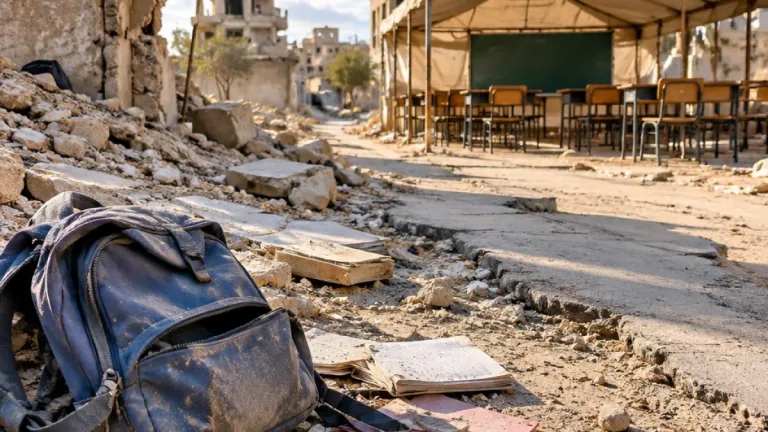
The returning population is adding to the challenge. More than 1 million Afghans have come back from the two neighbouring countries during 2026, including more than 245,000 children. The report identifies these returns, along with recurring emergencies and inadequate funding, as factors that are making it harder for the education system to meet demand.
“Afghanistan’s education situation in 2026 is defined by a widening mismatch between strong demand for learning and the capacity of the education system to meet it,” UNESCO and UNICEF said.
Girls remain excluded from formal schooling
The sharpest inequality concerns adolescent girls. Since the Taliban returned to power in August 2021, more than 2.6 million girls have been prevented from attending school beyond the sixth grade, the report says.
Some alternatives remain available, including community-based classes, literacy and skills programmes, distance and digital learning, and private tutoring. However, the agencies say these options are not sufficient to meet the educational needs of adolescent girls and cannot replace formal, face-to-face schooling or fulfil their right to education.
| Indicator | Figure |
|---|---|
| School-age population, 2019 | About 10.4 million |
| School-age population, 2024 | About 11.5 million |
| Girls barred from education beyond Grade 6 | More than 2.6 million |
| Children returning from Pakistan and Iran in 2026 | More than 245,000 |
| Community-based classes | About 5,300 |
Alternative provision cannot fill the gap
About 5,300 community-based classes currently serve approximately 162,000 learners. Girls make up 64% of those enrolled, indicating the importance of these programmes for children who cannot access regular schooling. Yet their limited reach means they cannot compensate for the loss of formal education for the millions of girls excluded beyond primary school.
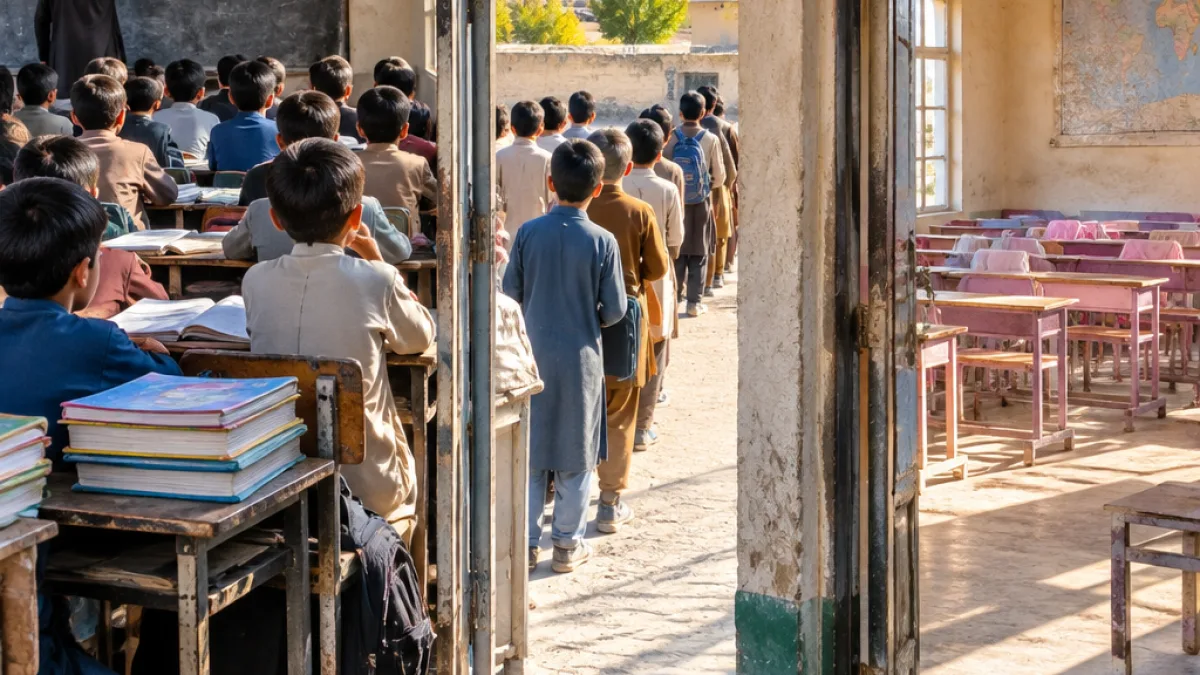
The report also records difficulties among boys. Approximately 53% of primary school-age children remain outside formal general education. Participation has weakened at both secondary stages, with enrolment reported at 67% in lower secondary education and 79% in upper secondary education.
- Population growth is increasing the number of children requiring education.
- Returns from Pakistan and Iran are bringing hundreds of thousands of children back into communities under pressure.
- Restrictions on girls are keeping more than 2.6 million learners out of school beyond Grade 6.
- Insufficient investment is limiting the system’s ability to expand services and support teachers and schools.
For learners and families, the figures point to a system where access depends increasingly on location, gender and the availability of alternative programmes. Children returning to Afghanistan may also need education services in communities that are already struggling to accommodate existing demand.
UNESCO and UNICEF’s assessment presents the central challenge as one of capacity: the demand for learning is growing, but the education system is not expanding sufficiently to meet it. Without adequate formal provision, the gap between the number of children needing education and the number able to access it will remain especially severe for girls and for children affected by displacement and return.