Tracker has marked 30 years in business by positioning itself as a broader technology and services company, moving beyond its origins in stolen vehicle recovery to help organisations manage risk, costs and operational performance.
The South African business began operating in 1996 as a vehicle recovery company. Its current offering includes connected technology, data intelligence and human expertise aimed at giving businesses greater visibility over their operations. That shift reflects the changing demands facing companies, which are under pressure to contain spending, improve productivity and respond to increasingly complex customer expectations.
From recovery to prevention
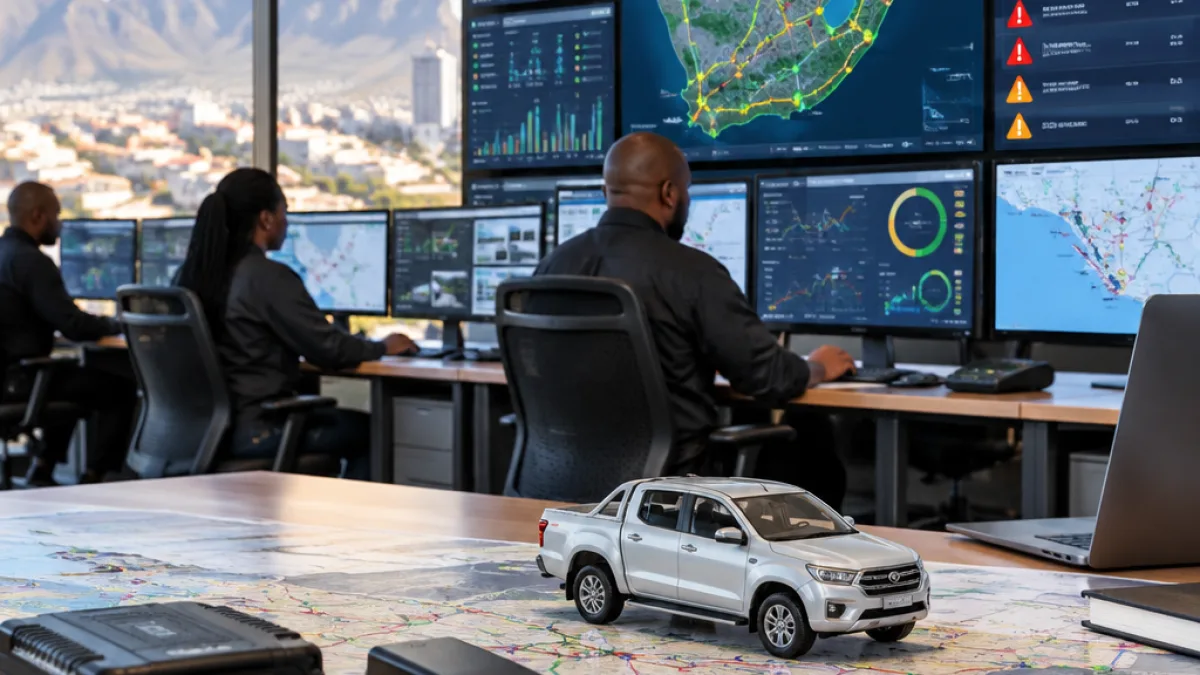
Vehicle recovery remains an important part of Tracker’s business, but the company’s focus has widened to include preventing incidents and identifying operational risks before they become more costly problems. Its tools include telematics, artificial-intelligence-powered cameras, real-time monitoring and advanced analytics.
For fleet operators, the potential value is practical rather than purely technological. Better information can assist with monitoring vehicles, improving driver safety and supporting duty-of-care responsibilities. It can also help businesses examine fuel consumption, vehicle use, compliance and the movement of goods. For companies operating fleets, these areas are closely linked to household-facing costs because transport expenses influence the price of products and services.
Solutions built around business outcomes
Tracker says it does not take a one-size-fits-all approach to its customers. Instead, it starts by identifying the outcomes an organisation wants to achieve and then develops connected solutions around those requirements. One business may prioritise safer driving and compliance, while another may be more concerned with fuel costs, fleet utilisation or supply chain control.
- Fleet management: supporting greater oversight of vehicles and their use.
- Video telematics: combining vehicle information with camera-based monitoring.
- Asset tracking: improving visibility of equipment and other mobile assets.
- Supply chain visibility: helping organisations monitor the movement of goods.
- Business intelligence: turning operational data into information for decision-making.
The company’s stated approach places customer needs ahead of deploying technology for its own sake. That matters for businesses weighing new systems at a time when every additional operating expense needs to be assessed against a measurable benefit. A platform that helps reduce unnecessary fuel use, improve vehicle utilisation or strengthen compliance may support efficiency, but the value will depend on how effectively the organisation uses the information and integrates it into daily decisions.
Data as an operating tool
Tracker’s expansion also reflects the wider movement from basic tracking towards data-led management. A location signal can show where a vehicle is, while combined information from monitoring systems and analytics can provide a fuller picture of how an operation is performing. That can give managers a basis for identifying risk, examining patterns and deciding where intervention may be needed.
| Business priority | Tracker’s stated focus |
|---|---|
| Safety | Driver monitoring and duty-of-care support |
| Cost control | Fuel management and improved fleet utilisation |
| Control | Real-time monitoring and operational visibility |
| Supply chains | Tracking goods and assets across operations |
For smaller companies, the same pressures can be particularly significant because fuel, maintenance, delivery delays and vehicle downtime can quickly affect margins. For larger organisations, the challenge is often managing complexity across fleets, assets and supply chains. Tracker says its services are designed for organisations across industries and fleet sizes, with the aim of addressing these operational challenges through connected information.
The anniversary therefore represents more than a milestone for a vehicle recovery business. It illustrates how a company can broaden its role as customer needs change, using its original capability as a base for services that extend into prevention, intelligence and efficiency. The immediate business question is whether these tools produce outcomes that can be seen in safer operations, better use of assets and more disciplined spending.
Businesses considering such systems should assess their own requirements, costs and expected returns before making decisions. This article is intended as business reporting and does not constitute financial advice.