
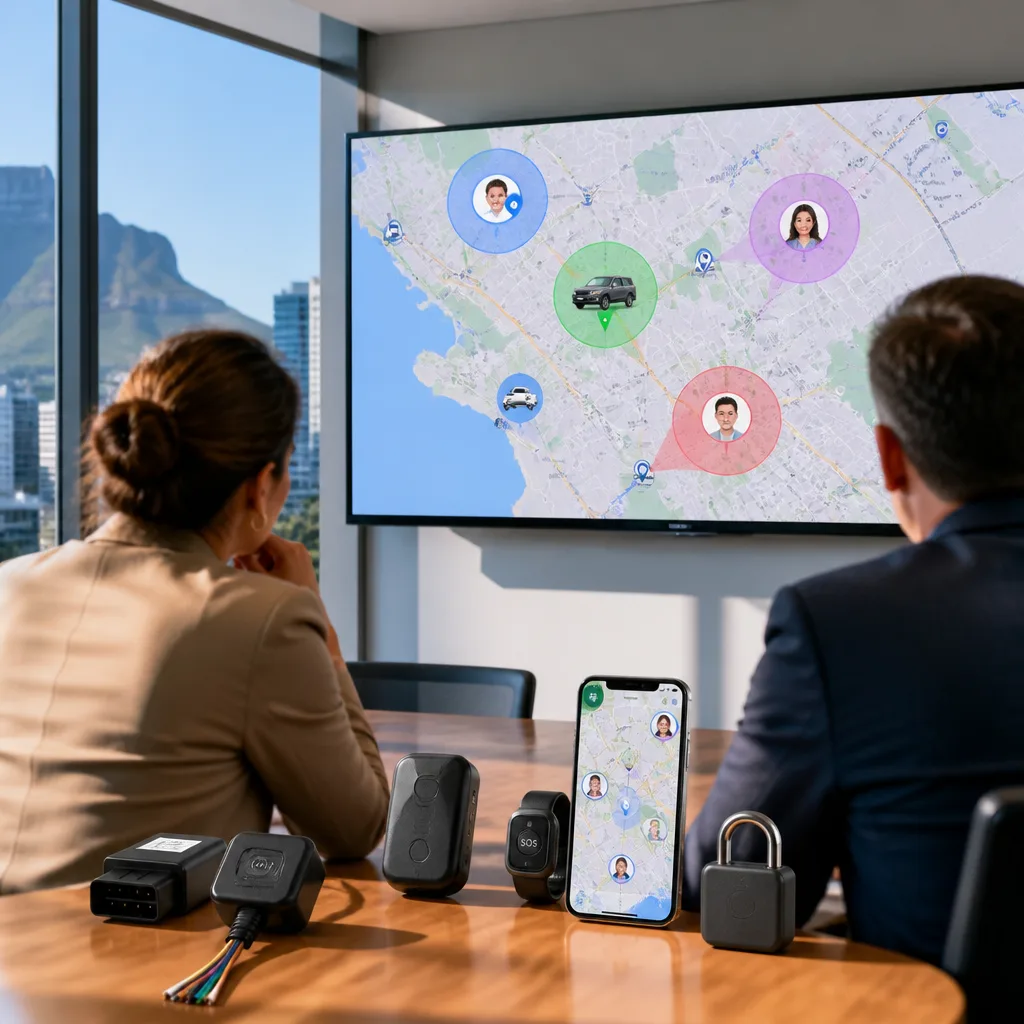
Netstar is moving beyond traditional vehicle tracking and recovery, aiming to knit together a broader consumer safety and commercial asset protection platform, the company says. The strategy, driven by newly appointed managing director Warren Mande, is intended to deepen customer relationships in an increasingly competitive market.
From a single product to an interconnected offering
Once a dominant player in vehicle tracking, Netstar — an important business unit and growth contributor for JSE-listed Altron — has ceded ground in recent years to rivals including Tracker SA, Mix Telematics (now merged with Powerfleet) and Karooooo-owned Cartrack. The company’s response is to treat tracking not as a standalone commodity but as one component of an interlinked ecosystem that protects people, non-motorised assets and commercial inventory.
The programme is structured into three broad segments:
- Personal and family safety — app-based emergency response, hardware panic buttons and location-based services;
- Consumer tracking — geofencing and family-member location alerts for caretakers and parents;
- Commercial asset protection — solutions aimed at safeguarding inventory and non-motorised assets across commercial operations.
These components are intended to work together so customers with one Netstar product might be encouraged to adopt others, mirroring the ecosystem approach popularised by large consumer tech firms and adopted by several industry competitors.
“In our consumer space … how do we help people look after themselves? How do we support our police force, and how do we provide an extra layer of security?”
That line from Mande, cited in the company’s recent profile, summarises the aim: offer personal security as a value proposition that users can access through a mobile app or a panic button, with private armed response or emergency medical services dispatched to an exact GPS location.
What this means for households and businesses
For households, the shift places more emphasis on safety services that operate independently of a vehicle. Parents and caretakers may gain new tools such as custom geofences — for example, school zone boundaries — and real-time alerts when a child moves beyond a designated area. For consumers already paying for vehicle tracking, bundled personal-safety services could represent added value without the need for separate subscriptions.
Commercially, protecting non-motorised assets and inventory addresses a broader pain point for logistics, retail and informal-sector businesses that currently rely on fragmented security arrangements. An integrated platform could reduce the number of vendors companies contract with, simplify incident response and provide consolidated reporting.
Altron has faced pressure to diversify and grow units like Netstar since the unbundling of Bytes Technology. The company’s pivot is therefore not only a response to customer demand but also to shareholder expectations that units deliver sustained growth and competitive differentiation.
Competitive landscape
The plan places Netstar in direct competition with firms that are themselves building multi-device, service-led ecosystems. While the source material does not disclose revenue targets, pricing or rollout timetables, the move signals an industry trend away from commoditised tracking devices to recurring, service-led business models.
| Company | Positioning |
|---|---|
| Netstar | Transitioning to safety and asset ecosystem (personal safety, consumer tracking, commercial assets) |
| Tracker SA | Established vehicle tracking competitor |
| Mix Telematics / Powerfleet | Global fleet management and telematics; recent merger expands scale |
| Cartrack (Karooooo) | Developing its own ecosystem of devices and services |
Key implications for the market include:
- Potential for higher customer lifetime value if consumers adopt multiple services;
- Greater emphasis on subscription and service revenue rather than one-off device sales;
- Increased competition as rivals also seek to broaden their offerings, making differentiation through customer experience and response times critical.
Netstar’s approach will be watched closely by investors and customers alike. If managed effectively, an ecosystem strategy could strengthen recurring revenue and deepen customer loyalty. But it will also require significant investment in technology, partnerships for emergency response and clear value propositions that justify extra monthly spend for households already under pressure from rising living costs.
Netstar’s announced direction is at once a defensive move to protect market share and an offensive push to capture adjacent markets — a familiar pattern as traditional hardware providers seek to become services-led businesses in a tougher competitive landscape.
WE NEWS does not provide investment advice.













