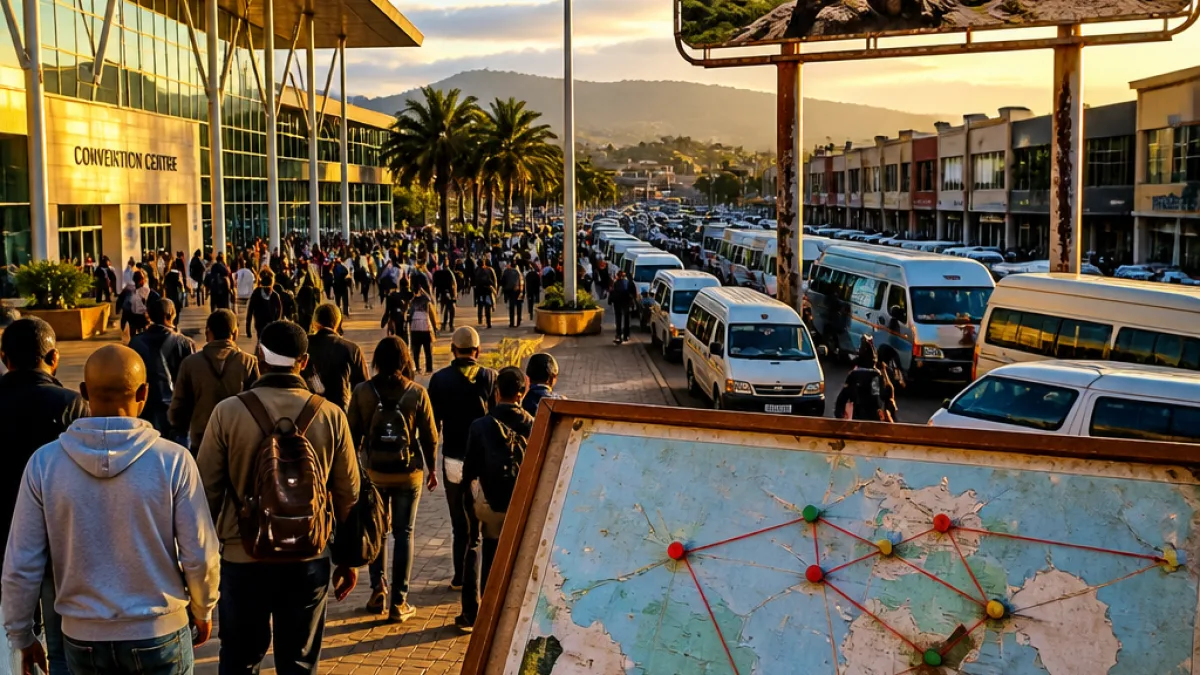
Tourist numbers mask weak economic returns
Mpumalanga welcomed around 2.7 million visitors in 2025 but is failing to translate arrivals into longer stays, greater spending and wider economic benefits for local communities, industry leaders said at the Mpumalanga Tourism Expo in Mbombela.
Speakers pointed to a combination of challenges — safety worries, limited transport mobility, a narrow range of tourism products outside headline attractions, and fragmented governance — that together blunt the province’s ability to capture visitor spend and create jobs.
“Our challenge is how do we manage Mpumalanga as a complete destination,”
The comment came from the Southern Africa Tourism Services Association (Satsa) national chairperson, who said the problem is no longer attracting visitors but getting them to stay longer and spend locally. Industry figures presented at the event show that while total tourism spend in the province amounted to R8.5 billion in 2025, only a small proportion of that is being retained in local economies.
Conversion, not arrivals, is the issue
Beacon Africa Tourism Consultancy’s chief executive highlighted a “conversion problem”: Mpumalanga is recording high visitor numbers without equivalent increases in revenue per visitor. She contrasted Mpumalanga with neighbouring Limpopo, which reportedly generated R5 billion from fewer arrivals, underlining the idea that more visitors do not automatically mean more local income.
Speakers warned that measuring success by arrivals alone masks weaknesses across the visitor value chain, from product diversity and transport connectivity to safety and the capacity of local businesses to benefit.
Accommodation and spend patterns
The composition of where visitors sleep offers one explanation for low local capture. Industry data shared at the expo indicate that a large share of visitors — roughly 90.8% — stayed with friends and family rather than in paid accommodation, sharply reducing direct spending in the formal tourism sector.
| Indicator | 2025 figure |
|---|---|
| Visitors to Mpumalanga | 2.7 million |
| Total tourism spend | R8.5 billion |
| Visitors staying with friends/family | 90.8% |
| Proportion of spend captured locally | ≈8% (about R8 of every R100) |
Where the money goes — and why it matters locally
Industry leaders said the province’s governance arrangements are undermining efforts to integrate tourism products across municipalities and districts. Weak coordination, they said, hampers joint marketing, route development, shared transport solutions and safety interventions that would encourage visitors to explore beyond the main draws and stay longer.
Low capture of spending reduces the income reaching small enterprises, township entrepreneurs, restaurants and tour operators. That in turn limits job creation and the multiplier effect that tourism can have in rural and peri-urban communities.
Action points raised at the expo
- Improve destination management to promote multi-day itineraries and disperse visitors beyond popular sites.
- Address safety and mobility constraints that deter longer stays and independent exploration.
- Support small and informal businesses to convert visitor presence into local spending.
- Enhance coordination across provincial and municipal authorities to deliver seamless visitor experiences.
Speakers urged a shift away from headline arrival statistics towards metrics that capture economic value: spend per visitor, length of stay and the proportion of tourist outlays retained locally.
What this means for residents and small businesses
For communities that border national parks, waterfalls and scenic routes, higher local capture of tourism revenue could mean more sustainable livelihoods and the ability to invest in services that tourists and residents both use. However, achieving that requires co‑ordinated improvements in safety, road and transport access, and a broader portfolio of attractions and services.
Tourism stakeholders at the expo repeatedly said the province already has the visitor numbers; the task now is to convert that footfall into meaningful economic benefits that reach towns, townships and rural communities across Mpumalanga.
Practical next steps for travellers and local vendors:
- Travellers: consider staying in registered guesthouses or community-run lodges to increase the proportion of your spend that benefits local people.
- Vendors and small operators: explore partnerships to create multi‑stop itineraries and joint marketing to capture visitors who would otherwise pass through.
- Municipalities: prioritise safety, signage and last‑mile mobility to make it easier for tourists to extend their stays.
With policy focus and operational coordination, Mpumalanga’s strong visitor numbers could translate into more jobs and better incomes for residents. For now, industry leaders say the province must move beyond counting people to measuring the real economic value those visitors bring.