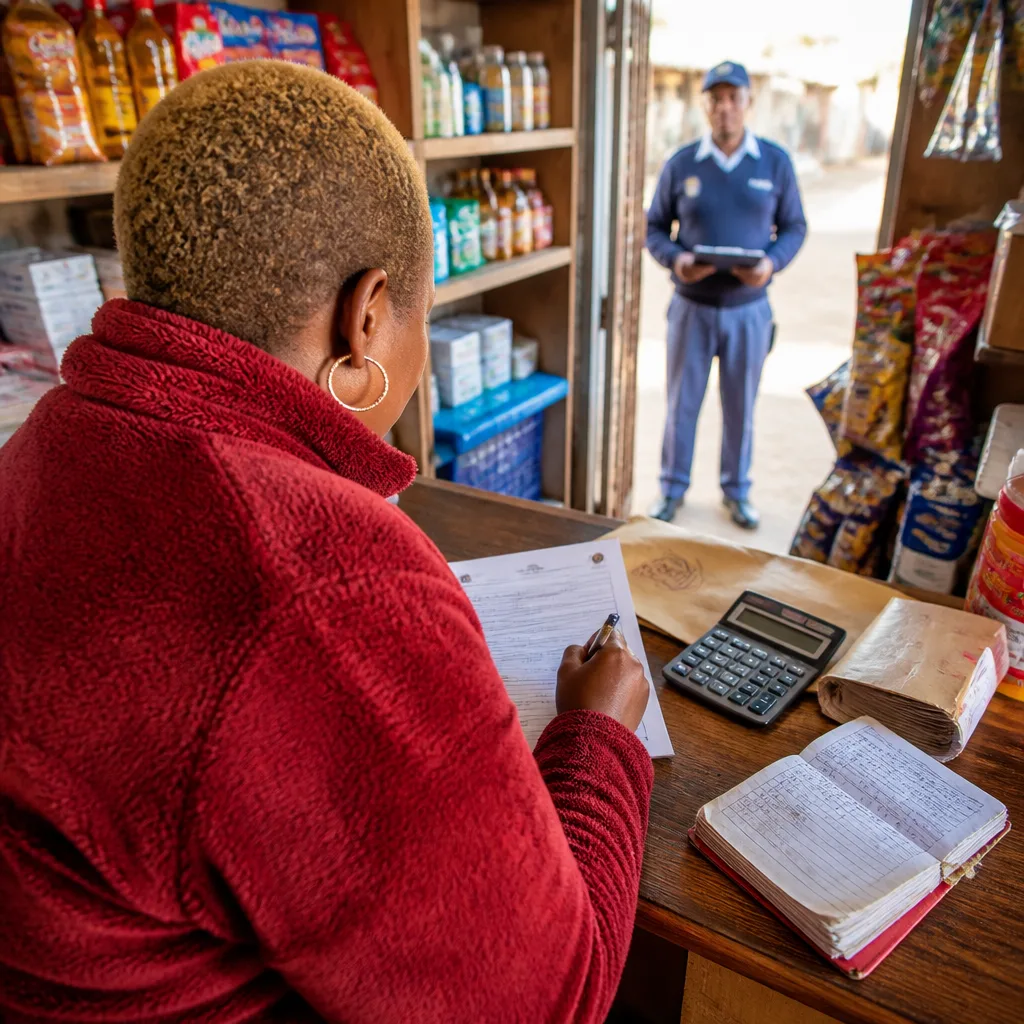
The South African Revenue Service (SARS) has intensified efforts to bring informal-sector businesses into the tax net, with spaza shops specifically identified as a sector of interest as the revenue authority seeks to broaden the country's tax base.
Why spaza shops are significant
Finance Minister Enoch Godongwana told reporters that SARS is pursuing improved registration, filing and payment across sectors where compliance remains low, naming the taxi industry and e‑hailing services as priorities and signalling that small retail outlets will also face scrutiny.
"SARS continues to broaden the tax base by improving registration, filing and payment, where tax compliance remains low. This includes the informal economy and the taxi industry,"
The spaza economy matters for two reasons. First, it is large: the sector is estimated to generate between R180 billion and R207 billion annually. Second, it is a major source of employment and convenience in townships and low‑income communities, with tens of thousands of shops operating across the country.
Revenue gains so far and enforcement data
SARS said it has registered 21,890 previously unregistered taxpayers in the informal economy since the 2024/25 financial year, yielding R314 million in additional revenue. The revenue authority is using a mix of data analytics, digital platforms, taxpayer education and simplified registration processes to identify and bring businesses into compliance.
| Measure | Figure |
|---|---|
| Estimated annual value of spaza sector | R180bn–R207bn |
| New informal‑economy taxpayers registered (since 2024/25) | 21,890 |
| Additional revenue from those registrations | R314 million |
| Customs seizures reported (2024/25) | R6.3 billion |
| Revenue recovered related to VAT fraud and illicit gold trading | R6.1 billion |
What this means for shop owners and households
Greater SARS attention could lift collections, but it also presents practical challenges for many small shop owners who operate informally. Registration and tax compliance bring administrative burdens — record keeping, filing and potentially VAT and income tax liabilities — that many spaza operators are not currently set up to manage.
- Costs: Compliance may require bookkeeping, accounting support or software that imposes new expenses on small operators.
- Cash flow: Regular tax payments can strain already tight margins, particularly where businesses are seasonal or have volatile turnover.
- Formalisation benefits: Access to formal financial services, credit and larger supplier relationships can be a long‑term upside to registration.
The government's emphasis on taxpayer education and simpler registration channels aims to mitigate the transition costs. However, the success of that approach will hinge on how accessible and affordable compliance measures are for businesses operating with limited records and informal supply chains.
Broader enforcement and anti‑illicit finance effort
Godongwana also said SARS is stepping up actions to curb illicit financial flows, including tax evasion, customs fraud, money laundering, corruption and organised crime. The authority reported 10,142 customs seizures worth R6.3 billion in the 2024/25 year and R6.1 billion recovered in relation to VAT fraud and illicit gold trading—figures the minister cited as evidence of coordinated enforcement yielding recoveries.
For policymakers, the challenge is balancing revenue recovery with the economic realities of township retailers. If compliance costs are high, some operators risk exiting the market or passing costs to consumers, squeezing already tight household budgets. Conversely, better compliance could formalise earnings, widen the tax base and improve public finances.
SARS's expanded approach signals that tax policy is shifting from selective enforcement to systematic inclusion of the informal economy. The immediate test will be how SARS implements registration drives and whether complementary support—training, simplified filing and affordable compliance tools—arrives alongside enforcement so that spaza shops can adapt without disproportionate harm to livelihoods.
WE NEWS does not provide financial advice.