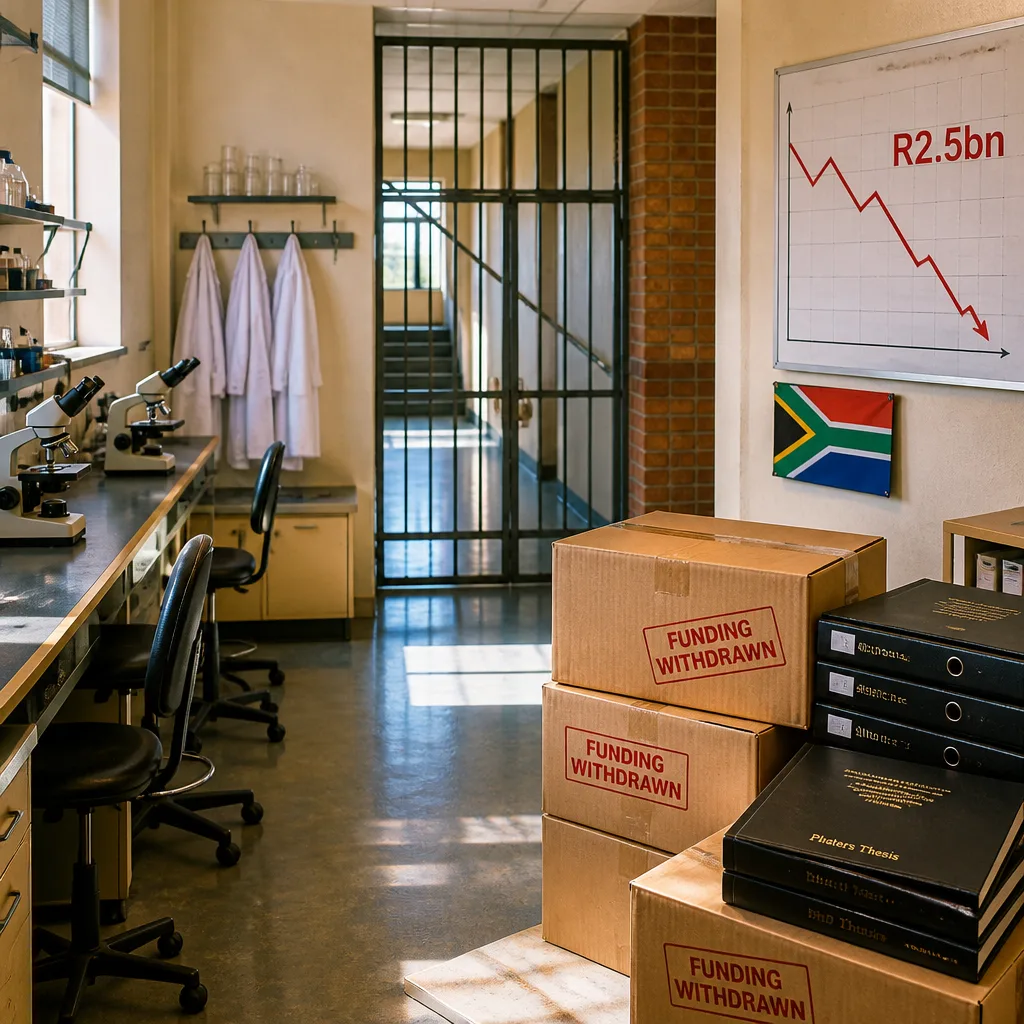
South Africa’s research and science system lost about R2.5 billion after the withdrawal of United States research funding, Science, Technology and Innovation Minister Blade Nzimande said as he released a ministerial working group report in Pretoria on 29 September.
"The total amount of impact, money-wise is R2.5 billion. That’s what our research and science system suffered with that withdrawal," Nzimande said.
Institutions and programmes affected
The minister said the cuts affected several major research institutions, including the University of Cape Town, Wits University, the University of Pretoria, the South African Medical Research Council and CAPRISA. The working group was established after the US government withdrew funding for South African health research and clinical programmes, particularly those focused on HIV and tuberculosis.
According to the report, the South African Medical Research Council estimated that R1.6 billion of the cuts were linked to the US National Institutes of Health (NIH). The NIH-related reductions placed 1 930 research posts and 108 student degrees at risk. One specific loss cited was an HIV vaccine trial that lost a newly awarded five-year grant worth $45 million.
What the report recommends
The working group’s report, released for public comment, argues that the funding shock has highlighted weaknesses in how critical research programmes are financed and sets out several priorities:
- More predictable domestic funding for strategic research areas.
- Protection of critical platforms in health, genomics, biotechnology and public health.
- Increased public and private spending on research and development.
Current expenditure on research and development in South Africa stands at about 0.62% of gross domestic product, well below the national target of 1.5%. The report also noted that roughly 17.3% of the country’s research and development funding is dependent on foreign donors, with health research more exposed than other fields.
Why this matters
The withdrawal underlines a broader policy challenge for South Africa: reliance on external partners leaves vital programmes vulnerable to geopolitical shifts and donor policy changes. The working group report points to disruptions experienced during the COVID‑19 pandemic — when restrictions by the United States, the United Kingdom and some European countries affected access to vaccines and therapeutics — as part of the same set of risks.
Ministry recommendations seek to bolster domestic funding mechanisms so core platforms are insulated from sudden external decisions. The report says some NIH funding could be reinstated after the US clarified whether certain grants fell within the definition of foreign aid; however, the working group emphasises that relying on reversals is not a sustainable strategy.
Implications for researchers and students
Losses on the scale reported threaten both employment in the research sector and the continuity of postgraduate training. With nearly 2 000 posts and more than 100 student degrees reported at risk, projects may be delayed or halted, affecting longitudinal studies and clinical trials that underpin public health responses.
| Item | Reported impact |
|---|---|
| Total estimated loss | R2.5 billion |
| NIH-linked cuts (SAMRC estimate) | R1.6 billion |
| Research posts at risk | 1 930 |
| Student degrees at risk | 108 |
| Lost grant cited | $45 million (five-year HIV vaccine trial grant) |
The working group’s recommendations aim to prompt dialogue between government, universities, research councils and the private sector about building more resilient funding structures. For South Africans dependent on research outputs — from new diagnostics to clinical trial results — the stability of these funding streams will determine whether important work continues uninterrupted.
Public comment on the report is expected to inform policy adjustments intended to reduce exposure to external shocks and to prioritise strategic domestic investment in research and innovation.