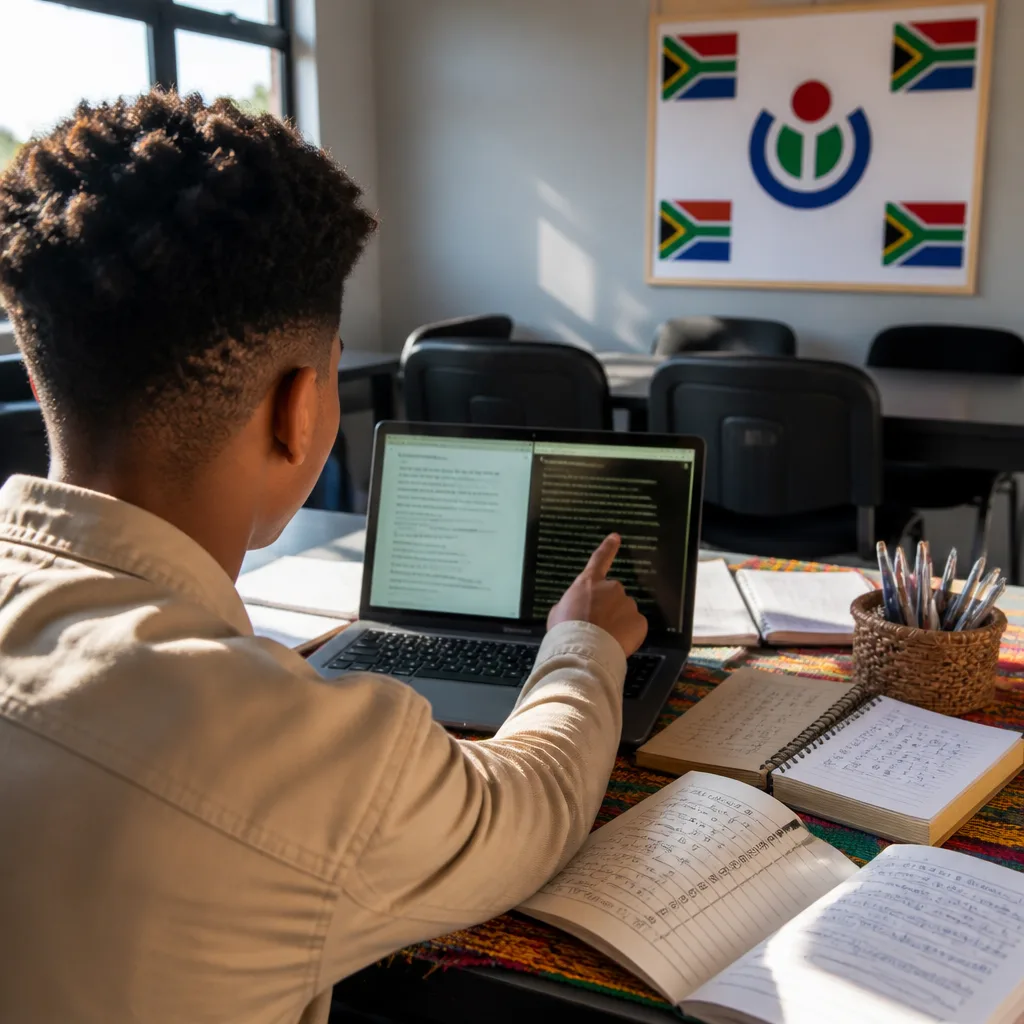
South Africa’s annual Heritage Month rituals — the songs, dances and traditional dress which take centre stage each September — mask a persistent problem: many indigenous languages remain sidelined where modern knowledge is produced and shared.
That concern was crystallised during a Wikimedia South Africa campaign to translate articles about national heritage into local languages. According to reporting on the session, a student opted to translate into Afrikaans rather than her mother tongue because her school had not taught her how to write it. The episode shows how a language can still be spoken confidently in homes and ceremonies while being weak on the page and in institutions that govern learning and technology.
The gap between ceremony and capability
South Africa recognises eleven spoken official languages and South African Sign Language. Yet recognition on paper has not automatically translated into parity in platforms of serious public life. English continues to dominate universities, corporate communication, much of the media, the professions, scientific publication, technology and large parts of government, according to the source reporting the Wikimedia session.
When a language is absent from classrooms, laboratories, libraries and code repositories it ceases to be a vehicle for transmitting modern knowledge. It can remain vibrant in family conversation, songs and ritual, but that is not the same as being able to carry scientific concepts, legal definitions, technical instructions or digital interfaces.
“She could not write her home language because the school she attended had never properly taught her how,” the reporting said of the student at the translation session.
The implications reach beyond cultural pride. If a language is not taught and used for formal knowledge, it will be poorly represented in technology products, digital content and educational resources — widening barriers to participation for speakers in an increasingly digital economy.
- Education: Learners who cannot read or write in their home language miss out on cognitive and literacy benefits associated with mother-tongue instruction in early grades.
- Technology: Limited written material in local languages reduces the incentive for localisation of software, apps and AI training data.
- Knowledge production: Research and scientific publication in non‑English languages struggle to gain the same visibility, deepening linguistic hierarchies.
These trends form a feedback loop: fewer teaching resources and less written content produce fewer fluent academic writers in those languages, which in turn reduces the presence of those languages in digital repositories and scholarly work.
| Recognised languages | Note |
|---|---|
| 11 spoken official languages | Plus South African Sign Language |
Addressing this gap requires action across sectors. Schools must ensure literacy in home languages is taught effectively; higher education and research institutions should support scholarship and publication in a wider range of languages; and technology firms and civil society need to prioritise localisation and the creation of accessible digital content.
Failure to act risks turning South Africa’s languages into performance pieces rather than living media for knowledge. Heritage Day snapshots are valuable for visibility, but the harder work is enabling languages to operate where the future of work, science and civic life is decided.
For everyday South Africans on tight data budgets and limited access to digital tools, having services, help desks, educational content and interfaces available in a language they read and write is not a cultural luxury — it is a practical necessity. The Wikimedia episode is a reminder that symbolic recognition must be matched by investment in language teaching, publication and technology if indigenous languages are to thrive beyond ceremony.