
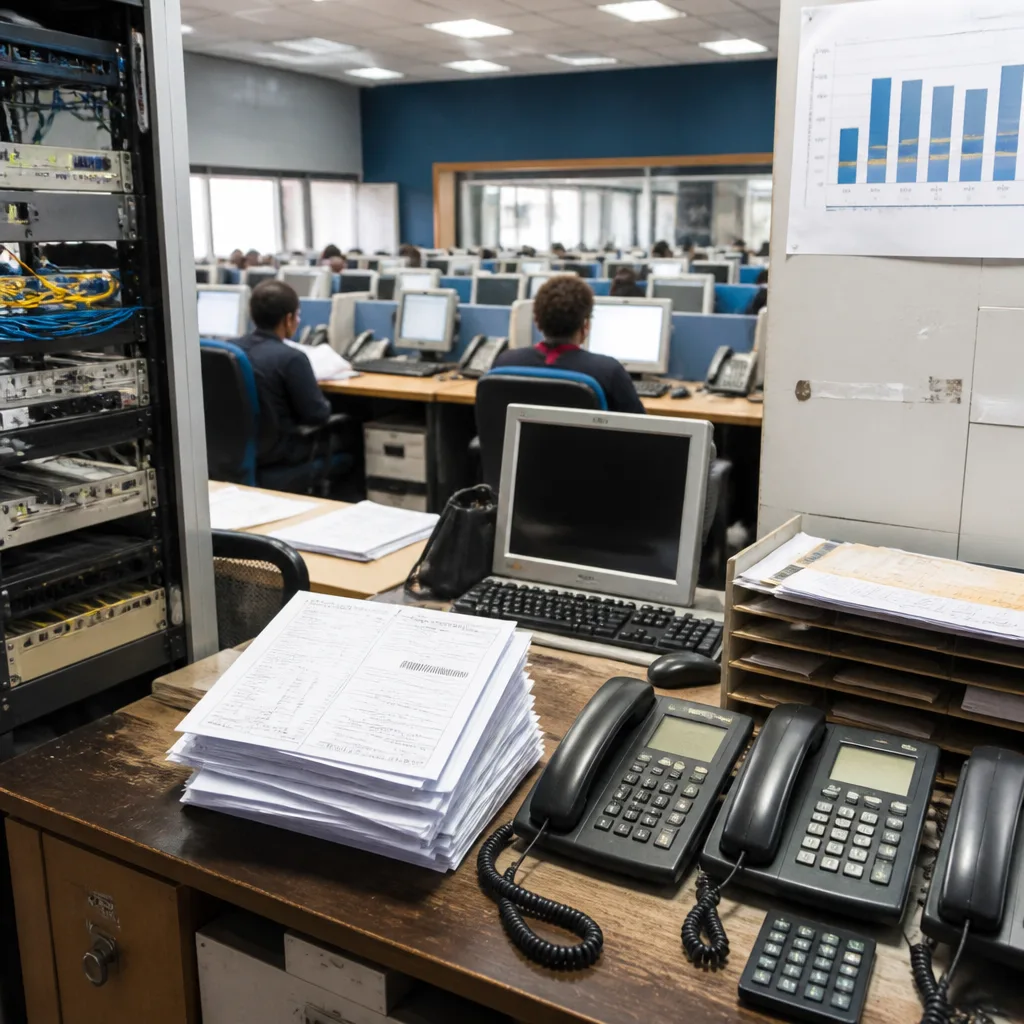
The South African Police Service’s 10111 emergency call centres are operating on ageing communications systems and remain understaffed even after R19.3 million was spent on two core systems over the past five financial years, Acting Police Minister Firoz Cachalia said in a parliamentary reply.
Maintenance spending but no capital upgrade
Cachalia provided the figures in response to questions from DA MP Ian Cameron, confirming that while the SAPS paid roughly R19.3 million for the Global Emergency Mobile Communications Command and Control (GEMC3) system and the Mobile Data System (MDS) between 2021/22 and 2024/25, there was no capital investment to modernise or replace the three principal platforms that support the 10111 service.
Those platforms include the Cisco telephone infrastructure, GEMC3 and MDS. The Cisco Unified Communications Manager used at the centres has reached official end-of-life and end-of-support status, meaning it will no longer receive software updates, security patches or vendor technical support — a situation Cachalia warned could create:
"operational, reliability, cybersecurity, and system sustainability risks"
Calls dropped, staff shortfalls persist
The problems are long-standing. Cachalia’s response references earlier disclosures that over 7 million emergency calls were dropped across the 2020/21, 2021/22 and part of the 2022/23 financial years. Staffing at 10111 centres has also been a persistent constraint: the service was supposed to have 3,344 personnel but had only 1,315 staff as of April 2022, according to previous reporting cited by the minister.
At one point only 41.5% of required personnel were deployed. SAPS has sought to address capacity by training and assigning additional personnel: the 10111 Reform Project Plan included the allocation of 535 newly trained constables to the call centres.
What the maintenance spending covered
Cachalia supplied annual expenditure figures for GEMC3 and MDS. The amounts recorded were:
- 2021/22: R4.04 million
- 2022/23: R4.15 million
- 2023/24: R2.70 million
- 2024/25: R3.19 million
- 2025/26 (to date): R5.20 million
| Financial year | GEMC3 & MDS spend |
|---|---|
| 2021/22 | R4.04 million |
| 2022/23 | R4.15 million |
| 2023/24 | R2.70 million |
| 2024/25 | R3.19 million |
| 2025/26 (to date) | R5.20 million |
Why the technology matters to users
For members of the public the 10111 line is often the first — and sometimes only — route to urgent police assistance. A telephone system that no longer receives security patches is not simply an IT problem: it raises the risk of outages, degraded call quality and potential cybersecurity vulnerabilities that could compromise call routing or call-taker consoles.
Operational weaknesses are compounded by staff shortages. Fewer operators increase the likelihood that incoming calls will not be answered or will be dropped, which in turn delays dispatch of resources. The earlier estimate that more than 7 million calls were dropped across several years highlights the practical consequences of underinvestment.
Government measures to bolster capacity — such as the addition of 535 trained constables — address human resources but do not resolve the reliance on unsupported communications hardware and software.
What comes next
Cachalia’s response does not outline a funded plan to replace the Cisco platform or to pursue a capital upgrade across the three systems. Without a scheduled capital replacement or vendor-supported migration path, SAPS will continue to meet operational needs through maintenance contracts and ad hoc spending, which risks higher costs and vulnerability over time.
For now, the SAPS faces a two-front challenge: remedying a technology stack that has reached end-of-life while ensuring sufficient trained staff are in place to answer emergency calls. Both are essential if the 10111 service is to meet public expectations for a reliable national emergency line.










