
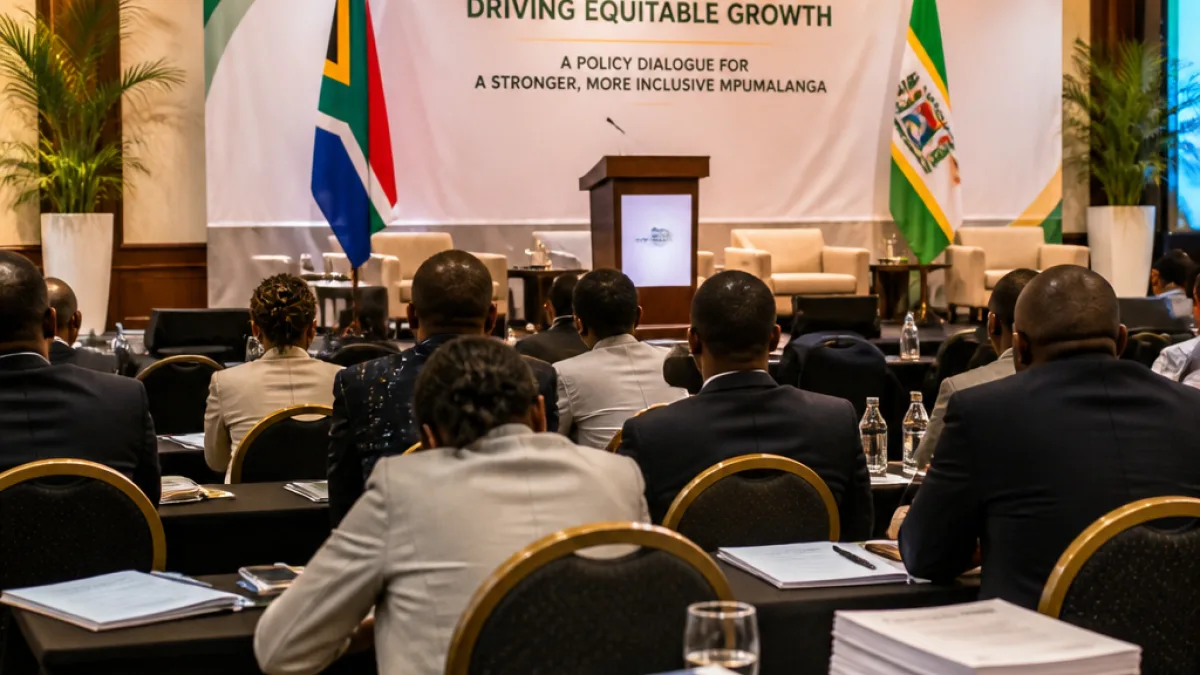
Mbombela staged the second National Labour Relations Conference from 16 to 18 September, bringing senior public‑service officials, labour practitioners and provincial leadership together to debate how to strengthen labour relations in the public sector and advance South Africa’s developmental agenda.
Calls to protect workers and rebalance power
The conference, held at The Capital Hotel, was convened under the theme: “Building Labour Relations capacity and capabilities for the realisation of South Africa’s developmental state.” Delegates discussed an array of issues affecting labour relations across government, with an emphasis on fairness, dignity and protecting workers from potential abuse of power.
The Premier of Mpumalanga, Mandla Ndlovu, told the gathering the event represented more than an administrative meeting; it was a reaffirmation of commitments that must underpin public‑service conduct. He said South Africa’s democratic order was shaped by the workers’ struggle and that organised labour continued to be central to social and economic progress.
Minister urges professionalisation and a review of disciplinary codes
In his address the Minister of Public Service and Administration, Inkosi Mzamo Buthelezi, called for a programme of professionalisation across labour relations practitioners and urged delegates to confront emerging problems such as the “juniorisation” of those responsible for managing labour matters.
“We must begin by professionalising labour relations and building real state capacity, which means this conference must deliberate honestly on the emerging phenomenon of juniorisation among practitioners.”
Buthelezi also urged a review of disciplinary processes so they are fair, efficient and shield workers from arbitrary action where checks and balances are inadequate. He linked improved labour relations capacity directly to the functioning of an effective developmental state.
Focus areas and practical implications
Delegates said the conference provided a platform to:
- Strengthen labour relations across national and provincial departments;
- Deepen collaboration between government and organised labour;
- Build capacity and professional standards for labour practitioners in the public service.
Speakers stressed that the public service must model fair labour practices: transparent disciplinary codes, consistent grievance procedures and accessible labour relations expertise. For workers, clearer processes could mean swifter resolution of disputes and reduced risk of unfair dismissals or punitive actions.
Why this matters in Mpumalanga
Mpumalanga’s economy relies on manufacturing, mining, tourism and public services that support communities across the province. Labour stability in the public sector influences service delivery, from municipal functions to education and health. Strengthening labour relations capacity therefore has a knock‑on effect on ordinary residents who depend on reliable municipal and provincial services.
For labour unions and employees in Mpumalanga, the conference signals renewed attention at national and provincial levels to ensure protections and procedures are fit for purpose. For provincial administrators, it means further investment in training and possibly revised human resources practices to align with national guidance.
Conference snapshot
| Item | Detail |
|---|---|
| Event | 2nd National Labour Relations Conference |
| Dates | 16–18 September |
| Venue | The Capital Hotel, Mbombela |
| Theme | Building Labour Relations capacity and capabilities for the realisation of South Africa’s developmental state |
| Notable speakers | Premier Mandla Ndlovu; Minister Inkosi Mzamo Buthelezi |
Next steps and expectations
Outcomes from the conference are expected to feed into discussions on human resources and labour policy across national and provincial structures. The minister’s emphasis on professionalisation suggests future training initiatives and possibly updated minimum standards for labour relations practitioners in government.
For public servants and union representatives in Mpumalanga, this could translate into:
- More structured training and accreditation for labour relations officials;
- Revised disciplinary codes and guidance to ensure consistency and fairness;
- Closer co‑operation between labour, management and oversight bodies to reduce disputes and improve service delivery.
As discussions move from conference halls to policy and practice, municipal and provincial managers will face the practical task of translating commitments into workplace procedures that protect workers while ensuring the public service can deliver on its developmental mandate.
Coverage from the three‑day conference highlights a continuing national conversation about how to professionalise labour relations, guard workers’ rights and strengthen state capacity — issues with direct consequences for Mpumalanga’s public sector and the communities it serves.













