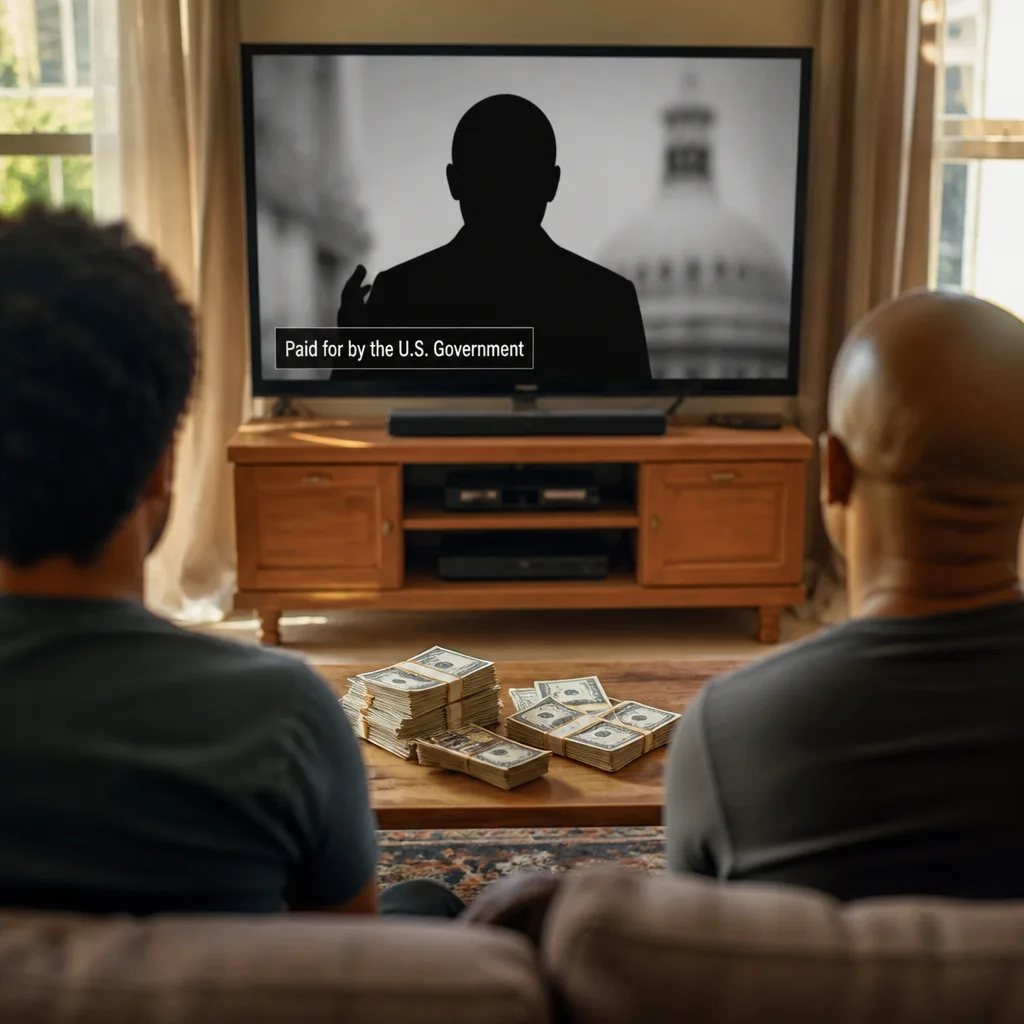
A television advertisement previously used by Donald Trump’s 2024 campaign has been aired again this weekend with the new on-screen label “Paid for by the U.S. Government”, a move that ethics experts and critics say may breach laws barring taxpayer-funded political propaganda, the New York Times reported on 27 September 2026.
What was broadcast
The ad is a sombre, black-and-white spot that originally formed part of Mr Trump’s 2024 campaign advertising. The latest version concludes with the words “Paid for by the U.S. Government”, rather than the campaign disclaimer that would normally identify a private political sponsor, the New York Times reported. The spot features Mr Trump promising to “expel the warmongers” and attacking a so-called “deep state”, language that had previously been deployed in a partisan campaign context.
- The ad aired on mainstream television and during high-profile broadcasts this weekend, according to ad-tracking data cited by the newspaper.
- Broadcasts included “Fox News Sunday”, “Saturday Night Live” and several college and National Football League game telecasts, including the Seattle Seahawks versus Washington Commanders and the Ohio State–Illinois matchup, the New York Times reported, citing data from ad-analytics firm AdImpact.
“The president and his administration have gone from breaking the law to trampling it,”
— Norm Eisen, former White House special counsel for ethics and government reform under Barack Obama, quoted by the New York Times.
Ethics concerns and the White House defence
Ethics lawyers and critics argue the reappearance of the spot with a government attribution may violate federal restrictions on using public monies for propaganda or political advocacy, particularly because the creative was first used in an explicitly political campaign. The New York Times quoted Norm Eisen, who has previously sued the Trump administration, as saying the administration had crossed from “breaking the law” to “trampling it”.
The White House pushed back in a statement, telling the New York Times that the spots were reissued as “public service announcements” intended to “remind Americans to love their country and understand what makes it worth defending, at home, at our borders, and abroad.” The administration also said there was no “call to action” in the ads.
Where it ran
| Platform | Examples cited |
|---|---|
| Television news/talk | Fox News Sunday |
| Entertainment | Saturday Night Live |
| Sport (college and NFL) | Seahawks v Commanders; Ohio State v Illinois |
Who benefits and who pays
The immediate beneficiary of wide broadcast placement is the former president’s message — repackaged and distributed at scale. The New York Times’ reporting underscores a tension: if the government funds placement, the cost is borne by taxpayers; if the ad operates as partisan messaging, political opponents and ethics watchdogs say that undermines legal and democratic norms.
Supporters of the White House line will point to the administration’s insistence that the material is non-partisan civic messaging. Critics, including some former ethics officials, characterise the reuse of campaign material with a government label as a more explicit transgression because the same content was previously deployed in an electoral fight.
The New York Times’ coverage cites ad-analytics firm AdImpact for scheduling data and quotes former ethics officials for legal and normative criticism. The White House statement defending the spots is also included in that reporting.
As the matter develops, questions are likely to centre on whether the advertisements meet legal tests for public information versus political advocacy, which could draw further scrutiny from courts, congressional committees or ethics enforcers — all avenues the New York Times’ reporting suggests may now come into play.