
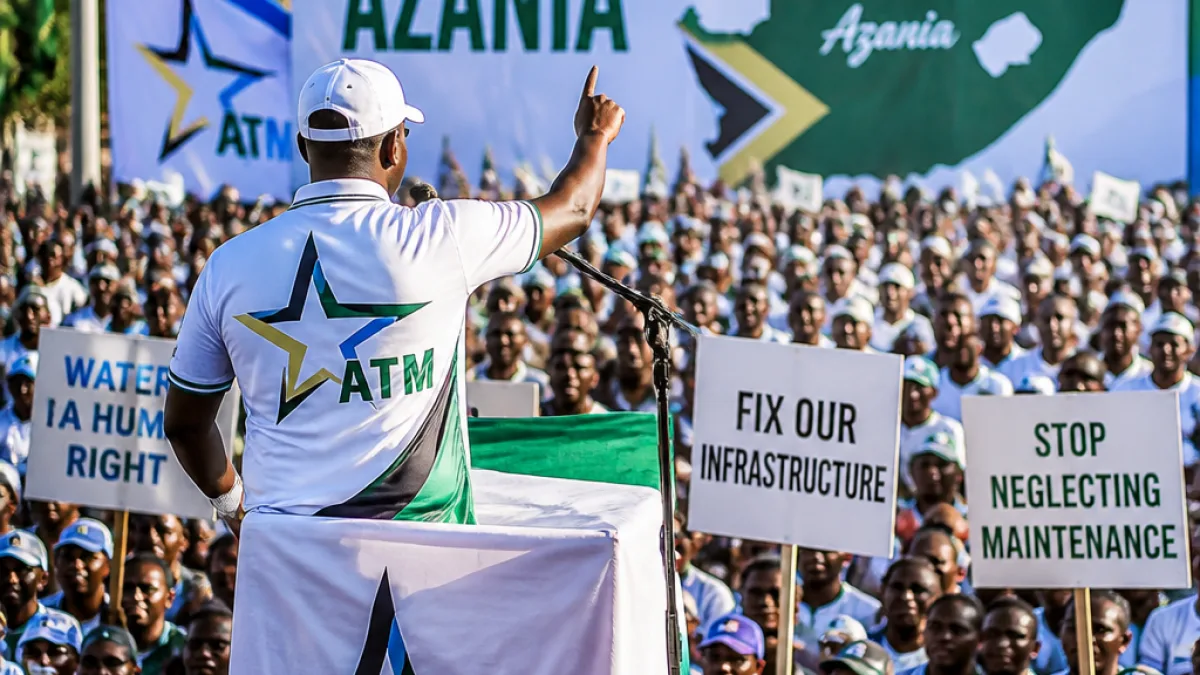
DURBAN — The African Transformation Movement (ATM) on Tuesday proposed that the country’s name be changed to Azania, arguing the current name is merely a geographical label and strips citizens of identity. The party also announced its mayoral candidates for the Eastern Cape and KwaZulu‑Natal and set out service-delivery priorities it says will anchor its campaign for the 4 November local government elections.
Identity, service delivery and coalition talk
ATM president Caesar Nongqunga framed the name-change proposal as a question of identity. He said the label 'South Africa' reduces people to a location rather than a people with a shared name and history.
“I’m very serious. You know, once you rob a person of his identity, you have committed a crime. You have committed a crime, and that crime is very serious,”
Nongqunga said the party has already begun a process by raising the idea publicly and linked that cultural argument to the ATM’s more immediate municipal agenda for the upcoming polls. He told a political gathering in Durban the ATM will contest elections in all nine provinces and is fielding candidates in the Eastern Cape as part of a broader plan to expand its footprint.
Service priorities for municipalities
In outlining the ATM’s local-government platform, Nongqunga identified three core priorities the party will pursue where it contests councils. These were framed as foundational steps for improving basic municipal outcomes:
- Water provision — described as the first and non-negotiable priority.
- Infrastructure — securing and upgrading municipal assets.
- Capacity for repair and maintenance — building the skills and systems to sustain services.
He said other issues would be addressed as they overlapped with these core interventions, and singled out sport as an area the party would encourage in towns, townships and rural places.
Coalitions and political positioning
The ATM is not ruling out working with other parties post-election. Nongqunga said his party would be open to coalitions “in councils where there are no outright winners”, signalling a willingness to negotiate power-sharing arrangements at municipal level.
The move to promote a name change comes amid renewed discussion around symbols, names and identity in South African politics — a debate that has periodically surfaced in the country’s post‑1994 history. The proposal to rename the country is likely to provoke strong responses across the political spectrum, including from parties and organisations who either support or oppose symbolic transformations amid pressing service delivery challenges.
What this means for the Eastern Cape
For the Eastern Cape — a province grappling with persistent municipal service problems including water interruptions, deteriorating infrastructure and constrained maintenance capacity — the ATM’s emphasis on the same three priorities aligns with longstanding local concerns. The party’s campaign promise to prioritise water supply will be closely watched in municipalities where residents regularly face disruptions and where service stability is a central electoral issue.
| ATM municipal priorities | Practical focus |
|---|---|
| Water provision | Ensuring reliable supply to households and institutions |
| Infrastructure | Upgrades to roads, bulk water and sanitation networks |
| Repair and maintenance capacity | Skills development and systems to sustain services |
It remains unclear from the ATM announcement which specific Eastern Cape municipalities the party believes it can win or influence. The party’s capacity to deliver on promises will depend on its electoral strength and whether it enters coalitions in hung councils.
Electoral context and next steps
Municipal elections on 4 November will determine control of hundreds of local councils across the country. Smaller parties such as the ATM often play kingmaker roles in municipalities without outright majorities, using coalition negotiations to secure policy influence or key positions.
Observers will be watching how voters — particularly in the Eastern Cape, where service delivery is a dominant electoral issue — respond to a platform that blends symbolic nation‑building with a narrowly defined municipal service agenda. The ATM’s proposal to change the country’s name to Azania introduces a cultural dimension that could reshape the party’s appeal beyond local service questions.
Further details on the ATM’s Eastern Cape mayoral candidates and localised campaign plans were not included in the party’s initial announcement and will be critical for assessing its electoral prospects in the province.
— Xolani Mgijima, Eastern Cape Correspondent












