
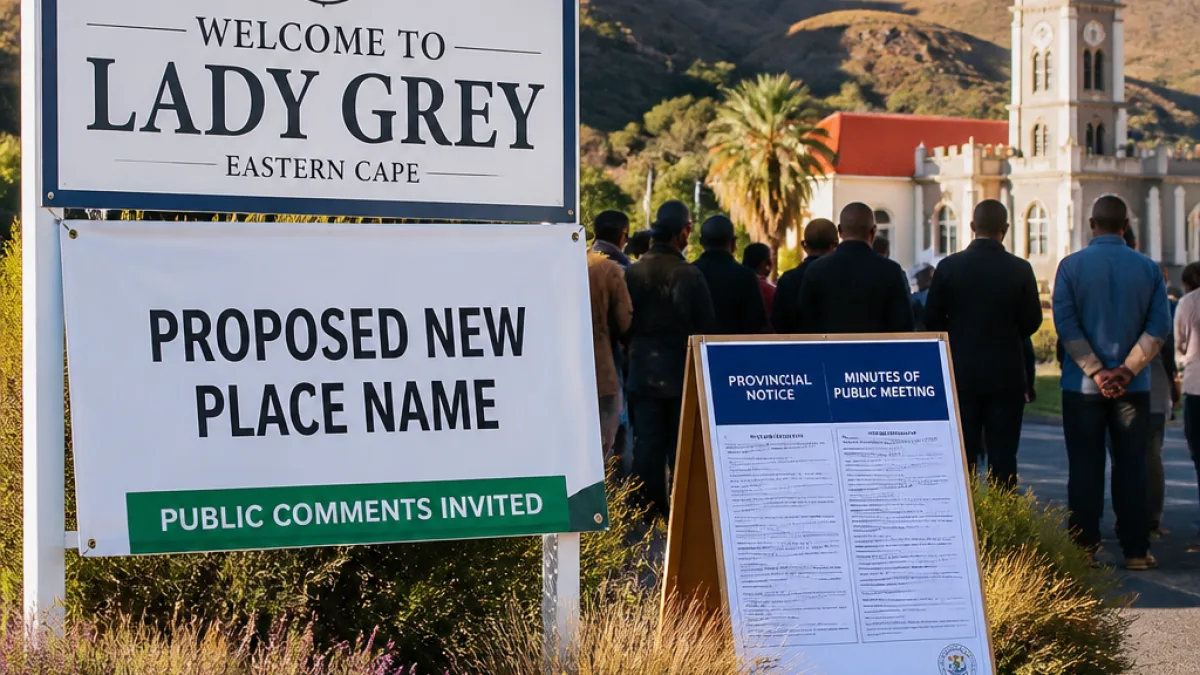
The Eastern Cape Provincial Geographical Names Committee has confirmed it will proceed with proposed name changes for several towns, including Lady Grey, Sterkspruit and Herschel, as part of an ongoing programme to honour historic traditional leaders and figures from the province's past.
The proposals, revealed this week, list the new names as Inkosi Makhobeni for Lady Grey, Inkosi Mpangazi for Sterkspruit, and Inkosi Lihlongo for Herschel. The committee said the changes form part of a wider geographical renaming process across the province intended to recognise previously marginalised place names linked to traditional leadership and local heritage.
Historical context and local significance
Lady Grey is among the settlements most affected. The town traces its origins to 1857 when the Dutch Reformed Church bought a farm to establish a new congregation; the settlement was founded in 1858 and became an official municipality in 1893. Herschel was established in 1879. Sterkspruit likewise has a long local history as a rural service town in the Joe Gqabi District.
| Current name | Proposed new name | Founding year / note |
|---|---|---|
| Lady Grey | Inkosi Makhobeni | Founded 1858; municipality from 1893 |
| Sterkspruit | Inkosi Mpangazi | Historic rural town (no founding year provided) |
| Herschel | Inkosi Lihlongo | Founded 1879 |
These proposals are the latest in a series of geographical name changes in the Eastern Cape. In recent years, several prominent places have been renamed, including East London to KuGompo City, Port Elizabeth to Gqeberha, Grahamstown to Makhanda, and King William’s Town to Qonce, among others. The provincial committee said further changes remain under consideration.
Political opposition and local concerns
The proposals have already drawn political resistance. The Freedom Front Plus (FF+) has criticised the renaming process, arguing that established names and historical identities are being removed without adequate consultation. The party said the changes risk erasing colonial-era place names that reflect part of the province's recorded history.
Local reactions are mixed. Some community members and traditional leaders support the intent to honour indigenous leadership and correct imbalances in public commemoration, while others warn that name changes can create administrative costs, disrupt local branding and tourism, and complicate municipal records if not handled with extensive consultation and clear implementation plans.
- Potential costs include new road signage, changes to official documents and stationery, and updates to digital mapping services.
- Residents may need clarity on the timing and legal processes before municipal administration can implement changes.
- Heritage groups and historians often call for balanced approaches that preserve historical context while recognising previously excluded figures.
What comes next
Under the geographical names process, proposed changes are considered by the provincial committee before recommendation to the national South African Geographical Names Council for final approval. The committee said these proposals will follow the prescribed consultation and public comment periods. Any final decision will also require alignment with municipal and national records.
Practical questions remain for local residents and municipal officials: when changes would take effect, how costs will be funded, and how signage and official documents will be updated. The committee has not published a timeline for implementation for these latest proposals.
The debate over place names in the Eastern Cape mirrors national conversations about identity, memory and how public spaces reflect South Africa’s diverse histories. For towns such as Lady Grey, with more than 160 years of recorded history, the proposals are particularly sensitive and likely to provoke sustained local discussion in the months ahead.
Further updates will depend on the provincial committee’s consultation schedule and any submissions lodged by municipalities, heritage bodies and political parties.












