Micro‑festival model: intimacy over spectacle
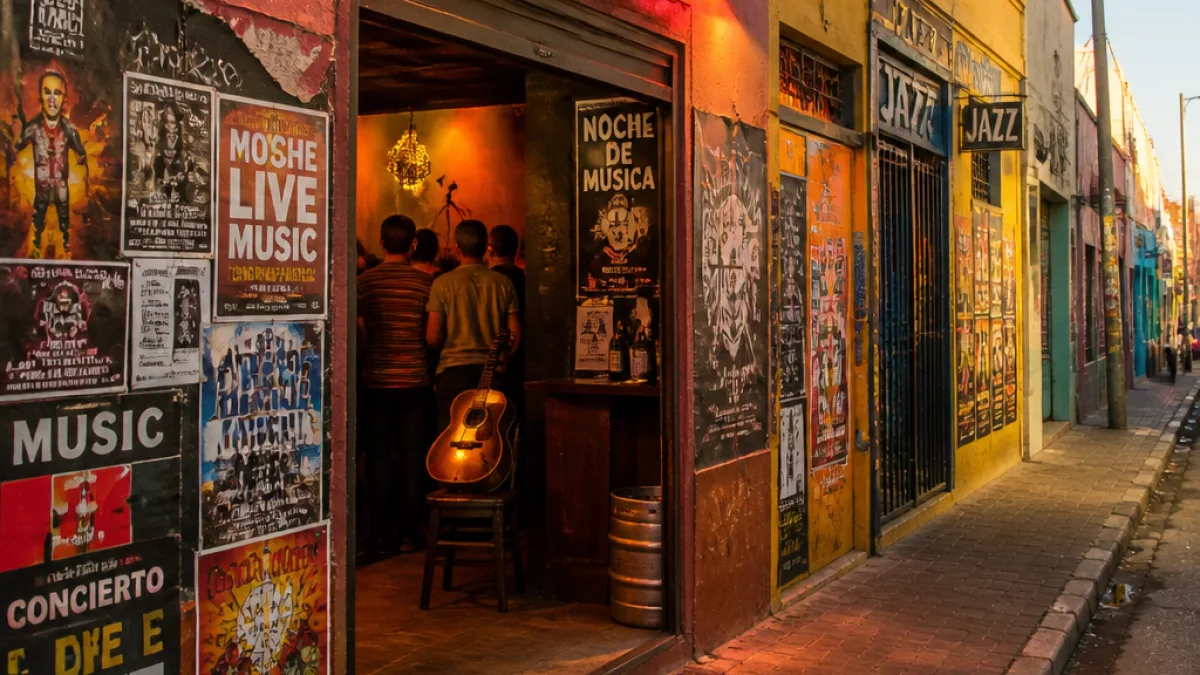
Rather than a single site, the festival used several sites across the city, continuing a format SON Estrella Galicia has been developing elsewhere in Europe. The organisers staged shows in compact, unconventional spaces where audiences were close to the performers, creating a series of short, intense live experiences rather than full‑scale headline concerts.
The weekend kicked off with a notably intimate performance by London‑based bedroom pop artist Jo From School, who played an acoustic slot inside Hackney Style Council, a hairdresser next to vintage shop Paper Dress Vintage. Stripped‑back arrangements gave her lyrics and guitar room to breathe — the reviewer singled out songs such as ‘Julia Roberts’ and ‘Chicken’ — and the close setting allowed for a looser rapport with the audience.
“Stripping back the production on her recordings gave her lyrics and guitar playing room to breathe,” the review said.
International flavour from Madrid
Following the acoustic set and a short move to Paper Dress Vintage, Madrid four‑piece Toldos Verdes delivered a riff‑forward indie rock set. The reviewer described the band’s sound as mullet‑driven, with punchy basslines and drumbeats and a vocal tone compared to Will Toledo. Within twenty minutes their sound shifted towards jangly, Strokes‑like alt‑rock before blending in elements of punk and country later in the set.
Across the micro‑festival, the focus was on concise, well‑crafted performances: brief sets, direct engagement with the audience and the kind of immediacy that emerges when sound systems and stages are small. The festival’s layout encouraged movement between venues, a pace that suits attendees who favour variety and discovery.
What this model means for local music scenes
SoundHood’s approach highlights several qualities that are relevant to any local music ecosystem:
- Access for emerging artists: Shorter sets in small venues reduce barriers for touring acts and local support artists to find spots on bills.
- Audience experience: Intimate spaces allow stronger performer‑audience interaction, and can turn a single song into a memorable moment.
- Venue sustainability: Using existing small venues spreads economic benefits across multiple businesses rather than focusing revenue on one large promoter or site.
For cities that prize grassroots music culture, micro‑festivals like SoundHood offer a template for programming that privileges diversity of acts and close‑up experiences over mass attendance.
What was reported and what was not
The Still Listening review provided on‑the‑ground description of acts and venues, but did not publish attendance figures, ticket prices or broader economic impact data. It focussed on the artistic and experiential aspects of the weekend: how acts translated to small spaces and how audiences responded.
For local organisers and venue operators, the festival underlines the value of flexible, small‑scale programming. Musicians gain curated stages and new audiences; venues can host low‑risk events that activate neighbourhood footfall; and promoters can test line‑ups and formats without the overhead of a single large site.
While SoundHood East London is a UK event, its tactical lessons are transferable. Promoters and municipal cultural planners here could consider similar micro‑festival structures to broaden live music offerings, support local artists and distribute economic benefit across more businesses.
The weekend’s coverage concentrated on the immediacy of live performance and the pleasure of discovery in small spaces — an approach that, for many music fans, promises more sustained engagement than the one‑off spectacle of larger summer festivals.