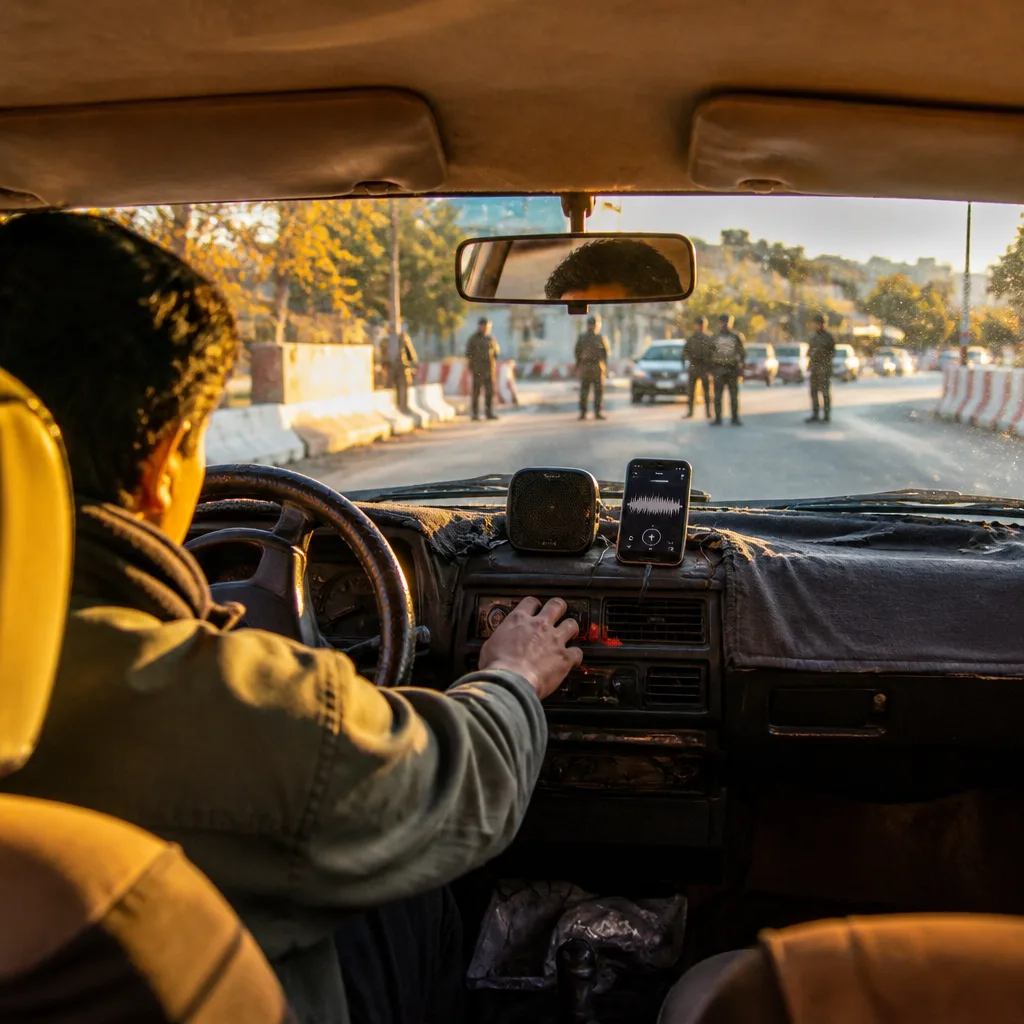
The soft strains of folk and pop are returning to Kabul’s streets — not openly, but inside the city’s taxis. Drivers are quietly playing music in defiance of a ban imposed by the Taliban, according to reporting by the Taipei Times.
Music as a private act of defiance
For many years, the soundscape of Afghan cities was shaped by a mix of local music, broadcasts and sounds from shops and cafés. That changed after the Taliban tightened restrictions on public entertainment: music in public spaces was effectively muted and replaced by religious or patriotic selections approved by authorities. Yet some taxi drivers are reclaiming a small space for song.
Drivers interviewed for the report said they turn music on when they think it is safe, and reduce or switch it off when approaching checkpoints or other areas where morality police might be present. This cautious behaviour reflects both fear of reprisal and a desire to keep a private form of cultural expression alive.
- Who: Taxi drivers operating in Kabul.
- What: Playing Afghan and regional folk or pop music in defiance of a ban on music in public places.
- How: Lowering volume or switching music off at checkpoints and when morality police could be near.
One driver who identified himself as Roeen told the Taipei Times that he and others treat listening to music as a form of protest. He described the practical compromises drivers make to avoid confrontation with officials from the Propagation of Virtue and the Prevention of Vice Ministry, who the report says patrol the city and enforce the ban.
“At every checkpoint we pass, we lower the volume of the music or even turn it off completely... so I don’t get into trouble with them,” Roeen said.
Fear, curiosity and renewed interest
The ministry’s regulations reportedly state that music is forbidden and may disturb passengers, urging drivers not to play it. The ministry did not respond to requests for comment from the Taipei Times about penalties for playing music, though the report notes that other infractions under Taliban rule can lead to jail time. That threat of punishment shapes how drivers listen: many prefer to play music only when alone in the vehicle or when surrounded by the ambient noise of traffic.
Drivers described the morality enforcers — sometimes referred to as the morality police — as having considerable authority. This combination of intimidation and prohibition has not eliminated musical interest. On the contrary, the report quotes Roeen saying he has grown more interested in music since the restrictions were imposed.
The practice of covert listening highlights several broader tensions raised by the ban:
- the clash between state-imposed cultural restrictions and everyday private behaviour;
- the role of small acts of dissent in maintaining cultural memory and morale; and
- how enforcement practices affect ordinary livelihoods and routines.
What this means for culture and daily life
While the Islamabad-based or international frameworks for censorship are not discussed in the report, the on-the-ground reality is clear: music survives in pockets, practiced discreetly. For taxi drivers who rely on daily fares, the risk calculus is practical as well as symbolic — they weigh potential penalties against the comfort music brings to themselves and their passengers.
That small-scale resistance through song is not without peril. The Taipei Times report notes the absence of an on-the-record comment from the Propagation of Virtue and the Prevention of Vice Ministry. It also underlines that Afghans found in breach of the Taliban’s broader behavioural rules have faced imprisonment under previous enforcement actions.
For now, music in Kabul plays softly and selectively — a private soundtrack to public restrictions. Where it can be heard, it may be both refuge and quiet rebuke to limits imposed on everyday culture.