
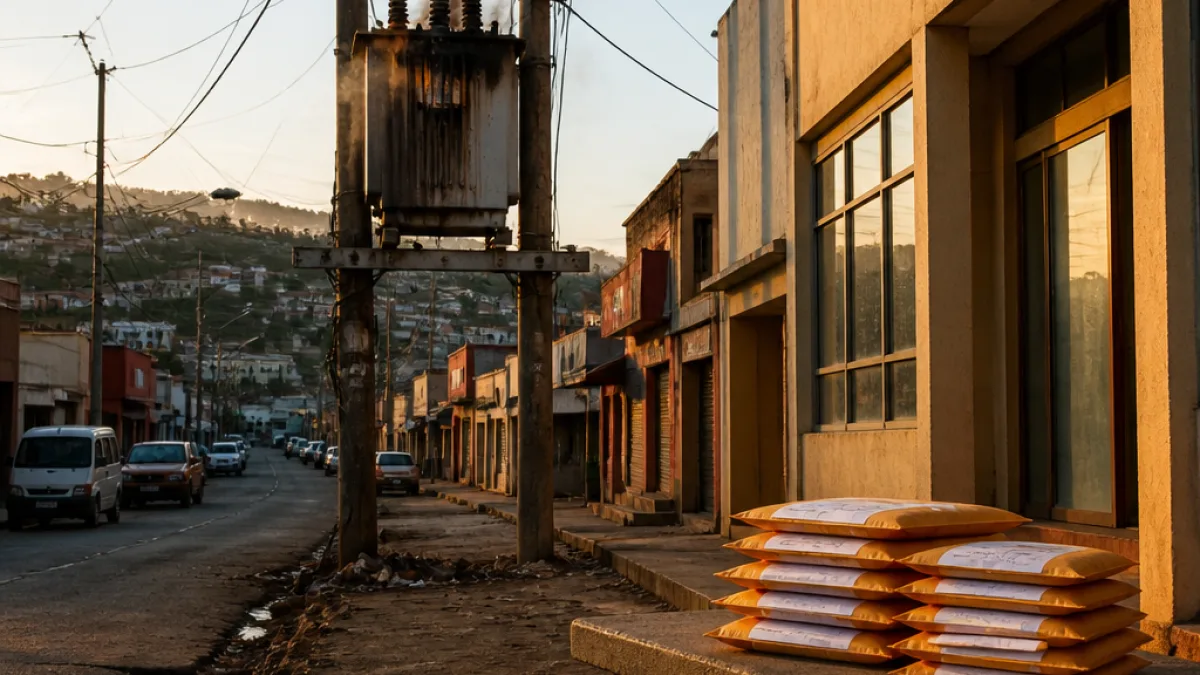
Mthatha, a commercial gateway to the Wild Coast and the economic engine of the King Sabata Dalindyebo Local Municipality, is experiencing a collapse in basic services and infrastructure even though the town generates significant economic activity and collects substantial own‑source revenue, a government letter has warned.
Funding and local wealth at odds with living conditions
South African Revenue Service (SARS) statistics show the municipality has 41,273 registered taxpayers with an average taxable income of R304,952 a year — roughly R25,412 a month — higher than the Eastern Cape average of about R292,061 annually. Trade and commercial activity account for approximately 23% of the municipality’s Gross Value Added in the province, and the town generates much of its own‑source revenue through electricity charges, property rates and service fees.
Yet an official letter dated 1 September 2026 from the Office of the Deputy Minister of Defence and Military Veterans to Cooperative Governance and Traditional Affairs (COGTA) Minister Velenkosini Hlabisa describes a very different picture on the ground: persistent service failures, crumbling public infrastructure and a pattern of incidents that suggest a widening disconnect between allocations and outcomes.
“Government cannot continue allocating billions of rands to municipalities while residents remain without reliable basic services and public infrastructure continues to deteriorate.”
Residents, suburbs and recurring outages
The problems, first highlighted by residents in Fortgale, are reported across multiple parts of Mthatha, including Northcrest, Khwezi, Ngangelizwe and Southernwood. Among the most severe complaints are recurring electricity outages that have left some households without power for several days. The letter also references the repeated destruction and burning of transformers, which aggravates supply instability and raises safety concerns.
As a commercial hub along the N2 and the main urban centre for an estimated catchment of more than 1.5 million people in surrounding rural areas, prolonged service interruptions have knock‑on effects for small businesses, informal traders and public services that rely on reliable electricity and infrastructure.
Accountability and oversight questions
The Deputy Minister’s letter urges a closer examination of the relationship between allocations to municipalities and the lived experience of residents. While the letter itself is a formal prompt to central oversight, it also signals growing impatience within government circles that funding has not translated into stable service delivery or the maintenance of critical infrastructure.
Key issues that require follow‑up include:
- Repeated destruction of transformers and the security of electrical infrastructure;
- Frequency and duration of electricity outages affecting households and businesses;
- Condition of roads and other public infrastructure in commercial and residential precincts.
Data at a glance
| Indicator | Figure |
|---|---|
| Registered taxpayers (municipality) | 41,273 |
| Average taxable income (annual) | R304,952 |
| Average taxable income (monthly) | R25,412 |
| Municipal contribution to provincial GVA from trade | ~23% |
The contrast between these fiscal figures and the deterioration in services raises practical questions for municipal finance and infrastructure management. If electricity charges and property rates are meaningful revenue streams, oversight should be able to trace where funds intended for maintenance and upgrades have been deployed.
What this means for residents and businesses
For households, recurrent outages increase the cost of living as people buy alternative sources of power, while frayed infrastructure can interrupt water supply and sanitation services. For businesses — particularly small traders and those in the hospitality and transport sectors that serve travellers along the N2 and visitors to the Wild Coast — unreliable utilities threaten livelihoods and can reduce investor confidence.
Municipal leaders and provincial authorities now face pressure to account for revenue streams and provide transparent plans to arrest infrastructure decline. The Deputy Minister’s letter effectively calls for a forensic look at whether allocations and municipal revenues are being used for their intended purposes.
Requests for comment to the King Sabata Dalindyebo municipality and the Office of the Premier were not included in the source material. The letter to COGTA, however, signals an escalation from complaints raised in communities to formal attention at national level. How provincial and municipal authorities respond will determine whether Mthatha can repair its infrastructure and restore reliable services in the months ahead.
Reporting from Mthatha.















