At least 397 public schools across South Africa experienced prolonged or complete electricity interruptions between April 2024 and March 2026, the national Department of Basic Education (DBE) told Parliament — and the Eastern Cape bore the brunt of the problem, with 324 schools in the province reporting outages during that period.
Extent of the problem and how it was disclosed
Basic education minister Siviwe Gwarube supplied the figures in response to a parliamentary question from EFF MP Laetitia Arries. The DBE emphasised the total of 397 represents schools reported by provincial education departments as having experienced interruptions during the two-year period; it is not a count of individual outage incidents nor does it mean every one of those schools remained without electricity when the response was issued.
The distribution of affected schools outside the Eastern Cape was: Gauteng 19, Free State 13, Mpumalanga 13, KwaZulu-Natal 12, Limpopo 5, Northern Cape 5, Western Cape 5 and North West 1.
| Province | Number of schools affected |
|---|---|
| Eastern Cape | 324 |
| Gauteng | 19 |
| Free State | 13 |
| Mpumalanga | 13 |
| KwaZulu-Natal | 12 |
| Limpopo | 5 |
| Northern Cape | 5 |
| Western Cape | 5 |
| North West | 1 |
Causes and the range of disruptions
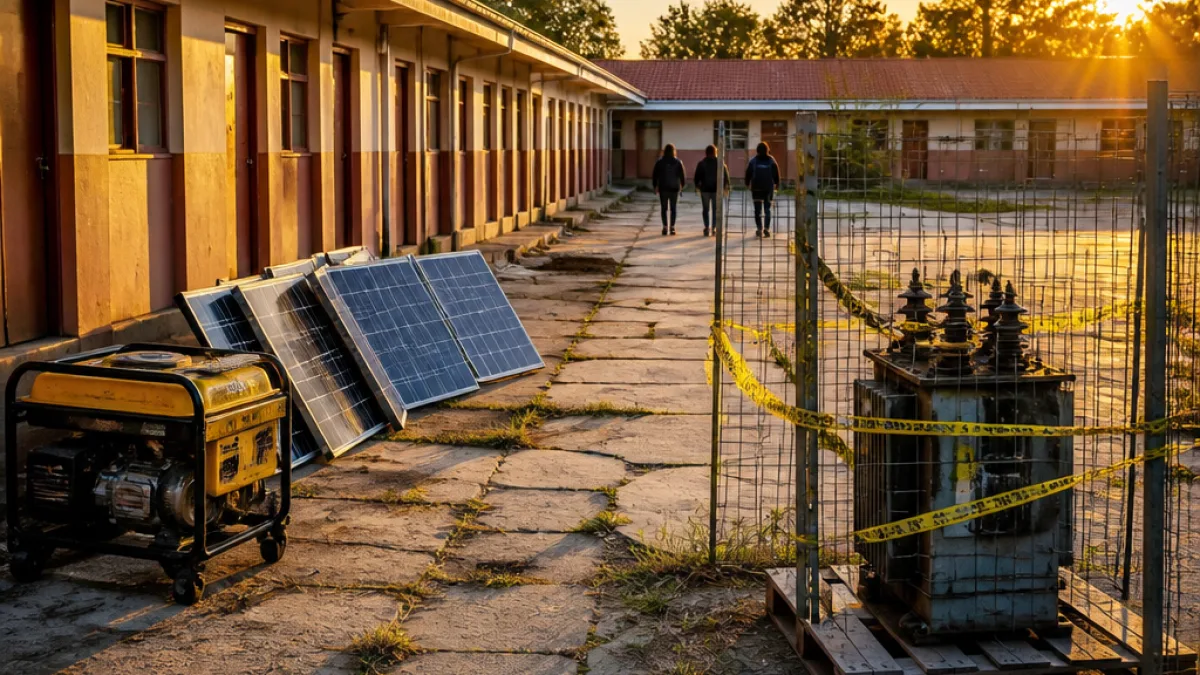
The DBE said provincial education departments reported a variety of causes: infrastructure failures, damaged transformers, vandalism and theft, interruptions to external electricity supplies, billing disputes, and schools sharing transformers with surrounding communities. The department noted the nature and duration of outages varied considerably, with some provinces reporting intermittent interruptions while others recorded prolonged or complete supply loss.
Sharing of infrastructure with surrounding communities was singled out as a recurring problem in some areas; where schools depend on a single transformer that also serves nearby households, faults or overloads in the neighbourhood can leave the school without power for extended periods.
Interventions, temporary measures and unresolved challenges
Provincial departments have deployed several stop-gap measures while seeking permanent solutions. These include the installation of solar panels at some schools and the provision of generators where feasible. Provinces have also engaged with municipalities, Eskom and other electricity providers to repair damaged infrastructure and resolve billing disputes. In certain cases, provinces have requested dedicated transformers for schools to reduce the risk of repeated outages.
The DBE response makes clear these interventions are uneven and largely dependent on provincial budgets, logistical capacity and the cooperation of municipal and national electricity providers. The department did not provide province-by-province timelines for permanent repairs, nor details on how many schools remained without electricity at the time of the parliamentary reply.
Impact on learning and local accountability
Power outages at schools have knock-on effects beyond lighting and appliances: they affect computer labs, Internet connectivity, refrigeration for food and medication, and the ability of staff to complete administrative work. In the Eastern Cape, where the majority of affected schools are located, chronic infrastructure challenges already contribute to inequalities in access to quality education.
- Safety concerns arise where classrooms are without lighting during winter months.
- Matric preparations and online assessments are disrupted when electricity and broadband are unavailable.
- Costs for fuel and maintenance of generators create persistent budgetary pressure on provincial departments.
The DBE’s countrywide figures now place pressure on provincial education departments and municipalities to publish clear repair schedules and to prioritise dedicated infrastructure for schools. For families and educators, the immediate question remains how long temporary measures such as solar and generators will have to fill the gap before durable, municipally backed power connections are restored.
Education remains a constitutional priority. The national disclosure to Parliament provides a baseline for further scrutiny and demands coordinated action between the DBE, provincial education departments, municipalities and Eskom to prevent learners from repeatedly learning in the dark.