Misgund, a small farming settlement in the Eastern Cape’s Langkloof, is surviving on a severely intermittent water supply, with households receiving water for roughly one hour a day or sometimes none at all, according to reporting by GroundUp.
Daily routines disrupted at crèche and homes
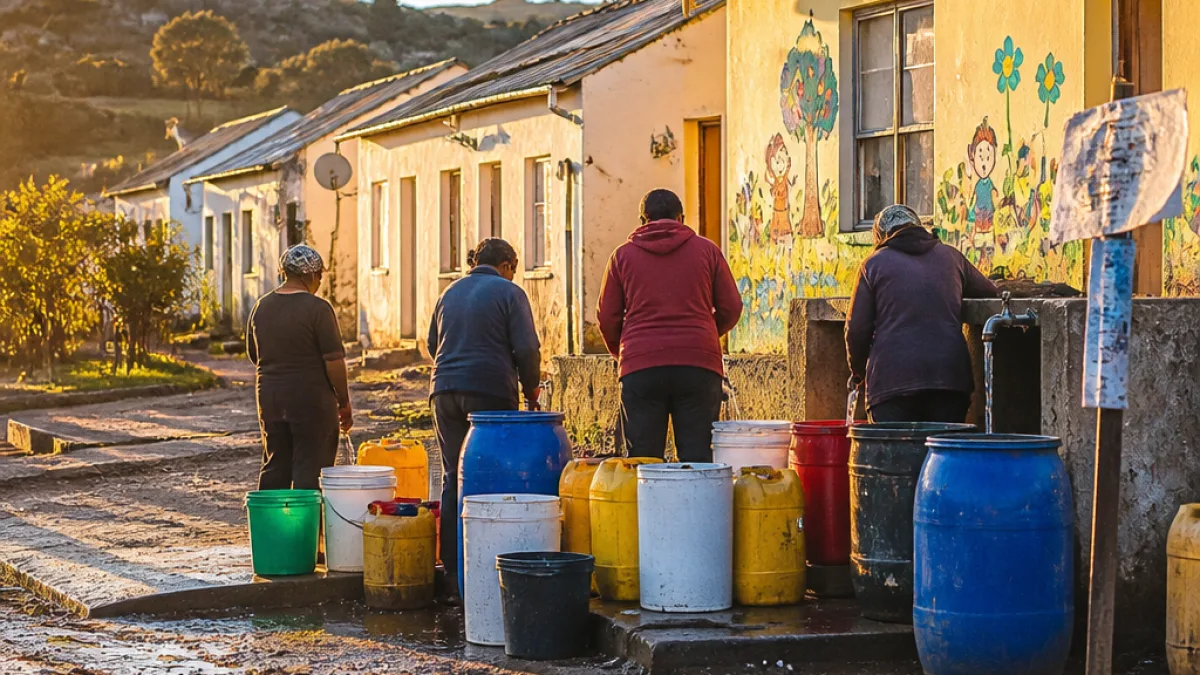
Staff at Twinkle Twinkle Daycare, which cares for children from four months to five years, store water in containers and use buckets to flush toilets when taps run dry. The crèche’s principal, Elize Berries, said the taps are usually on between about 5pm and 7pm and sometimes for longer at weekends.
"Every day we get water for about one hour. Some months there isn’t water for several days. We’ve never had continuous running water,"
The limited supply forces residents to rely on rainwater, to buy water and to ration what little comes from taps. Water that does emerge is frequently discoloured. The disruption affects domestic needs such as drinking, cooking, handwashing and sanitation.
Municipal funding and compliance figures
Kou-Kamma Local Municipality’s annual report, cited in the GroundUp piece, states it requires roughly R210-million to upgrade and maintain water and sanitation infrastructure in its area. Government testing over the past year found the local tap water met basic drinking-water standards only about 50% of the time, with compliance of 0% for taste, colour and disinfectant levels during that period.
| Indicator | Compliance |
|---|---|
| Overall basic drinking-water standards | 50% |
| Taste / Colour / Disinfectant levels | 0% |
Who lives in Misgund and how the shortage evolved
The settlement has about 500 households, primarily RDP homes, many occupied by current or former farmworkers because of the area’s apple, pear and peach production. Residents say the unreliable supply has worsened since 2011.
Because the limited hours often fall while people are at work, households cannot always fill storage containers when water is available. That compounds the strain on families and institutions such as the local day-care centre that must maintain hygiene for infants and young children.
Immediate impacts and practical consequences
The shortage presents several immediate risks and inconveniences:
- Increased cost as households buy water when available.
- Hygiene and health risks from discoloured water and inconsistent disinfectant levels.
- Disruption to early childhood care, as crèche staff must store and carry water to meet basic sanitation needs.
Wider municipal picture
While Kou-Kamma Local Municipality has quantified the investment needed, the annual report’s figure of R210-million underlines a familiar challenge across rural Eastern Cape municipalities: ageing or undersized infrastructure, limited revenue bases and the competing demands of maintenance versus new capital projects.
Residents of Misgund are caught between daily coping strategies and a longer-term requirement for substantial capital investment. The municipality’s funding shortfall, combined with the documented water-quality non-compliance, makes clear that households are not simply inconvenienced — they are exposed to potential health hazards.
What residents say they need
Locals want a reliable, continuous supply and treated water that meets safety and aesthetic standards. For facilities that serve vulnerable groups — notably the Twinkle Twinkle Daycare — continuous running water is essential for basic childcare and infection prevention.
Until infrastructure upgrades are implemented, residents will continue relying on collected rainwater, purchased water and rationing. The situation will remain precarious unless the municipality secures the funding and technical capacity to upgrade and maintain systems.
GroundUp reported the conditions in Misgund.