
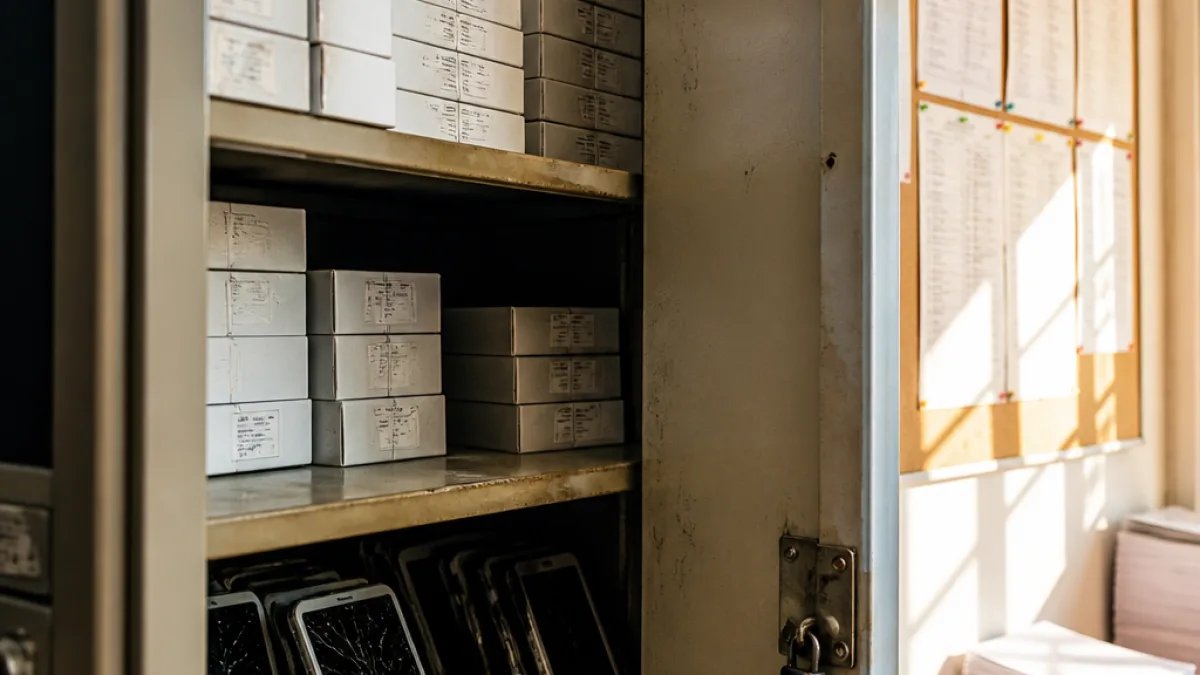
The Eastern Cape's flagship tablet programme for Grade 12 learners has stalled, with thousands of devices either locked away in cupboards or never distributed, according to reporting by Daily Maverick and GroundUp. The intervention, launched to support matric preparation, was budgeted at R686-million but is not operating as intended in the 2026 school year.
Devices unused, monitoring absent
At Mary Waters High School in Makhanda staff found 115 tablets delivered at the start of 2025 stored in a cupboard. The devices were supplied preloaded with past papers and were meant to be topped up with 50GB of mobile data each month. Yet the school reported that none of the tablets were issued to learners in 2026.
“The tablets were not distributed this year due to a shortage of tablets, with some not functioning properly,”
The comment was reported by Daily Maverick citing a senior teacher at the school who asked not to be named. The teacher estimated that of the learners who received devices in 2025, only about 30% used them for schoolwork in any meaningful way, and said the provincial education department had not properly monitored the project during the 18 months since its start.
Problems across the province
GroundUp contacted 12 schools across the province – in Makhanda, Gqeberha, Butterworth, Idutywa, Queenstown, Mount Ayliff, Libode, Ngcobo, King William’s Town, Despatch and Maclear – and found that none were running the programme as it had been designed. The provincial report tabled in the legislature in August 2025 records that by 15 May 2025, 53,254 of the 54,000 devices had been delivered, reaching roughly half of the province’s full-time matric cohort of about 108,000 learners.
However, that report also listed outstanding shortfalls: 746 tablets were still owed to 41 schools and 165 schools were recorded as having shortages. Whether these outstanding deliveries were ever completed has not been answered by the department, Daily Maverick reported.
Budget and targeting questions
The department set aside R686-million for the programme, committing R447-million on devices with the remainder intended to cover the monthly data allocations and related costs, according to the reporting. The rollout was said to prioritise matrics at no-fee Quintile 1 to 3 schools, but the department has not published the criteria used to include or exclude specific schools.
Daily Maverick noted examples of uneven delivery: in Makhanda, only three of the town’s six qualifying schools received devices. The department acknowledged budgetary constraints had affected distribution, saying not all Q3 matriculants received tablets.
What this means for learners
Education experts and school staff have long argued that reliable access to revision materials and past exams can materially support matric outcomes, particularly in under-resourced communities. When devices arrive but are unused — or when distribution is partial and monitoring weak — the intended impact on learners’ preparations for exams is undermined.
- Devices delivered (by 15 May 2025): 53,254 of 54,000
- Outstanding devices listed: 746 to 41 schools
- Schools with shortages recorded: 165
- Budget: R686-million (R447-million on devices)
| Item | Figure |
|---|---|
| Target devices | 54,000 |
| Delivered (reported) | 53,254 |
| Outstanding | 746 |
| Budget | R686-million |
Accountability and next steps
The gaps identified raise straightforward questions for the Eastern Cape Department of Education: were the outstanding devices ever supplied; why were devices not issued even where they were delivered; what quality checks were performed on tablets before distribution; and how will the department monitor effective learner use going forward?
Officials have previously defended the programme’s focus on the poorest learners, but the absence of published inclusion criteria and of clear monitoring data leaves schools and parents uncertain. For learners in their final year of school, reliable access to revision material and data can be decisive; mismanagement of a province-wide intervention of this scale has direct consequences for equity and matric results.
For parents and school managers seeking clarity, practical steps include requesting a written account from district offices about delivery status, device warranties and data provision schedules. District education offices are the first point of contact for queries about outstanding devices and data allocations.
The reporting by Daily Maverick and GroundUp underscores an implementation gap between provincial intentions and school-level realities. With matric exams approaching each year, ensuring devices are operational, distributed fairly and supported by monitoring should be an immediate priority for the department.












