
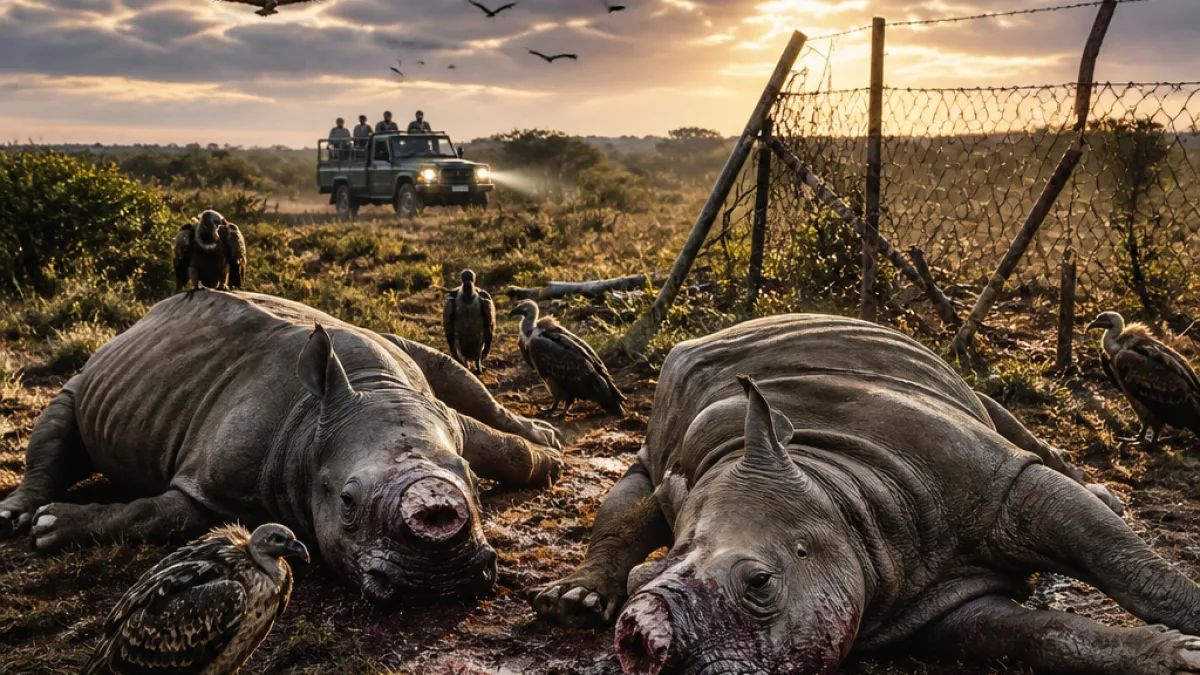
Gruesome discovery at Kariega Game Reserve during World Rhino Month
A dehorned rhino cow and her two-year-old calf were found butchered at the Kariega Game Reserve, News24 reported, in a killing that has shocked conservationists and residents as World Rhino Month is observed.
The report by Lynn Williams for News24 states the animals had been dehorned. The killings were discovered on the reserve grounds; further details on the exact location inside the reserve and the time of discovery were not provided in the report.
Local and provincial authorities have repeatedly warned that poachers adapt their methods when hornless animals are present, often targeting carcasses or seeking other body parts. This incident underlines those concerns and raises urgent questions about security measures on private and public reserves in the Eastern Cape.
- Victims: one dehorned rhino cow and her two-year-old calf
- Location: Kariega Game Reserve
- Timing: during World Rhino Month (as reported)
- Source: News24 report by Lynn Williams
“A dehorned rhino cow and her two-year-old calf were butchered at the Kariega Game Reserve,” the News24 report said.
Local implications and context
Kariega and the broader Eastern Cape host a number of privately run game reserves that contribute to tourism, employment and local conservation capacity. Incidents of poaching — particularly those that result in the death of breeding females and calves — have direct consequences for population recovery and breeding programmes.
Dehorning is a widely used anti-poaching strategy intended to reduce the value of rhinos to horn smugglers. However, conservationists and reserve managers have cautioned that dehorning is not a silver bullet: it can reduce immediate market value but does not remove all risks. The killing of a dehorned adult and its calf highlights those limits and may force reserves to reassess layered security measures, vet protocols and community engagement strategies.
What this means for security and conservation efforts
Although News24’s piece provides the basic facts of the killings, it did not include follow-up statements from reserve management, SAPS or provincial conservation authorities. The lack of on-record comment in the report leaves several practical questions unanswered for residents and stakeholders in Kariega:
- Whether a case was opened at a local police station and which unit (SAPS or the Hawks) is investigating.
- What security arrangements the reserve had in place and whether they will be strengthened.
- Whether neighbouring reserves or provincial conservation authorities have issued advisories or increased patrols.
Tourism operators and local workers who depend on the game reserve economy will be watching for official responses. Loss of key breeding animals can have a long-term impact on visitor appeal and the ecological balance that supports local livelihoods.
What residents should expect next
Residents in Kariega should expect the following immediate steps, depending on how authorities respond:
| Action | Purpose |
|---|---|
| Police investigation | Identify perpetrators, forensic work, open case at local police station |
| Reserve security review | Improve patrols, surveillance and anti-poaching measures |
| Provincial conservation briefings | Coordinate response across reserves, advise on population impacts |
Given the sparse details in the initial report, Kariega residents and stakeholders should look to statements from SAPS, the reserve management and provincial conservation authorities for confirmation of investigative steps and any community-level precautions.
The incident is a stark reminder that poaching continues to evolve and that even animals thought to be less valuable because they are dehorned remain at risk. For a city like Kariega, where conservation areas are part of both the ecological fabric and the local economy, the killings will likely prompt renewed debate about how best to protect wildlife while sustaining tourism and local jobs.














