A spate of deadly attacks in the Western Cape has reopened a fraught national debate on the death penalty while authorities move to establish the causes and links between the incidents.
What happened
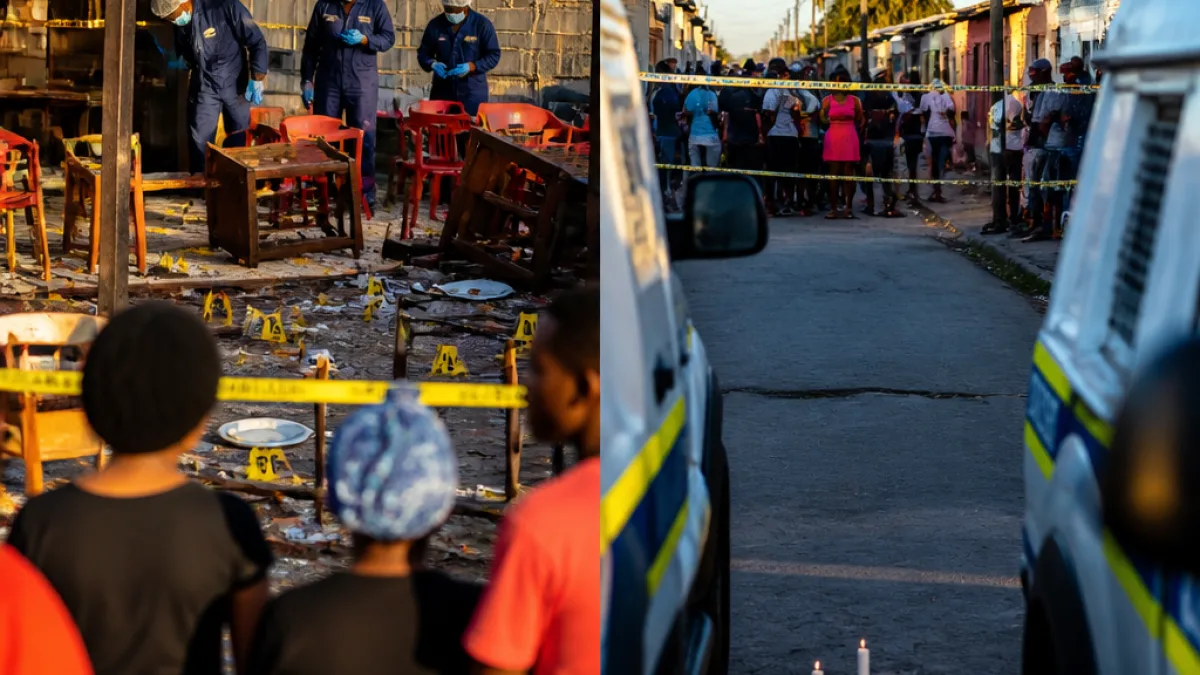
Five people died at a Lwandle shisanyama and a further five succumbed to injuries shortly afterwards, leaving a total of 10 dead and 11 wounded in that incident. In a separate incident in Khayelitsha, four men were shot dead in Mthuma Street, Site C.
Western Cape Provincial Commissioner Lieutenant-General Sizakhele Dyantyi has established a multidisciplinary team, led by Serious and Violent Crime detectives, to investigate the Lwandle attack. Police said they had not established a link between the Lwandle shooting and the Khayelitsha killings.
Violence in context
The twin attacks come as part of a disturbing pattern of mass and targeted killings across South Africa. The source reporting linked the Lwandle and Khayelitsha incidents to other recent mass shootings including one in Wedela, near Carletonville in Gauteng, where gunmen reportedly killed 17 people and wounded 15 in an attack on a tavern.
The Western Cape has also recorded a number of high-profile individual murders in recent weeks, which have intensified public anxiety:
- Nomakhwezi Zitha, 56, from Delft, died in hospital on 14 September after an alleged kidnapping and assault.
- Zakira Christian, 28, a mother found stabbed to death in Kewtown on 22 September.
- Asemahle Hanisi, 19, a West Coast College student, found dead near the Olifants River in Citrusdal after being reported missing in August.
Debate over the death penalty
The killings have revived calls for the restoration of capital punishment in South Africa. Opinions among experts remain divided on whether reinstating the death penalty would deter violent crime.
Former Western Cape police commissioner Dr Lennit Max said public frustration with violent crime was understandable. He summarised the debate as split between those who believe the death penalty is no more effective a deterrent than long imprisonment, and those who argue that convicted murderers should face execution. Dr Max referenced the Constitutional Court’s S v Makwanyane judgment, which abolished capital punishment in South Africa.
Police response and investigations
The multidisciplinary team set up after the Lwandle attack is led by Serious and Violent Crime detectives under the provincial commissioner's oversight. Investigators are likely to focus on motive, possible links to other organised violence and the weapons used. Police have not publicly connected the two Western Cape incidents.
| Location | Dead | Wounded |
|---|---|---|
| Lwandle (shisanyama) | 10 | 11 |
| Khayelitsha (Mthuma Street, Site C) | 4 | — |
| Wedela (Gauteng, for context) | 17 | 15 |
What this means for communities and policy
For residents, the immediate priorities are transparent investigations, improved policing visibility and witness protection where needed. The return of the death-penalty debate places pressure on lawmakers and the courts but does not replace operational demands: faster case finalisation, stronger prosecutions and prevention-focused policing.
Legal and constitutional barriers remain. The Constitutional Court’s ruling in S v Makwanyane continues to guide South African lawmakers and courts. Any move to restore capital punishment would require substantial legal and political processes, including constitutional amendment — a high bar in South African polity.
Practical advice for residents
- Report information to local SAPS stations if you witnessed or have information about the incidents.
- Preserve any evidence and avoid sharing graphic material on social media that could jeopardise investigations.
- Seek updates from official police statements rather than rumours circulating online.
The provincial police are continuing investigations and have not released further operational details. As the police probes proceed, the debate on punishment versus prevention will likely intensify in political and public forums.
Riaan Bester, Western Cape Correspondent (Cape Town)