
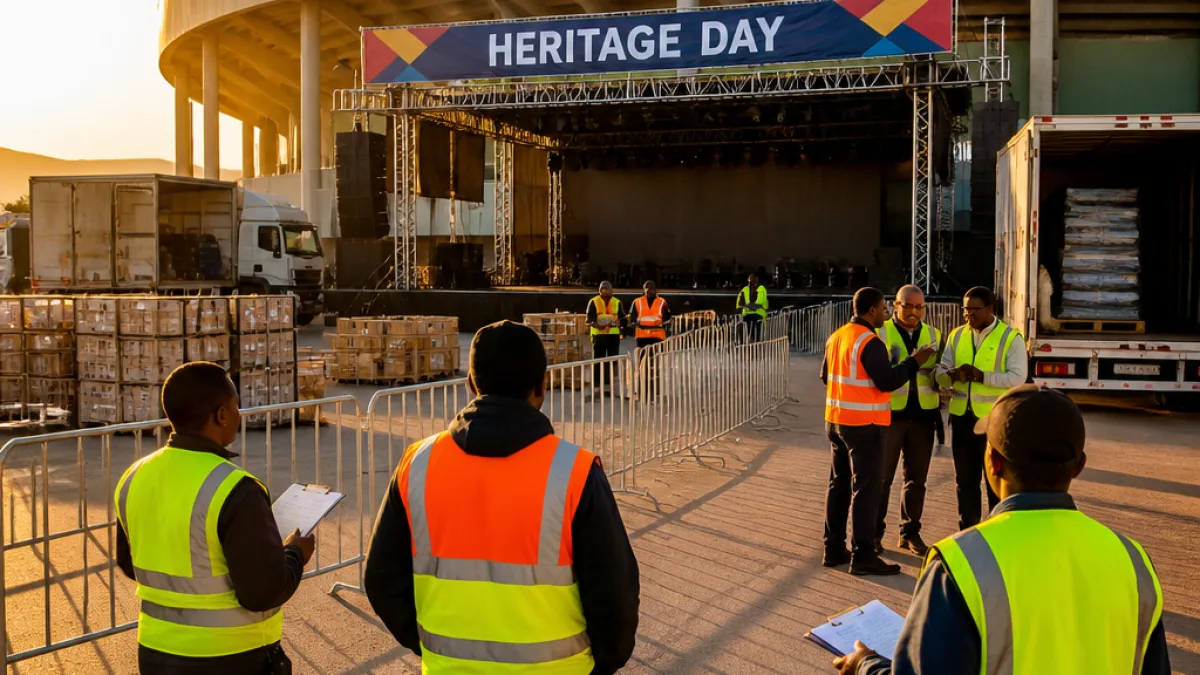
National Heritage Day was relocated twice before settling in Oudtshoorn, sparking a public clash between the Western Cape Government and the national Department of Sport, Arts and Culture over who was consulted and who will account for the costs of the last-minute changes.
Short notice, shifting venues
The event — originally planned for KwaZulu‑Natal and later announced for George — was moved again to Bongolethu Sport Stadium in Oudtshoorn. The Presidency had earlier said President Cyril Ramaphosa would address the celebration at Rosemoor Stadium in George, but by the following day the venue had been changed.
The national department said the move from KwaZulu‑Natal followed consultations with King Misuzulu kaZwelithini and that it sought to allow the annual uMkhosi weLembe commemoration to have its own platform. The department added it considered George but described the municipality and provincial government there as “unable and unwilling” to make the necessary arrangements at short notice.
Western Cape questions consultation and costs
The Western Cape Government said it was informed on Saturday, 19 September 2026 that the national celebration would be moved to the province, giving authorities just five days to prepare. It has questioned what happened to preparations and expenditure already incurred in KwaZulu‑Natal and why provincial and local authorities were not properly consulted.
DA Western Cape spokesperson on Cultural Affairs and Sport, Benedicta van Minnen, called on Sport, Arts and Culture Minister Gayton McKenzie and his department to account for expenditure arising from the relocations and the consultation process. No public figure has been disclosed for the costs.
Oudtshoorn accepts event amid compressed turnaround
Despite receiving even less notice than George, Oudtshoorn accepted the event. Bongolethu Sport Stadium can host up to 5,000 people, and the Presidency expects President Ramaphosa to deliver the keynote address.
The Western Cape disputes the national department’s characterisation of George’s preparedness. The province emphasised that an event of this scale requires detailed planning for security, infrastructure, municipal services and personnel — elements that cannot be improvised on a matter of days.
What is at stake
The dispute raises three immediate concerns for the province and for taxpayers:
- Accountability for expenditure on venues, transport and planning incurred in KwaZulu‑Natal and George;
- The adequacy of security and municipal arrangements with the compressed planning window;
- The standard of intergovernmental consultation when national events are relocated across provinces.
Organising national celebrations requires coordination across spheres of government. Late changes complicate logistics for host municipalities, provincial services and communities expecting to participate.
| Initial plan | Subsequent announcement | Final venue |
|---|---|---|
| KwaZulu‑Natal | George (Rosemoor Stadium) | Oudtshoorn (Bongolethu Sport Stadium) |
Calls for transparency
With no cost breakdown made public, opposition politicians in the province have demanded a clear accounting from the national department. The Western Cape’s account underlines the broader problem of how national events should be planned with reasonable notice so that provinces and municipalities can mobilise resources without undue strain.
As preparations continue in Oudtshoorn, the focus will be on whether the compressed timetable affects security, municipal services and the quality of the national celebration. The unresolved questions about who bears the financial and logistical consequences remain a point of contention between the national and provincial authorities.
For residents and visitors, organisers will need to provide clear information about access, parking, and any service disruptions in the Oudtshoorn area to ensure the event proceeds safely and smoothly.













