Police say viral post about a child in Joza Extension 8 is false
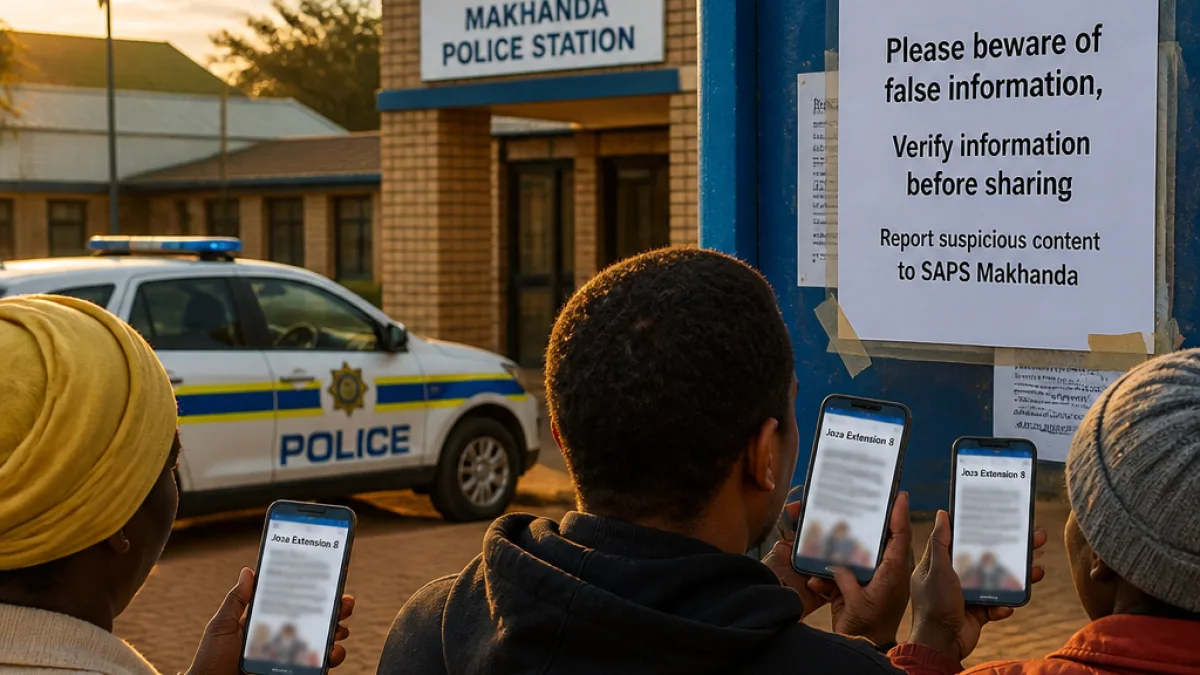
The South African Police Service (SAPS) in the Eastern Cape has confirmed that a Facebook post claiming a child was found in Joza Extension 8, Makhanda is fabricated and has urged residents not to share the message. The post, which included a photograph, had circulated widely before police classified it as a hoax.
Robin-Lee Francke reported for IOL that Captain Marius McCarthy, a SAPS spokesperson, said no such incident was reported to or recorded by local police stations. McCarthy warned that the post appeared to be part of a broader trend of social-media scams that prey on emotion to gain reach and then insert malicious links.
“This fraudulent scheme is part of a growing social media scam trend where users share emotionally charged posts under the impression they are helping,” McCarthy said.
SAPS described tactics used by scammers, including recycling images of children from other contexts, disabling comments on the posts to stop community warnings, and later editing captions to insert links that can hijack profiles or steal personal data. The police said these posts exhaust critical law-enforcement resources and distract officers from real emergencies.
What SAPS is advising Makhanda residents
- Do not share or repost emotionally charged missing-or-found-person posts without verification.
- Delete such posts from your timeline if they are unverified or appear suspicious.
- Verify notices through official SAPS channels, credible media outlets, or recognised non-profit organisations.
- Report the origin of false posts via Crime Stop on 08600 10111 or anonymously through the MySAPS App.
The police also provided an email contact to forward suspected misinformation for investigation. Members of the public with information about the origin of the false Facebook post were urged to contact authorities immediately, according to the IOL report.
Local impact and context
In Makhanda, where communities rely heavily on social media platforms to share urgent community news, the spread of fabricated alerts can quickly escalate fear. Local ward councillors and community leaders often act as first responders when alleged incidents surface online; false alarms divert attention and time away from real cases, community safety meetings and crime-prevention operations.
Police warnings echo a wider national concern about how disinformation undermines public trust and the efficient use of policing resources. In towns and cities across South Africa, SAPS has frequently had to debunk viral hoaxes that generate unnecessary panic and burden call centres and station staff.
Community members who see unverified posts are encouraged to follow these simple verification steps before reacting:
| Step | Action |
|---|---|
| Check official channels | Look for alerts on SAPS social channels or local station updates |
| Contact local police | Call your nearest station or Crime Stop on 08600 10111 |
| Look for reputable coverage | Verify with established media or community organisations |
| Be cautious of links | Do not click or follow links in unverified posts |
Police in the Eastern Cape said that fabricated alerts regarding child abductions and missing minors provoke severe public panic. Officers reminded residents that sharing such content, even with good intentions, is highly irresponsible and can have real consequences for investigations.
The SAPS statement, as reported by IOL, highlights the need for digital caution in tight-knit communities like Joza where rapid resharing is common. Authorities appealed to residents to act as a first line of defence against misinformation by verifying claims and by helping to trace the origin of false posts.
Anyone with information about the provenance of the post or who wishes to report it is asked to contact Crime Stop on 08600 10111 or to submit information anonymously via the MySAPS App, the IOL report said.