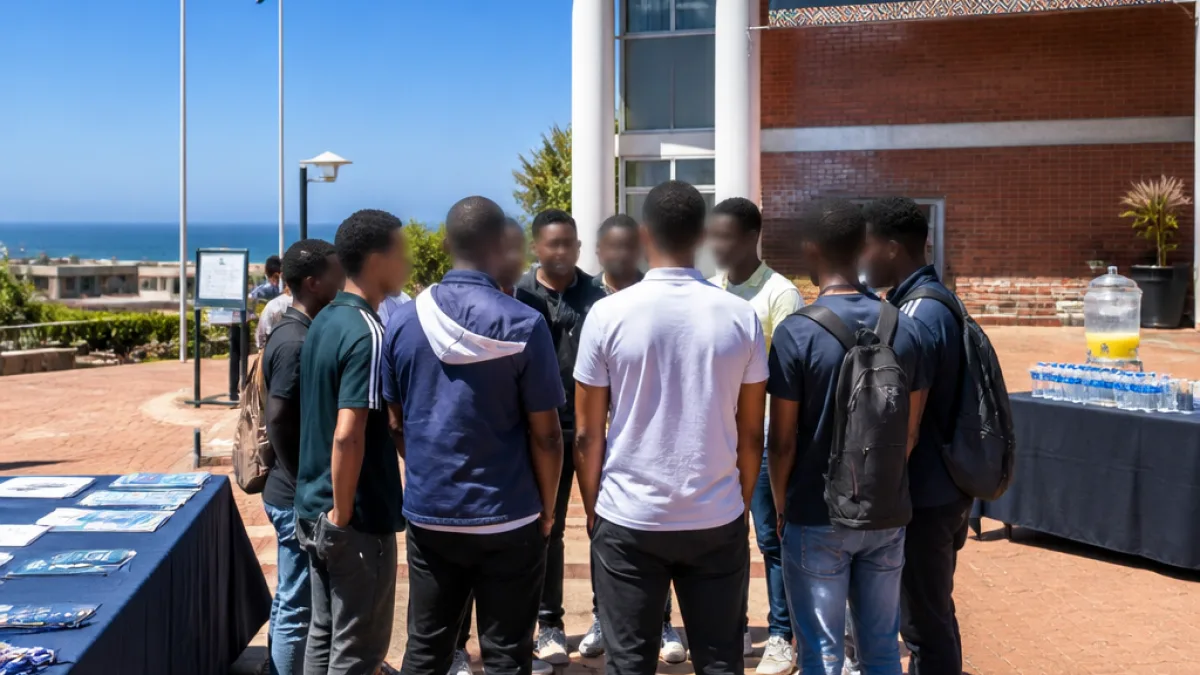
Nelson Mandela University will host a regional symposium that brings young men, academics, community leaders and professionals together to examine masculinity, wellbeing and gender-based violence (GBV).
Event aims to reframe conversations about manhood
The Ebuhlanti/The Kraal Men’s Regional Symposium, organised by the university’s Student Governance and Development Department, is scheduled for Friday, 25 September 2026. Held under the theme “African Men Rising: Men of Substance, Purpose and Integrity”, the gathering aims to create space for young men to reflect on identity, responsibility and leadership rather than solely cataloguing the challenges men face.
Organisers say the symposium will focus on how integrity, purpose, wellbeing and responsible leadership can translate into everyday behaviour—an approach intended to strengthen positive role models and community accountability.
Regional participation and scope
Delegates are expected from a cross-section of higher-education institutions in the province, including Rhodes University, the University of Fort Hare, Walter Sisulu University and various East Cape Midlands TVET colleges, as well as Mandela University students. The programme will also include representatives from government, civil society and local communities.
- Theme: African Men Rising: Men of Substance, Purpose and Integrity
- Date: 25 September 2026
- Organiser: Nelson Mandela University Student Governance and Development Department
- Participants: Students, academics, community leaders, government and civil-society representatives from across the Eastern Cape
Programme focus areas
The symposium programme lists a broad range of topics intended to connect personal wellbeing with social responsibility. Among the sessions are:
| Topic | Focus |
|---|---|
| African masculinity, heritage and identity | Exploring cultural narratives that shape notions of manhood |
| Men’s health and wellbeing | Physical health and access to services |
| Dignity, integrity and responsible manhood | Values-based leadership and everyday conduct |
| Political awareness, social justice and transformation | Connections between civic engagement and societal change |
| Men’s mental health | Mental-health challenges and support mechanisms |
| Gender-based violence, law and the male experience | Legal frameworks, accountability and the role of men |
A dedicated panel discussion titled “Behind the Statistics: Law, Gender-Based Violence, and the Male Experience” will examine the relationship between men, GBV and the law, offering a space where legal practitioners, activists and young men can engage on accountability and prevention.
Why the symposium matters locally
South Africa continues to grapple with gender-based violence and difficult questions about masculinity, relationships and accountability. By convening students and community leaders from across the Eastern Cape, the symposium aims to seed discussions that can influence campus culture, community initiatives and local services.
For higher-education institutions in the province, the gathering provides an opportunity to share approaches to prevention, student support and disciplinary practice. For civil-society groups and government representatives, it is a forum for testing collaboration on interventions that target young men, who remain a critical cohort for prevention work.
While the symposium is framed as a reflective space for young men, the presence of legal and policy-focused sessions signals an intent to move conversations toward concrete accountability measures and service responses.
Takeaways and practical context
Participants can expect both conceptual discussion and practical conversation about how to transform attitudes and behaviour. Areas likely to emerge as priorities include:
- Strengthening mental-health and counselling provision for young men on campuses and in communities;
- Linking value-based leadership training to student governance and community outreach;
- Clarifying legal remedies and reporting pathways where GBV occurs, and how men can engage constructively with these processes.
Organisers say the symposium is not a one-off event but part of broader efforts to engage men as agents of change. By providing a regional platform that crosses institutional boundaries, the organisers aim to encourage sustained partnerships across universities, TVETs, government and civil society.
The event will be watched closely by campus safety officials, student groups and community organisations across the Eastern Cape who are seeking workable approaches to address GBV, improve men’s wellbeing and promote responsible leadership.