Rise and Shine Bakery, established in 2012 after its owner identified a shortage of locally produced bread, has expanded into a regional supplier serving more than 80 spaza shops, hospitals and community facilities across Bedford, Adelaide and Cookhouse in the Eastern Cape.
How a local gap became a business opportunity
The business began when owner Xolani Dyesha noticed that bread for his town was being transported from Gqeberha, almost 200km away, which limited reliable access for residents and enterprises. He converted a small shisanyama operation into a bakery but encountered typical small-business obstacles: inadequate production capacity, limited infrastructure, compliance hurdles and gaps in business management.
Targeted support translated into scale
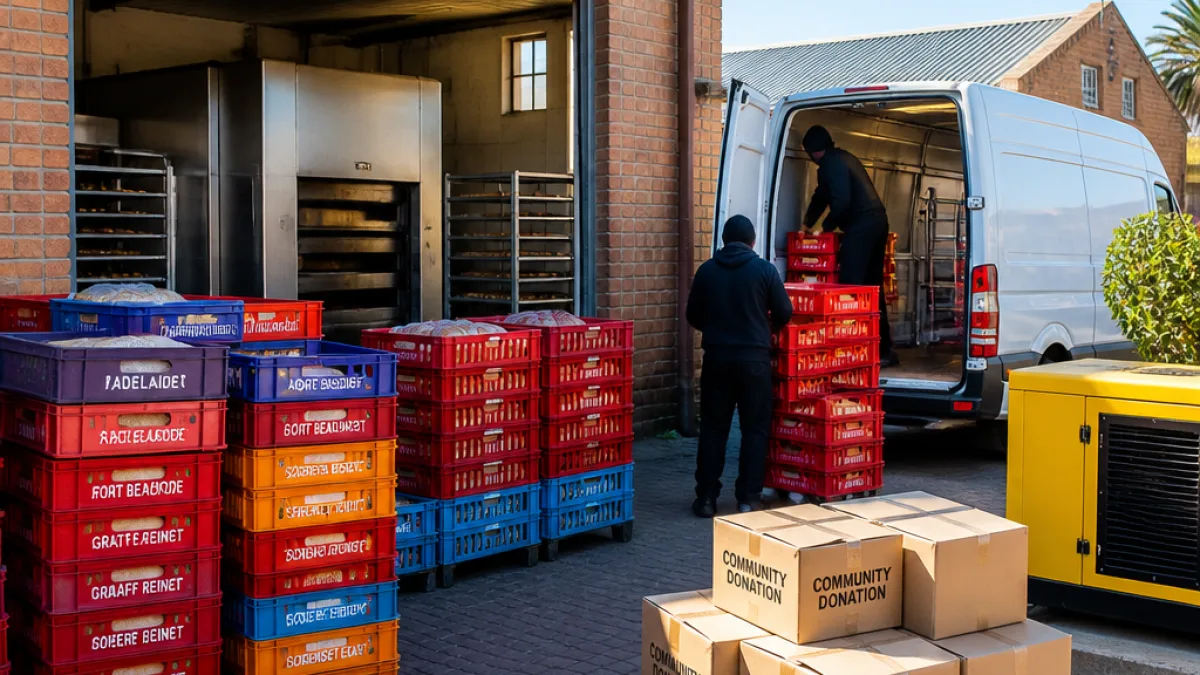
In 2019 Rise and Shine Bakery received a package of industrial baking equipment, a generator and 2,000 bread crates through the Amakhala Emoyeni Community Fund Trust, which invests in community enterprise development in Exxaro’s host communities. The capital injection increased production capacity and allowed the bakery to expand its distribution network beyond its immediate town.
Support did not end with machinery. In 2021 the Community Fund Trust partnered with the South African Institute of Chartered Accountants Enterprise Development programme to provide accounting assistance, governance guidance, mentorship and compliance support intended to strengthen financial and operational management as the business scaled.
Local impact and social contribution
Today the bakery supplies customers across parts of the Eastern Cape and provides employment in communities where joblessness is high. The business also donates bread to local crèches and vulnerable households, sustaining social value beyond its commercial footprint.
- Founded: 2012
- Equipment and supplies received: industrial baking equipment, a generator, 2,000 bread crates (2019)
- Business support: accounting, mentorship and compliance support (2021)
- Markets served: more than 80 spaza shops, hospitals and community facilities in Bedford, Adelaide and Cookhouse
| Year | Type of Support | Effect |
|---|---|---|
| 2019 | Equipment, generator, 2,000 crates | Increased production and distribution capacity |
| 2021 | Accounting and enterprise development | Improved governance and financial management |
Why this model matters
Enterprise development interventions that pair capital with non-financial support — such as bookkeeping, governance training and branding — are widely regarded as more effective at producing sustainable small businesses than equipment grants alone. In this instance the Community Fund Trust also attended to operational details that are often overlooked, arranging branded delivery vehicles and worker uniforms once deficiencies were identified.
According to Neo Monareng, executive head of sustainability at Exxaro, small businesses can strengthen local economies by creating jobs, supporting local supply chains and improving access to goods and services.
Practical takeaways for other entrepreneurs
Rise and Shine Bakery’s trajectory highlights several practical lessons for informal and formal microenterprises across the province:
- Identify a clear local need and validate demand before investing in fixed assets.
- Pair capital investment with business support — accounting, compliance and governance matter when scaling.
- Logistics and branding (vehicles, crates, uniforms) are operational enablers for consistent market access.
For municipalities and development agencies, the case suggests that relatively modest investments, when targeted and accompanied by mentorship, can convert subsistence initiatives into enterprises that supply local institutions and create jobs.
Rise and Shine Bakery’s expansion is not presented as a complete blueprint — every business faces unique market conditions — but it does underline how combined technical and managerial support can help Eastern Cape enterprises move from addressing a community necessity to becoming regional suppliers.
As the province continues to grapple with high unemployment and service backlogs, small manufacturers and food-producers that can scale responsibly remain an important part of local economic strategies.