
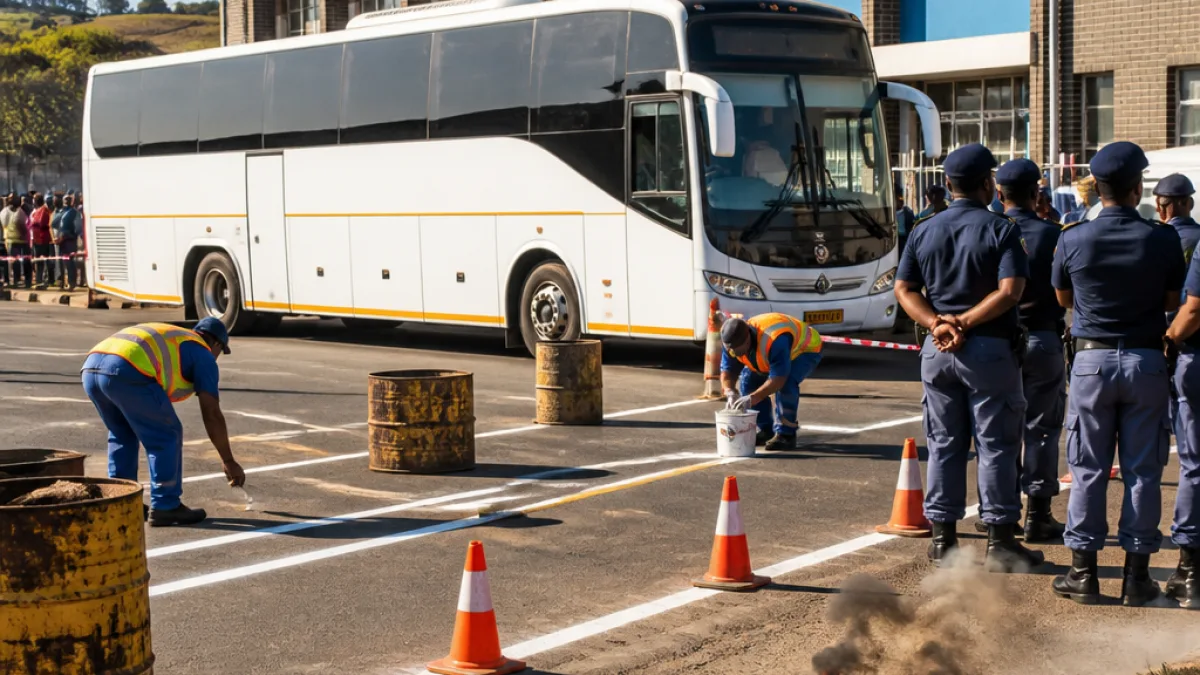
Intercape has been granted an interim court order allowing its buses to load and offload passengers directly in front of the Ngcobo police station, after weeks of a taxi strike, roadblocks and a series of violent incidents that included an attack in June in which a child passenger sustained head injuries.
Court order and municipal duty
The order, issued by the Eastern Cape High Court in Mthatha, requires the Dr AB Xuma Local Municipality to demarcate a parking area directly in front of the police station and to take steps to ensure the safety of Intercape operations there. The interim interdict follows litigation brought by local parties including the Engcobo Ratepayers Association, which had sought to block the municipality from allowing Intercape to use the town centre for loading.
GroundUp and News24 reporting showed Intercape has for years faced intimidation and violent attacks across the Eastern Cape, with the Ngcobo confrontation one of several flashpoints where long-distance bus operators and local taxi associations are in dispute over competition and control of loading points.
Strike, roadblocks and interventions
Taxi operators in Ngcobo launched a strike on 18 August, staging roadblocks that prevented private motorists from carrying passengers and paralysed some local movement. The National Joint Operational and Intelligence Structure (NATJOINTS) convened a meeting with taxi leadership on 7 September, after which the strike was suspended for 21 days.
Intercape has said it faced intimidation and violence in Ngcobo and other parts of the province, and that this has endangered passengers and staff. In response to the unrest, buses will now use the police station as a temporary bus stop while the court-ordered demarcation is implemented.
Impact on travellers and local commerce
The impasse affected residents who rely on long-distance bus services for travel between towns and cities. Intercape’s removal from traditional loading points — and the subsequent legal wrangling — disrupted schedules and left passengers uncertain about boarding locations.
Local businesses that depend on travellers, including informal traders at transport hubs, reported reduced footfall during the strike period. The court order aims to restore a measure of predictability by designating a protected area at the police station where buses can operate with a degree of safety assurance.
- What the court ordered: Intercape may load and offload passengers in front of the Ngcobo police station.
- Municipal obligations: Dr AB Xuma Local Municipality must demarcate parking and take steps to protect Intercape operations.
- Context: Taxi strike from 18 August; NATJOINTS met on 7 September and strike was suspended for 21 days.
Background: broader pattern in the Eastern Cape
Intercape’s difficulties are part of a broader pattern across the Eastern Cape where long-distance bus operators have clashed with local taxi associations. Taxi operators argue that buses operate with an unfair advantage in some towns; bus companies counter that they provide essential intercity links and face unlawful obstruction and violent attacks.
| Date / Period | Event |
|---|---|
| June (this year) | Intercape bus attacked in Ngcobo; a child passenger sustained head injuries. |
| 18 August | Taxi operators began a strike and staged roadblocks in Ngcobo. |
| 7 September | NATJOINTS met with taxi leadership; strike suspended for 21 days. |
| Recent | Eastern Cape High Court in Mthatha ordered Intercape may use police station for loading; municipality must demarcate parking area. |
What travellers need to know
Passengers and prospective travellers should take note of the following practical points while the court order is implemented:
- Boarding and alighting for Intercape services in Ngcobo will be at the police station until further notice.
- Travellers should allow extra time for delays while authorities demarcate and secure the designated area.
- Keep identity documents and tickets readily available and avoid confrontations at taxi ranks and informal stops.
The court’s intervention emphasises the role of municipal and law enforcement authorities in maintaining order at transport nodes. The order does not resolve the underlying disputes between taxi associations and long-distance bus operators, but it aims to provide immediate protection for passengers and restore a basic level of service while broader negotiations and legal processes continue.
Local stakeholders will be watching whether the municipal implementation of the order, and police protection at the site, are sufficient to prevent further violence and to allow uninterrupted intercity travel to resume.