MAKHANDA — A simple gesture on the touchline has grown into a formal drive to get second-hand rugby boots and basic protective equipment into the hands of promising young players from disadvantaged communities across the Eastern Cape.
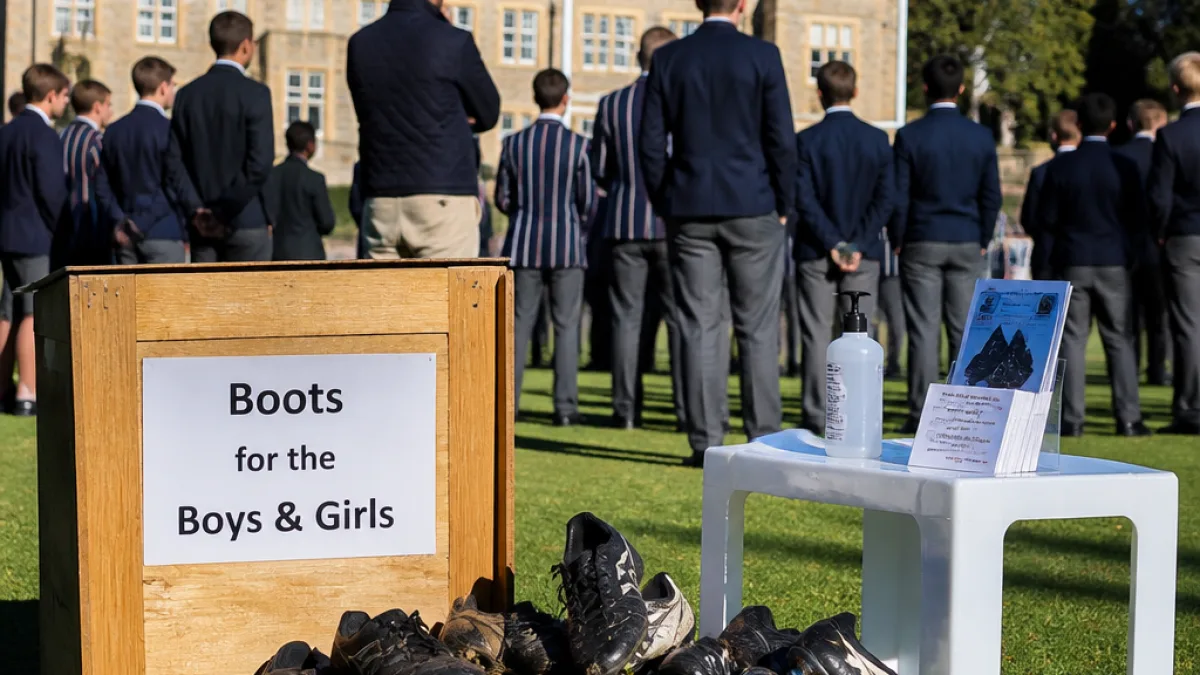
Called Boots for the Boys & Girls, the programme is an initiative of The EcoVenturist and asks pupils who have finished their school rugby careers to clean and deposit their retired boots in dedicated collection boxes. The first of those boxes was launched at St Andrew’s College in Makhanda on 18 September.
From sideline observation to structured campaign
The idea originated when EcoVenturist founder Paul Gardiner watched a match in the recently established Mzwandile Mali Schools Rugby Champions League, which involves 138 schools from disadvantaged communities in the province. He said what struck him was not the lack of skill but the lack of equipment.
“I was watching these youngsters playing in KwaNobuhle and what struck me was the talent. But then I started looking at their feet. Some of these boys were playing rugby in their school shoes or everyday shoes… These kids weren’t short of talent. They were short of equipment. That really touched me, and Boots for the Boys & Girls was born.”
Gardiner recently returned to the Eastern Cape after 23 years abroad and chose his alma mater to begin the campaign. He said retiring boots should be treated with pride and passed forward to help others start their journey in the sport.
How the scheme will work
The practical model is straightforward and schools can adopt it with minimal administration. Pupils finishing their final season are asked to:
- clean their boots;
- place them in a specially designed collection box at their school;
- allow the boots to be redistributed to young players in need.
The campaign is supported by Isuz, according to the launch material. Organisers hope the St Andrew’s pilot will become a tradition at other schools across the Eastern Cape and ultimately expand nationally.
Local context and potential impact
Grassroots rugby in the Eastern Cape has long been recognised for producing talent under constrained conditions. The Mzwandile Mali Schools Rugby Champions League provides competitive exposure to schools that previously lacked structured pathways. But equipment shortages, playing on uneven fields and lack of basic protective gear remain barriers.
By focusing on reused boots, the initiative targets an immediate, tangible need. Proper boots can improve safety, traction and confidence for young players who otherwise compete in everyday shoes. While the programme does not replace broader investment in fields, coaching and protective equipment, it lowers at least one steep hurdle for entry-level participation.
What schools and donors need to know
Organisers point out that the scheme emphasises hygiene and respect. Donated boots should be cleaned and boxed, ready for inspection and sorting before redistribution. The first phase concentrates on rugby boots, with flexibility to accept other basic items where appropriate.
| Item | Requested |
|---|---|
| Rugby boots (clean, serviceable) | Yes |
| Mouthguards & basic protective gear | Limited (subject to hygiene checks) |
| Collection points | School-based boxes (starting at St Andrew’s) |
Schools that wish to adopt the idea can model their approach on St Andrew’s rollout. The simplicity of the ask — clean, retire and donate — is intended to make uptake straightforward for school sport coordinators and rugby parents.
Questions still to be resolved
At launch, organisers did not outline a formal logistics or long-term sustainability plan beyond initial redistribution. Key questions for wider roll-out include:
- how donated items will be inspected and fitted to recipients,
- who will cover transport costs to disadvantaged schools, and
- how the campaign will ensure safety and appropriate sizing.
Those details will be important if the initiative moves from a single-school pilot to a province-wide programme. Local rugby unions, school sport departments and NGOs could be natural partners if organisers seek support for scaling.
Why it matters
Even modest interventions can have outsized effects in communities where sport is a pathway to further opportunities. For the Eastern Cape, which consistently supplies rugby talent to provincial and national levels, lowering barriers to entry complements talent identification efforts and the competitions already in place.
The St Andrew’s launch on 18 September marks a testable beginning. If the concept proves manageable and respectful of recipients, it could become a low-cost, community-driven model to keep children on the field and give grassroots players the equipment they need to compete safely.
Note: Details of the campaign are drawn from the launch materials provided by The EcoVenturist and statements attributed to Paul Gardiner.