From Chloorkop to the world: how money plus vision lifted a Mamelodi institution
Mamelodi Sundowns have become an unavoidable name in conversations about African football’s elite. That, according to former Sundowns midfielder Roger Feutmba, is the product of a deliberate match between financial muscle and a clear strategic roadmap — a combination he says the club has executed better than most.
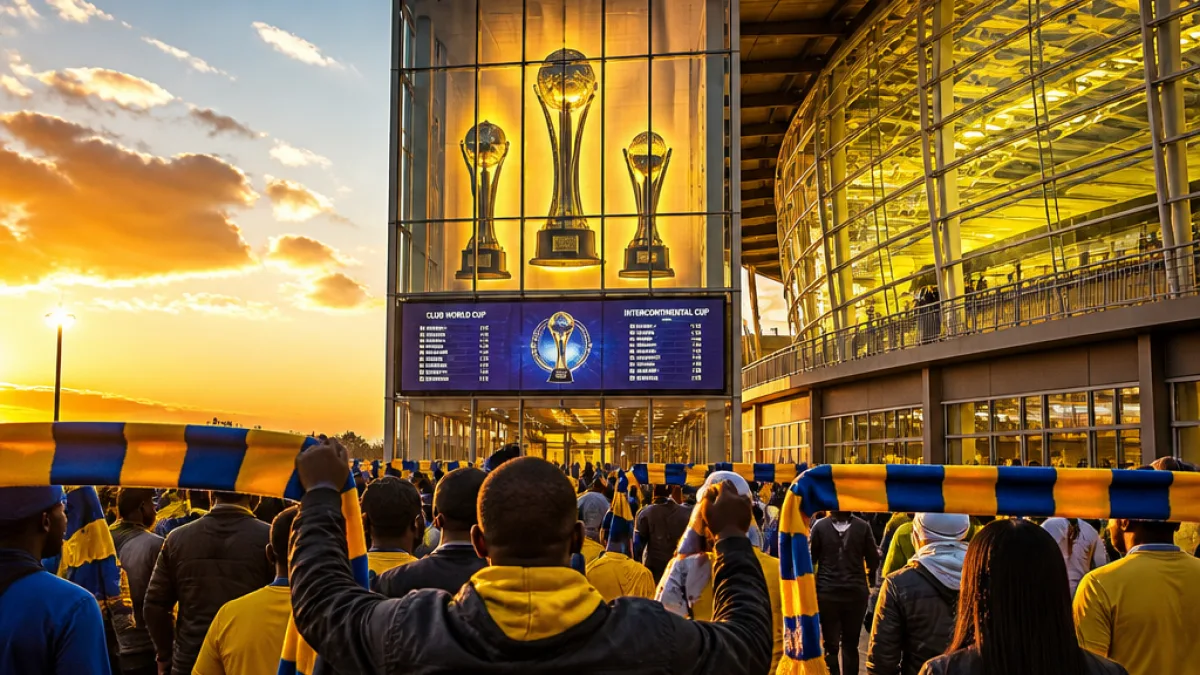
Feutmba, speaking to KickOff, pointed to the club’s recent appearances on the biggest international stages, including the FIFA Club World Cup and the FIFA Intercontinental Cup, as markers of a transformation that began well beyond matchday tactics. For Mamelodi residents, the rise of the Chloorkop-based side is as much about local pride as it is about a club projecting the city’s name across the globe.
“Sundowns is bringing South African football to the big stage, their players are exposed to international football, which will obviously benefit the national team,”
Feutmba underlined the two essential ingredients he believes explain the club’s success: money and vision. He warned that one without the other is insufficient — you can have funds without a plan, or a plan without funding, and neither will achieve sustained success. “For your vision to work, you need to back it with money. And that's exactly what Mamelodi Sundowns are doing,” he told KickOff.
Local consequences: more than trophies
The implications for Mamelodi extend beyond silverware. A club that markets itself internationally can create indirect benefits for the local economy and for youth development. Feutmba suggested that regular exposure to elite competition improves players’ quality — a positive for the national team — and strengthens the club’s brand, which can attract sponsorship, partnerships and investment.
- Player development: Increased international exposure for players can raise standards and create pathways for local youth.
- Local economy: Greater brand recognition may draw commercial interest and tourism related to high-profile matches.
- National impact: A stronger club foundation feeds into the national team through better-prepared internationals.
Feutmba’s comments also frame Sundowns’ approach as a potential template for ambitious clubs across the continent. He argued that the evolution into a global brand was not an accident but the result of systematic planning supported by sufficient funding.
| Indicator | Example mentioned |
|---|---|
| International showcases | FIFA Club World Cup, FIFA Intercontinental Cup |
| Core ingredients | Vision + Money |
Questions for residents and stakeholders
That combination — strategy and resources — raises practical questions for supporters, local officials and football administrators in Mamelodi and Gauteng. How can the city leverage Sundowns’ brand to create jobs, develop facilities and deepen community programmes? Can the club’s model be adapted by smaller teams to ensure a more competitive domestic league?
Those questions are not answered in Feutmba’s remarks, but his perspective does provide a framework: success on the pitch requires a long-term plan backed by sustainable investment. For residents who watch Sundowns as a source of local identity, the club’s trajectory offers reassurance that the team is operating with clear intent rather than chasing short-term fixes.
As Sundowns continue to represent Mamelodi on the continental stage, the club’s evolution will remain a local story as much as a sports one. The city’s name now travels with every international fixture, and Feutmba’s analysis invites a closer look at how that visibility might be turned into lasting local gain.