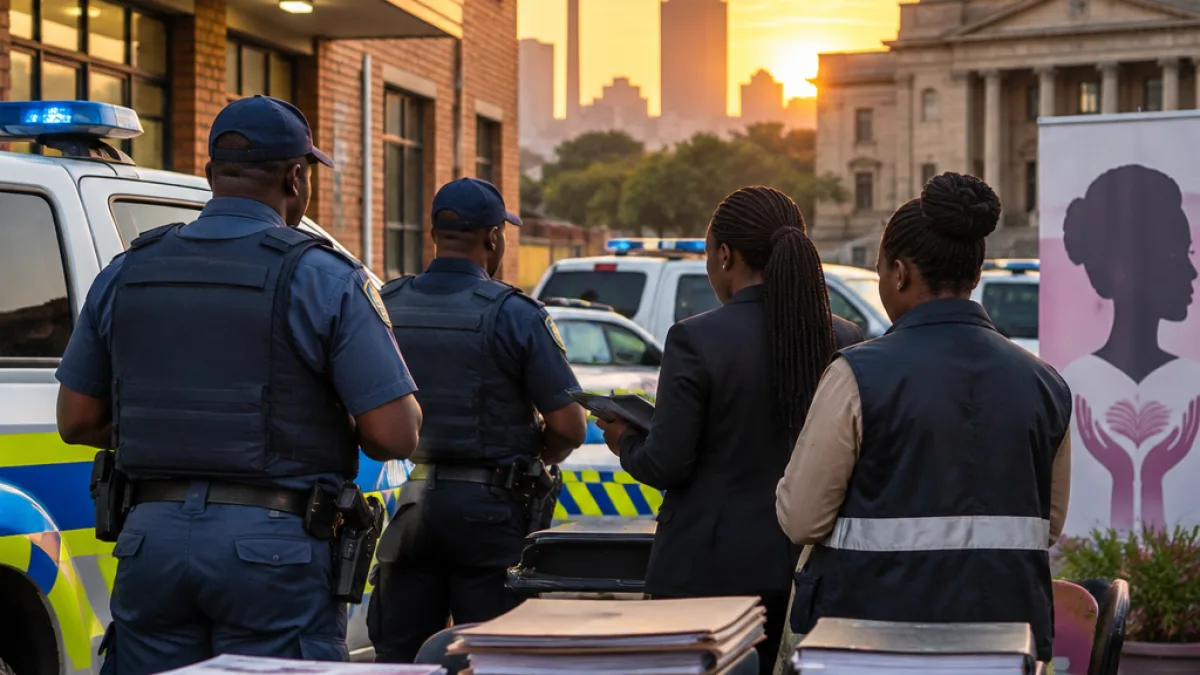
Gauteng is preparing to send 1,022 gender-based violence response teams into 122 high-risk areas as the provincial government steps up its response to rape, femicide and other violent crimes against women and children.
The intervention forms part of a 90-day provincial programme announced by Premier Panyaza Lesufi, with the focus falling on unresolved rape and murder cases, forensic delays and gaps in safety and support services. The plan comes after President Cyril Ramaphosa instructed authorities to accelerate action against gender-based violence and femicide.
“Gauteng bears a significant share of our nation's gender-based violence and femicide crisis, and we fully accept our duty to act,” Lesufi said.
Police stations under additional scrutiny
Ten police stations with the highest rape caseloads have been identified for extra intervention. The list includes Rietgat, Alexandra, Mamelodi, Diepsloot, Ivory Park, Dobsonville, Midrand and Tembisa. The source did not list the remaining two stations.
For residents in these communities, the pressure on the criminal justice system is often felt through delayed investigations, limited victim support and uncertainty over the progress of cases. The provincial programme is aimed at bringing several parts of that response together, from the first report at a police station to the preservation of forensic evidence and the handling of matters in court.
More social workers and survivor support
Gauteng also plans to appoint or add 56 social workers to strengthen services for victims and survivors. Their role will form part of the broader support network being expanded under the intervention, although the announcement did not provide a breakdown of where each additional worker will be placed.
The province has further committed to improving 144 victim-friendly facilities. These facilities are intended to provide a more appropriate setting for women and children dealing with sexual offences and other forms of violence. The government has not provided a detailed timetable for the upgrades, but has placed them alongside the deployment of response teams and the expansion of social work services.
Courts and forensic evidence
Seven specialised Sexual Offences Courts are included in the plan. Strengthening these courts is expected to support the processing of cases involving sexual offences, while Gauteng’s 19 Medical Legal Clinics will assist with the protection of forensic evidence and criminal investigations.
Forensic backlogs have been identified as one of the central problems the 90-day programme must address. Evidence gathered during medical examinations can be crucial to an investigation, and delays in processing it can affect the progress of a case. The provincial announcement did not state how many outstanding cases are affected or provide a target for clearing the backlog.
| Intervention | Scale announced |
|---|---|
| GBV response teams | 1,022 across 122 high-risk areas |
| Additional social workers | 56 |
| Specialised Sexual Offences Courts | 7 |
| Victim-friendly facilities | 144 |
| Medical Legal Clinics | 19 |
A province-wide response to a local crisis
Lesufi acknowledged that Gauteng carries a substantial share of the national GBVF burden. The response therefore extends beyond one municipality or police station, covering high-risk areas across the province while directing additional attention to communities where rape cases are most numerous.
The announcement was made as part of Gauteng’s response to the President’s directive on attacks against women and children. It places responsibility on provincial structures to coordinate social services, policing support, courts and medical-legal work rather than treating each case as an isolated incident.
Key elements of the plan include:
- Deploying 1,022 GBV response teams in 122 high-risk areas.
- Adding 56 social workers to support victims and survivors.
- Strengthening seven specialised Sexual Offences Courts.
- Improving 144 victim-friendly facilities.
- Using 19 Medical Legal Clinics to protect forensic evidence and assist investigations.
The success of the programme will depend on how quickly these measures reach the communities and police stations named in the plan, and whether outstanding cases move through the system without further delay. For victims and families awaiting justice, the practical test will be visible in investigations, access to support and the handling of cases in court.
Gauteng has now placed the 90-day intervention on the provincial agenda. The next stage will be implementation across the 122 high-risk areas, alongside the targeted work at the 10 police stations identified as carrying the highest rape caseloads.