
Gauteng Premier Panyaza Lesufi is due to provide an update on the province’s response to gender-based violence and femicide as pressure grows for authorities to turn national commitments into measurable action on the ground.
The briefing is scheduled for 10:00 on 1 November 2026 at the Auditorium of the Gauteng Office of the Premier in Marshalltown, Johannesburg. It follows President Cyril Ramaphosa’s directive after a recent wave of killings of women across the country.
For communities dealing with unresolved cases, delays in the forensic system and unsafe public spaces, the provincial update is expected to focus on what has been done, where interventions have been deployed and which gaps still need attention.
Case reviews and forensic delays
Gauteng has started a 60-day audit of unresolved cases involving women and children. The province has also introduced 90-day recovery plans for priority matters and cases that have stalled.
The stated aim is to improve the movement of cases through the justice system by identifying blockages and reducing forensic backlogs. These delays can hold up investigations and prolong the wait for families and survivors seeking progress in their cases.
The planned briefing comes after Lesufi met in October with mayors, municipal managers and law enforcement agencies to strengthen the provincial response. That engagement identified the need for a coordinated approach involving provincial departments, municipalities and police structures.
Police stations placed under priority support
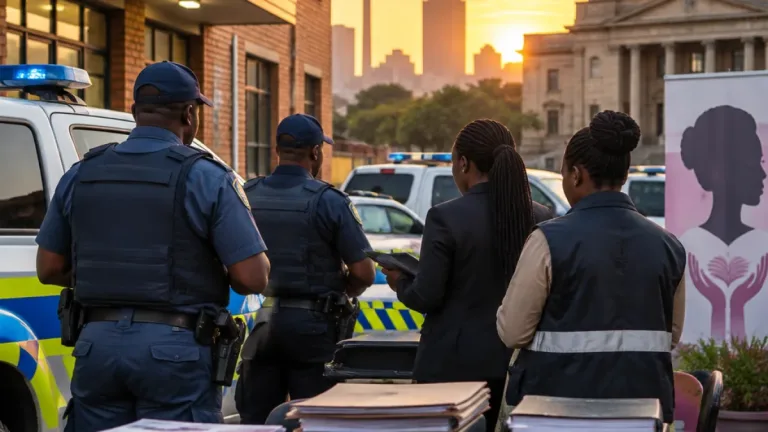
The provincial government has identified 10 police stations recording the highest numbers of rape cases for prioritised support. They are located in communities spread across Gauteng, from the east of Johannesburg to Tshwane and the West Rand.
| Measure | Details |
|---|---|
| Unresolved-case audit | 60-day review involving cases concerning women and children |
| Case recovery plans | 90-day plans for priority and stalled cases |
| Police focus | 10 stations with the highest recorded numbers of rape cases |
| GBV brigades | More than 1,000 deployments across 122 high-risk precincts |
| Municipal safety reviews | Audits aimed at identifying hazards affecting women’s safety |
The stations named for additional attention are Ivory Park, Roodepoort, Alexandra, Mamelodi East, Diepsloot, Kagiso, Atteridgeville, Reiger Park, Meadowlands and Tembisa.
The province also plans to increase the number of SAPS gender-based violence desks. More than 1,000 GBV brigades are being deployed across 122 high-risk police precincts, according to the provincial government’s intervention plan.
Support beyond the police station
The response is not limited to policing. Additional social workers are being brought into the Gauteng Department of Social Development, while support is being extended to Green Doors and non-governmental organisations assisting survivors.
These services are important for people who need assistance after reporting violence, including help navigating the justice system and accessing social support. The provincial plan also includes a fifth intervention focused on places of safety.
Those facilities are to be audited for their condition, staffing and funding gaps. The province has described the measure as an effort to strengthen places where survivors can receive protection and support.
Municipal safety audits
Municipalities across Gauteng have been instructed to begin women’s safety audits without delay. The reviews are intended to identify dangers in public spaces and help municipalities respond to problems that can increase the risk of violence.
- Municipalities must carry out safety audits focused on women’s security.
- Broken streetlights and other hazards are among the issues the reviews are expected to identify.
- The audits form part of a wider provincial response involving municipalities, police and social-development services.
The focus on local infrastructure puts municipalities at the centre of the response. Public safety is shaped not only by police visibility, but also by whether people can move through their neighbourhoods with adequate lighting and functioning public spaces.
National plan behind provincial action
Ramaphosa’s four-point recovery plan calls for a national case-recovery operation, a funded programme to tackle forensic backlogs, safety audits by every municipality and measures to address alcohol-related violence.
Gauteng’s measures mirror several of those priorities. The province is reviewing cases, directing attention to high-volume police stations, expanding support structures and requiring municipalities to examine safety risks.
The Premier’s briefing will provide an opportunity to assess the progress of those interventions and the next steps for implementation. For residents and families affected by GBVF, the central question will be whether the plans produce faster investigations, stronger support and safer communities across Gauteng.